
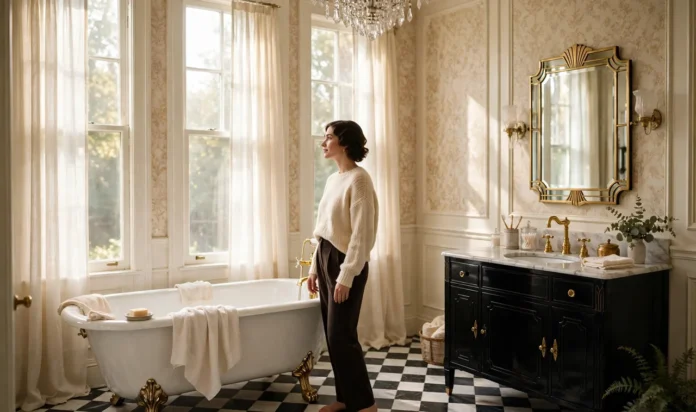


Most bathrooms from the 1920s looked like small movie sets. Glossy black and white tile, gold taps, a deep tub, and a mirror that made the whole room glow. That look still works today, and you do not need a big budget or a full gut job to get it. The trick is to pick a few strong pieces and let them do the talking. A checkerboard floor, a crystal light, or a gold framed mirror can shift a plain white bathroom toward Old Hollywood glamour in a single weekend.
The 20 ideas below are built for real homes. Some cost very little, like swapping your taps or adding black grout. Others are bigger moves, like a clawfoot tub or a marble top. Each one names the exact piece, the finish, and the small detail that keeps it from looking like a costume. Start with one idea you love, live with it for a week, then add the next. That slow build is how a 1920s bathroom ends up feeling collected, not copied.
1. Black and White Checkerboard Floors Set the 1920s Bathroom Mood
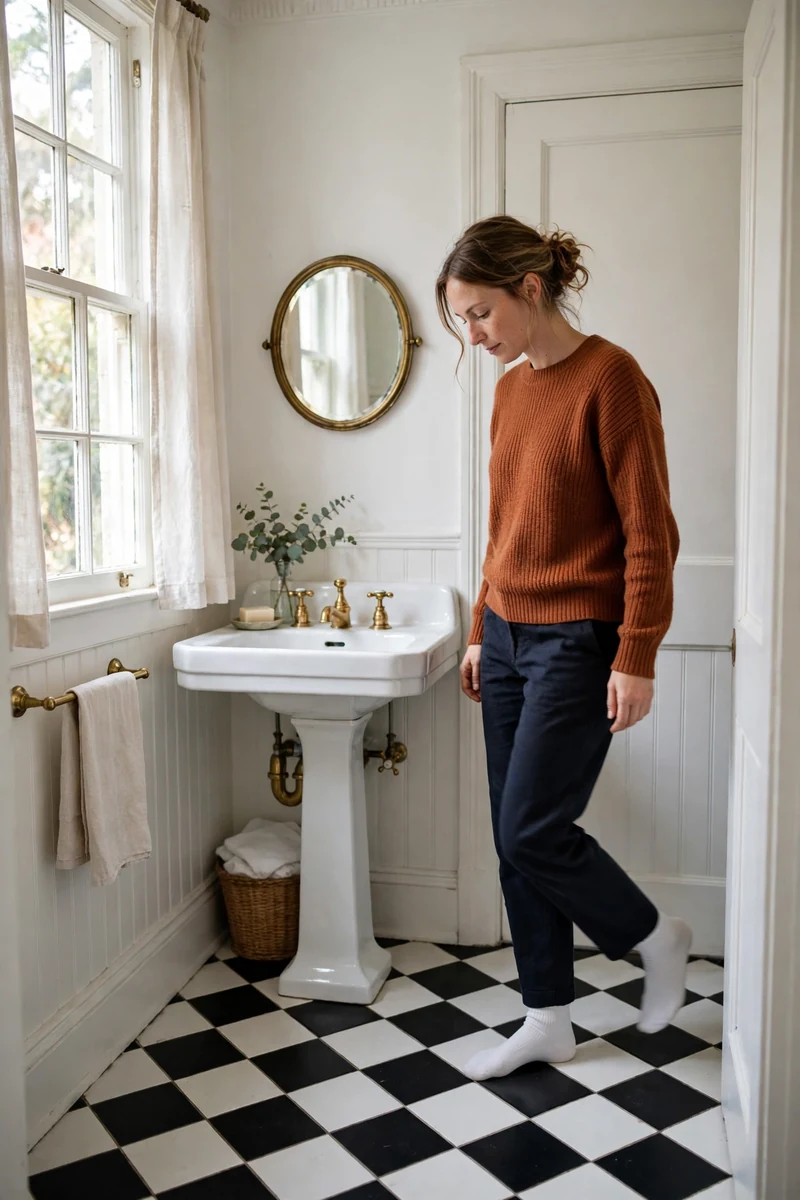
Start at the floor. A black and white checkerboard floor does more work than any other single change in this room, and it sets the mood before you touch a tap or a tile. Go with 12 inch squares in matte porcelain, with thin dark grout lines that keep the pattern crisp.
- Small rooms suit smaller squares, so the grid does not swallow the space.
- Plain white walls let the floor stay the star.
- A black cotton bath mat softens the hard lines under bare feet.
2. A Clawfoot Tub With Gold Feet
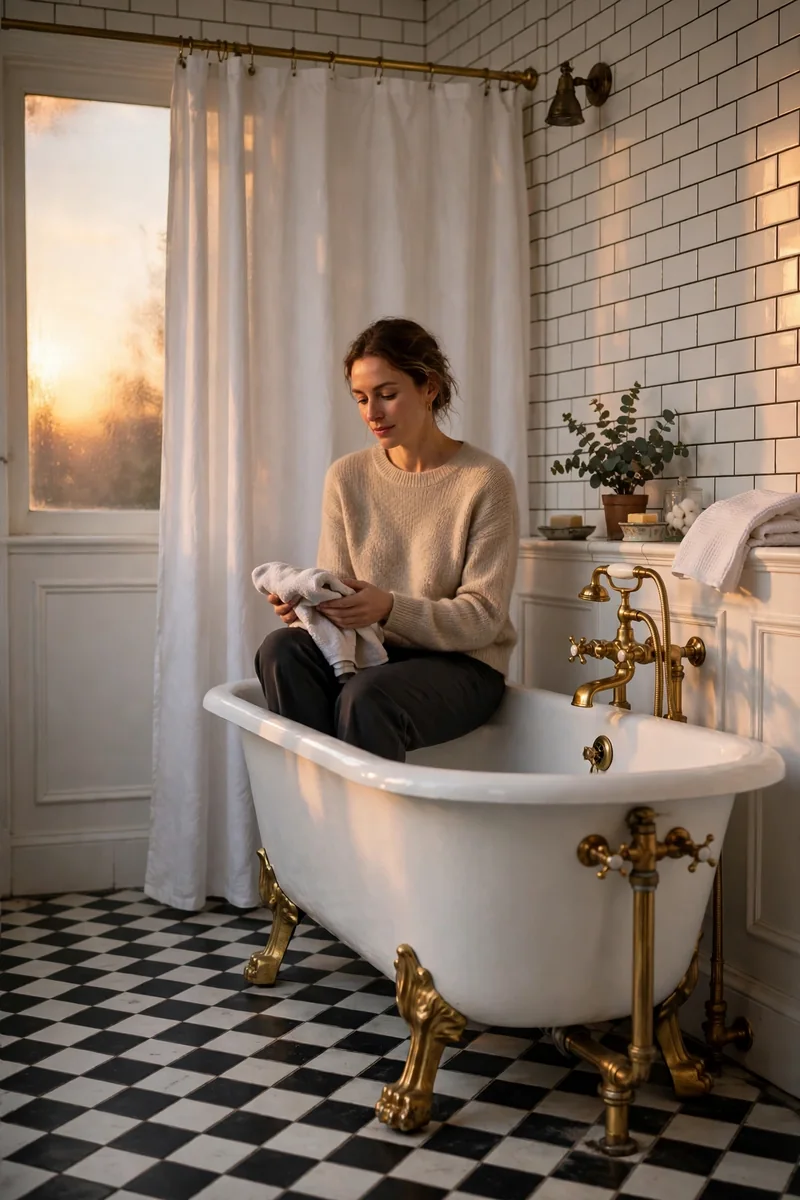
A clawfoot tub is the fastest way to give a bathroom a 1920s soul. The curved rim and the little feet do the styling for you, so the rest of the room can stay quiet. Look for a cast iron tub with the original feet, then paint the feet gold or brass for a warm finish.
- Keep the plumbing exposed in brass, not hidden behind panels.
- A simple white shower curtain on a brass ring keeps the look soft.
💡 Quick Tip
Measure your doorways before delivery, since cast iron tubs are heavy and wide, and they do not bend around tight corners.
3. A Black Lacquer Vanity
A black lacquer vanity brings the drama that a bathroom from this era needs. The glossy finish catches the light, and it makes a small room feel like a dressing room from an old film. Keep the shape simple, with clean lines and brass knobs, so the shine does the talking.
Pair it with a white basin and a light wall so the black does not close the room in. One bold piece is enough, so let the rest of the room stay calm.
4. An Arched Mirror in Warm Brass
An arched mirror softens all the straight lines in a bathroom, and brass keeps it warm. Hang it above the vanity so the arch frames your face and bounces light around the room. It works over a pedestal sink too, where a square mirror would feel too stiff.
- Pick an arch that is narrower than the vanity, so the edges have room to breathe.
- Choose unlacquered brass if you like a finish that ages with soft marks.
- Hang it low enough to see your face, not the ceiling.
Check before you buy
5. White Subway Tile With Dark Grout
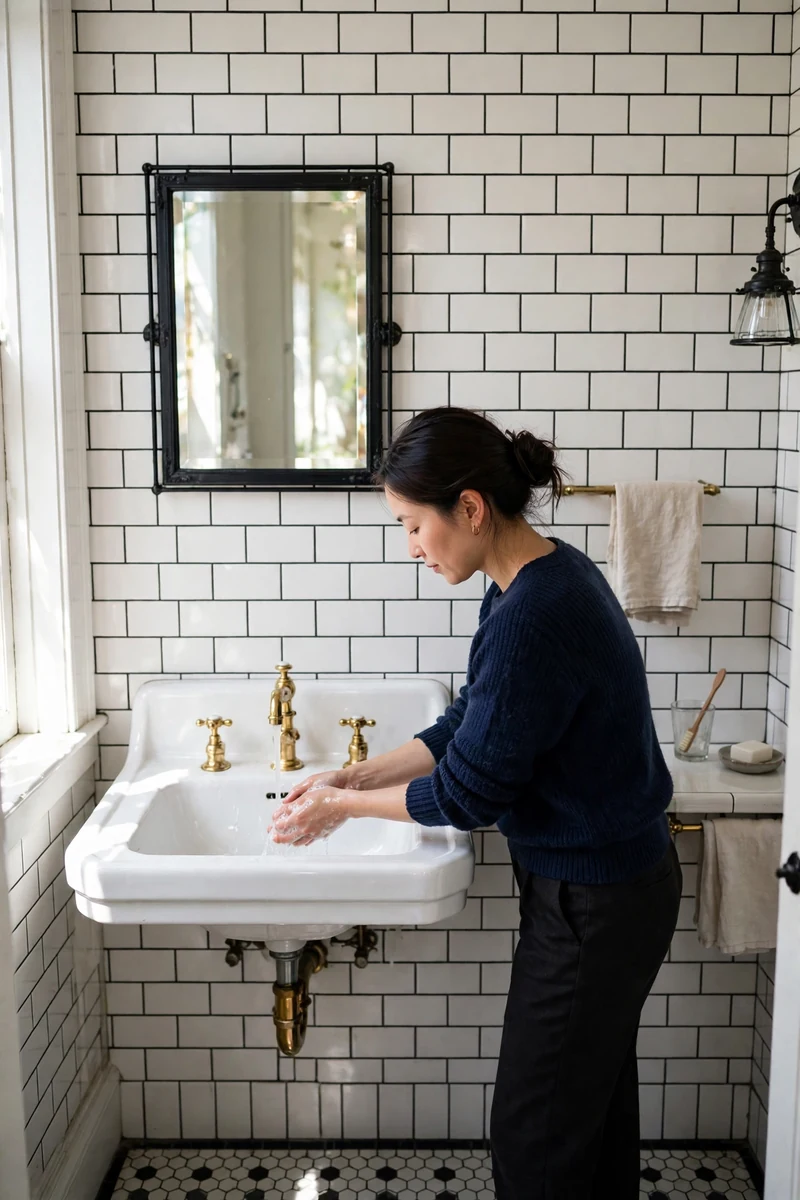
White subway tile is a safe choice, but dark grout is what makes it look like the 1920s. The dark lines draw out the brick pattern and give plain walls a graphic edge. Use a charcoal grout, not pure black, so the lines read soft instead of harsh.
This is the same trick that shows up in many retro bathroom ideas, where one small finish change carries the whole room. Seal the grout well, since dark grout shows water marks more than white.
White tile with white grout. The pattern fades into the wall, and the room looks plain and flat.
The same tile with charcoal grout. Every brick line shows, and the wall reads crisp and Deco.
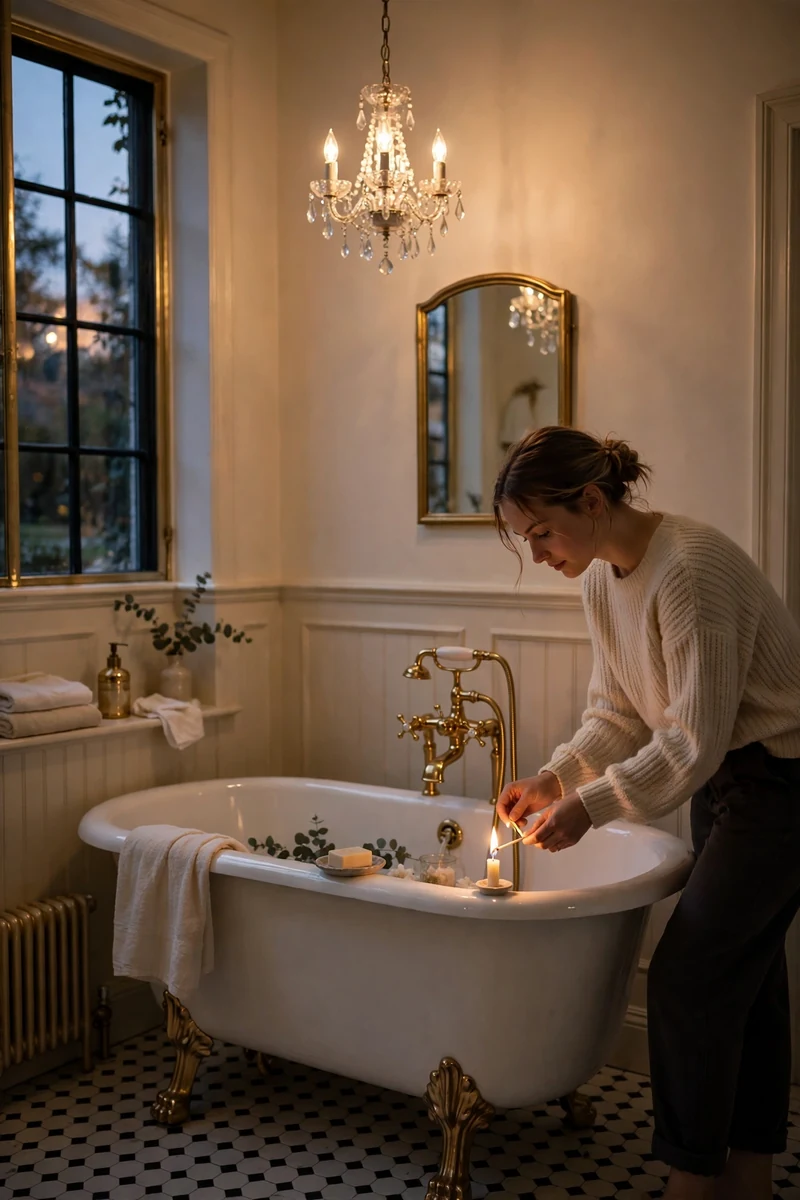
6. A Small Crystal Chandelier
A small crystal chandelier turns an ordinary bathroom into a room that feels dressed up. Hang it over the tub or in the centre of the ceiling, and keep it small enough that it never crowds the space. Two tiers are plenty for most rooms, and a single tier suits a small ceiling.
Choose warm bulbs, since cool light makes crystals look cold. A dimmer lets you drop the light low for a bath and raise it for getting ready.
Hang it dead centre, or over the tub.
Add a dimmer switch for soft evening light.
Wipe the crystals with a dry cloth each month.
7. A Sunburst Tile Feature Wall
A sunburst pattern is pure Art Deco, and one wall is all you need. Fan shaped tiles in gold, cream, and black spread out from a single point behind the mirror or above the tub. The rays catch the eye and pull the whole room together.
Keep the other walls plain white or soft cream, so the sunburst stays the one loud moment. Too many patterns in one small room will fight each other. One feature wall also keeps the cost down, since Deco tile is not cheap.
Use the sunburst on one wall only.
Keep the other walls plain white or cream.
Do not run the pattern around the whole room.
Do not pair it with another loud pattern.
8. Marble Tops and Gold Taps
Marble and gold are the classic 1920s pairing. A white marble top with soft grey veins cools the room, while gold taps warm it back up. The mix feels rich without any extra decoration. A thick marble edge looks better than a thin one, so ask for at least an inch of depth.
Honed marble hides marks better than polished, so ask for a honed finish. Match the taps to the mirror frame so the gold repeats twice, and wipe the top dry after use to keep the stone bright.
- ▸Honed marble hides marks better than polished.
- ▸Gold taps repeat the mirror frame.
- ▸One inch of edge depth looks far richer.
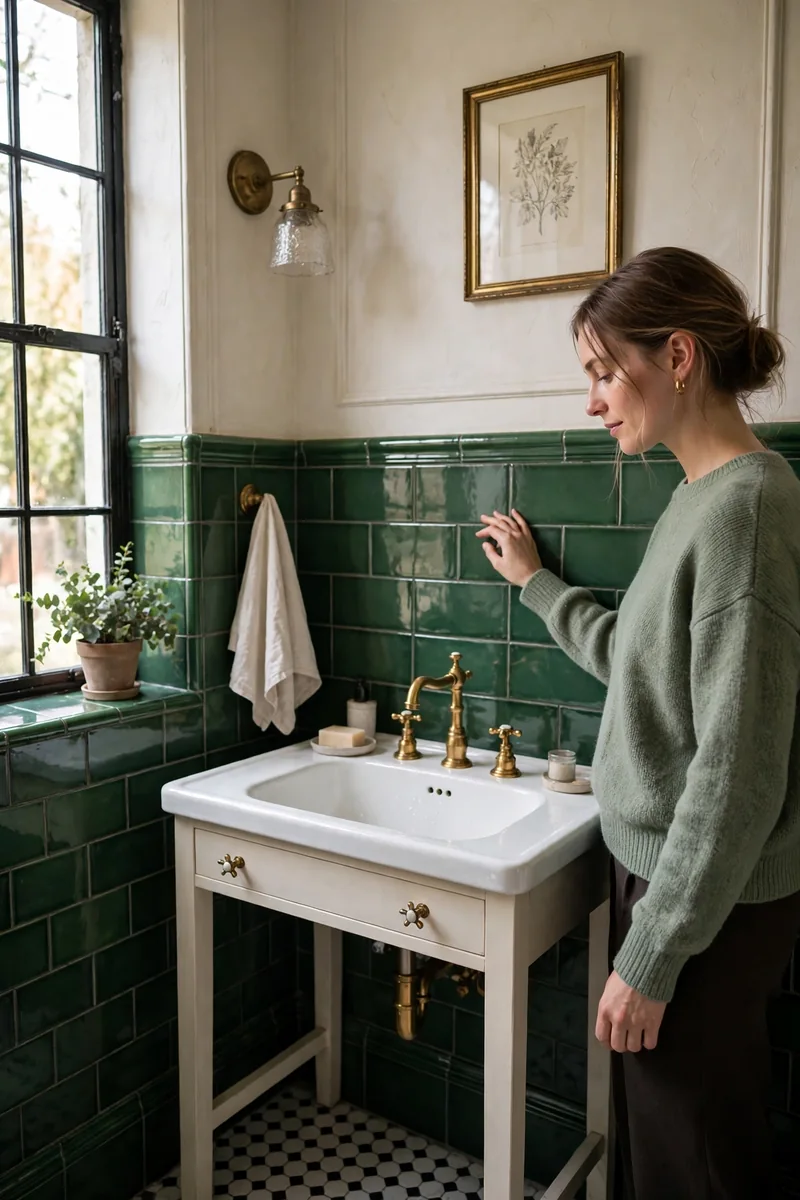
9. Jade Green Wall Tiles
Jade green tile is the colour that makes a bathroom feel like a spa. It was a favourite green of the decade, deep enough to feel moody and light enough to work in a small room. Use it on one wall, or up to the halfway line around the whole room.
Brass taps and a white basin keep the green from feeling heavy. Add a small plant on the sill if the window gets light, since green tile loves a bit of real green nearby.
Jade green plus brass is the 1920s spa look. Keep everything else plain and let those two do the work.
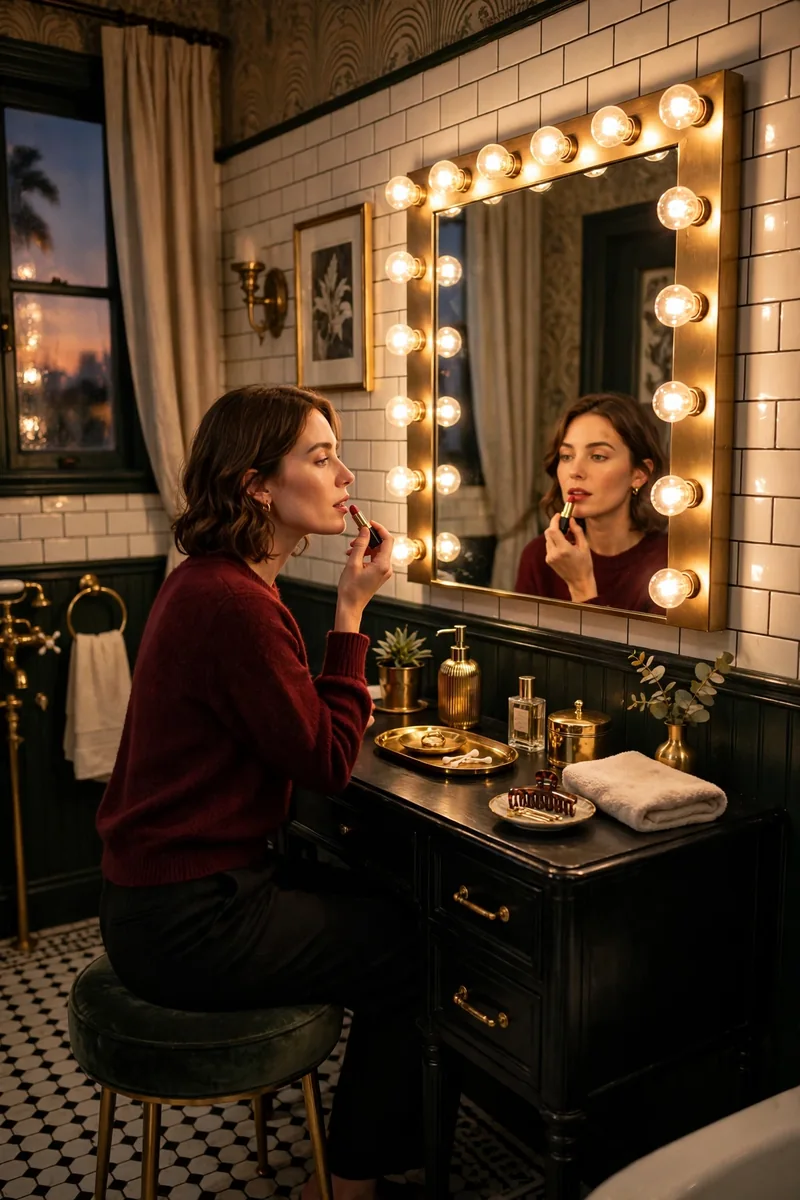
10. A Hollywood Mirror With Warm Bulbs
A Hollywood mirror with bulbs around the frame is the most glamorous way to light a vanity. The bulbs throw an even glow on your face, with no harsh shadows from above. It also turns a plain mirror into the feature of the room.
- Place it at eye level.
- Keep the bulbs warm, never cool white.
Pick warm bulbs and a dimmer, so the light stays soft in the morning. A slim frame suits a small bathroom better than a wide one.
📌 Good To Know
LED bulbs in warm white give the same glow as old bulbs and run much cooler, which matters in a small room.
11. Bold Black and White Stripes
Black and white stripes are bold, but in a small bathroom they work. The stripes lift the ceiling and give plain white fixtures a sharp frame. Use them on one wall, behind the mirror or the tub, and keep the rest of the room plain. A stripe that runs floor to ceiling makes a low room feel taller.
Pick a washable paper, since bathroom steam will test it. Thin stripes feel smart and calm, while wide stripes feel loud and fun.
12. A Classic Pedestal Sink
A pedestal sink is the quiet hero of a bathroom from this era. Its slim column leaves the floor open, so a small room feels bigger. A white porcelain pedestal with a wide basin suits the era, and it pairs well with gold or brass taps.
Storage is the trade off, so keep a small basket under the window for towels. If you love the look of moody vintage bathroom styles, a pedestal sink fits right in, since the shape is simple and the lines are honest.
| Pedestal sink | Wall hung vanity |
|---|---|
| Floor stays open, room feels bigger. | More floor covered, room feels smaller. |
| Almost no storage under the basin. | Drawers hide towels and bottles. |
| Classic 1920s shape, honest lines. | Modern look, less period charm. |
13. Gold Fixtures Through the Room
Gold fixtures tie a 1920s bathroom together. Taps, towel rings, and the shower head in the same warm gold make the room feel planned, not patched. Brushed gold hides water spots better than polished gold, so it stays looking good with less wiping.
Keep one metal through the room. Mixing gold with chrome splits the look and weakens the warm glow. If your mirror frame is brass, let the taps match it. A soft cloth and plain water are enough for daily cleaning, so skip harsh sprays.
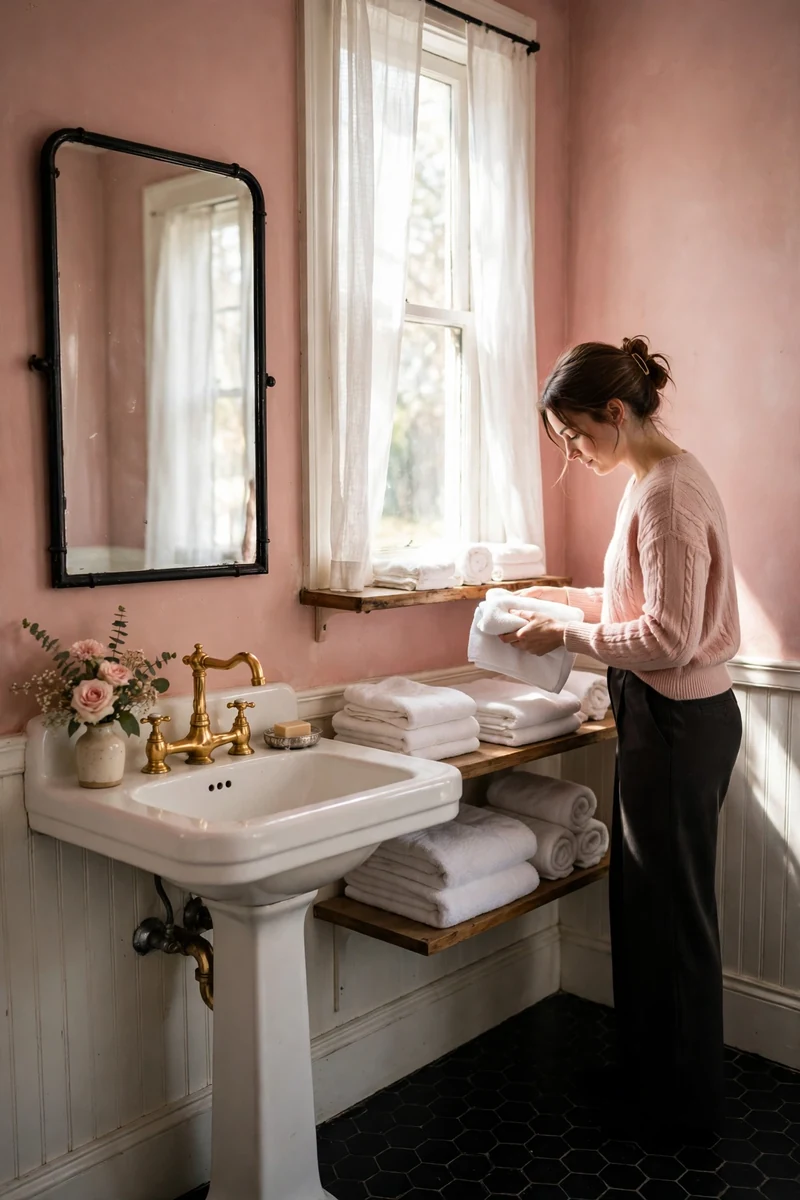
14. A Pink and Black Colour Scheme
Pink and black is the colour pair that says Old Hollywood more than any other. Blush pink walls or tiles soften the room, and black floors, frames, and taps give it backbone. The pink keeps the black from feeling cold.
Use pink on the walls and black on the floor, or flip it with pink tiles and black fittings. Either way, keep the pink dusty, not bright, so it reads grown up. A black framed mirror is the easiest way to anchor the scheme.
Get the balance right
15. A Tall Mirror by the Door
A tall mirror by the door does two jobs at once. It lets you check your outfit before you leave, and it bounces light deep into the room. A black frame with a slight arch keeps it in the 1920s spirit.
Lean it against the wall if you rent, or hang it if the wall is solid. Place it where it catches the window light, not where it faces the toilet. Keep the glass clean, since a tall mirror shows every mark.
A plain wall by the door and a dark corner that eats the light from the window.
A tall black framed mirror sends window light to the back wall, and the room feels twice as bright.
16. Fluted Glass on the Shower
Fluted glass on the shower screen is a small detail with a big payoff. The ridges blur the shower from view, soften the light, and add the ribbed texture that Deco rooms loved. It keeps the room feeling private without a curtain.
Pair it with a black frame to match the rest of the room. Clear glass shows every drop, but fluted glass hides them, so it stays looking tidy. Ask for toughened glass, since bathroom screens must be safe if they ever break.
Measure the opening twice before you order.
Choose a slim black frame to match the room.
Pick toughened fluted glass for safety.
17. Art Deco Wall Sconces
Art Deco sconces are the light that makes a bathroom glow at night. Look for stepped shapes, fan motifs, or milk glass shades in brass. Two sconces, one on each side of the mirror, beat a single light from above.
Warm bulbs matter here. Cool white light turns brass grey and flattens the room, while warm light makes the gold glow. Mount them at eye level, so the light falls on your face and not on the ceiling.
Hang one sconce on each side of the mirror.
Use warm bulbs at eye level.
Do not use a single harsh light from above.
Do not use cool white bulbs near brass.
18. A Velvet Stool at the Vanity
A velvet stool at the vanity is the piece that turns getting ready into a ritual. Pick deep green or dusty pink velvet, with short wooden legs, and tuck it under the vanity when you are done. It also suits a mid-century bathroom, where soft seats and clean lines sit together.
Velvet in a bathroom needs care, so keep the stool away from shower steam. A wipeable velvet or washable cover makes life easier, and matching the stool colour to the towels gives the vanity a planned look.
- ▸Deep green or dusty pink velvet, short wooden legs.
- ▸Keep it far from shower steam.
- ▸Match it to the towels for a planned look.
19. Crisp White Towels, Hotel Style
Crisp white towels are the cheapest way to make a bathroom feel like a 1920s hotel. Fold them in thirds, stack them in a neat pile, and roll the hand towels. White towels show off gold rings and dark walls, and they never clash with the tile.
Keep two sets, so one is always in the wash. A small stack on an open shelf looks better than a stuffed cupboard. Add a thin black border on the towel edge if you want a Deco nod.
20. A Black Framed Shower Screen
A black framed shower screen is the modern way to nod at the 1920s. The thin black grid breaks up a glass wall and adds the graphic lines the decade loved. It works with marble, subway tile, and plain white walls alike.
Keep the frame slim so the screen stays light, since a heavy frame crowds a small shower. It is a good final piece, since it pulls the black details of the room together.
Slim black frames add structure without weight. Let the grid echo the floor, the mirror, and the taps, and the whole room will read as one idea.
That is the whole list. A 1920s bathroom is not about copying a film set. It is about picking a few strong pieces, black and white tile, warm gold, a deep tub, and letting them work together. Start with the change that excites you most, then add one more when the room asks for it. Small rooms suit small moves, and a single gold tap or a striped wall can shift the mood more than a full refit. Keep the finishes warm, the lines clean, and the clutter low, and the glamour will take care of itself.
Save this list on Pinterest for the next time you want to refresh your space, and pick your first idea from the top.