
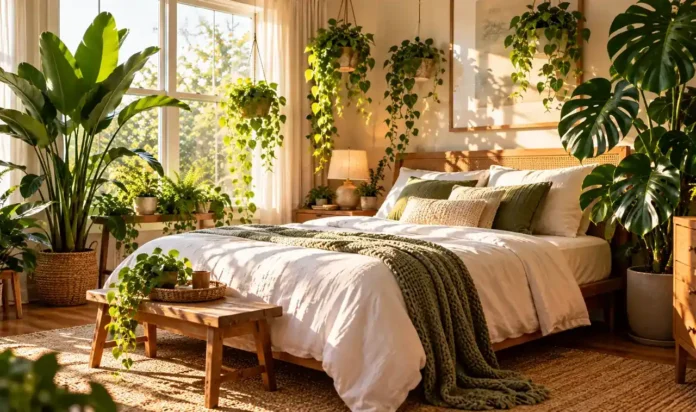


My bedroom used to look fine in photos and flat in real life. The bedding matched, the lamp worked, and still the room felt like a place I slept in rather than a place I liked. The change came from a single tall plant in the corner, and it cost less than a new throw pillow.
Most plant advice assumes you have a bright living room and hours of free time. Bedrooms are different. The light is softer, the space is smaller, and nobody wants soil on the sheets. That is why so many bedroom plants fade within a month. People pick the wrong plant for the wrong spot and then blame themselves.
These 25 greenery bedroom ideas fix that. Every idea names the exact plant or the exact move, tells you where it goes, and keeps the care simple enough for a beginner. You will find big statement plants, tiny shelf clusters, low light survivors, and the small habits that keep them all alive. Start at the top, or skip to the one that fits your room.
Related: 20 bedroom plant décor ideas
Pick One Big Plant to Anchor Your Greenery Bedroom Ideas
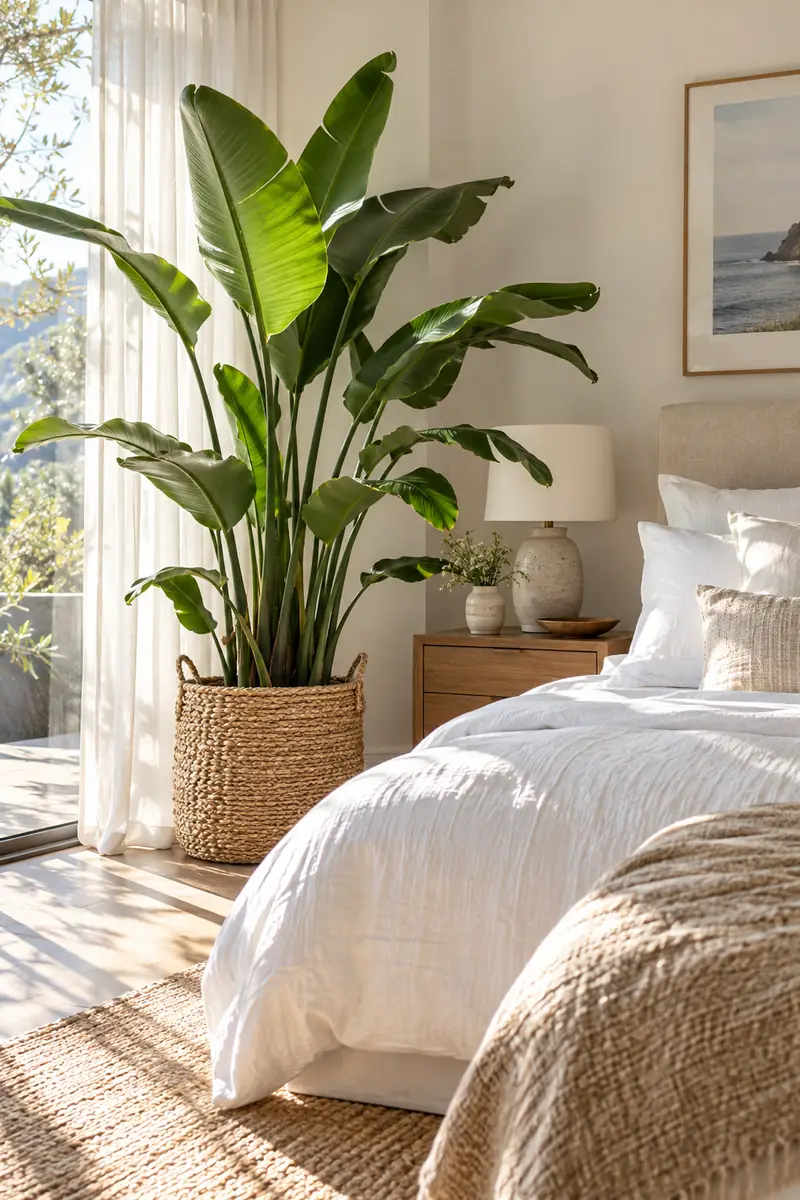
A bedroom with no focal point feels unfinished. A tall plant, something around four to five feet, gives the eye somewhere to land and makes the whole room look styled. Bird of paradise, kentia palm, or a large rubber plant all work if the corner gets decent light.
Put it in a heavy pot so it never tips, and leave a few inches of clearance from the wall so air moves around the leaves. The chair in that corner that collects clothes? Move it. The plant earns the spot. Water deeply, then let the top two inches dry before watering again. One big plant beats ten tiny ones every time.
Hang a Trailing Pothos From a Wall Shelf
Pothos forgives almost everything, which is why it belongs in a bedroom. A golden pothos on a wall shelf sends vines down the wall and softens hard furniture edges. Mount the shelf near, not directly over, the bed so falling leaves never land on your pillow.
Let the top inch of soil dry between waterings, and trim the vines when they pass your knee. Those trimmings root in water in about two weeks, so one plant becomes three. Three types worth knowing:
- Golden pothos: brightest leaves and the fastest grower
- Marble queen: white variegation, slower but prettier
- Jade pothos: solid green and the toughest of the three
Cluster Three Small Plants on Your Nightstand
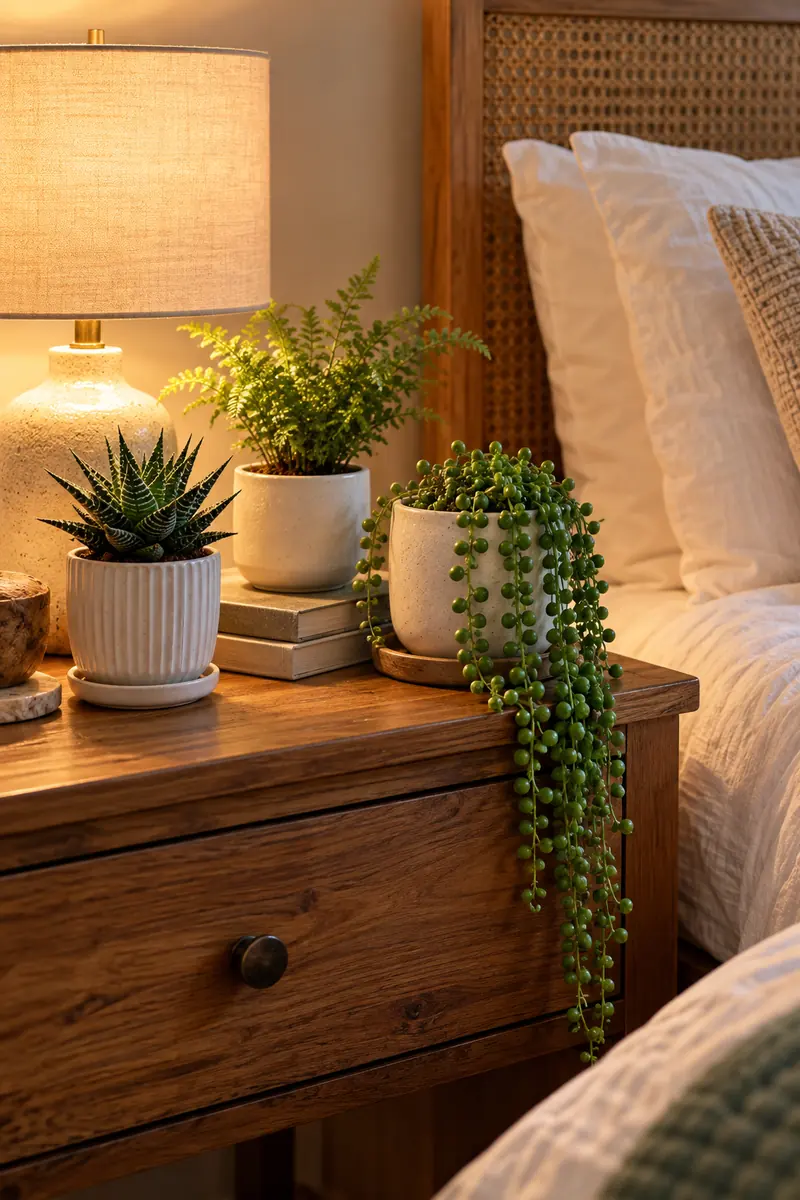
A nightstand with one small plant looks like an afterthought. Three plants grouped together look like a decision. Keep them in the same color family of pots, white or terracotta, and vary the leaf shapes: one round, one spiky, one trailing.
A haworthia, a tiny fern, and a string of pearls fit on most nightstands without crowding your lamp or book. Water small pots more often than big ones because they dry out faster. Check them every Sunday morning while the coffee brews.
Try a Snake Plant for Dark Bedroom Corners
Snake plants survive the corners where other plants give up. They handle low light, missed waterings, and dry bedroom air without complaint. The upright leaves add height without taking floor space, which matters in a small room.
One warning that matters: they hate wet feet. Water only when the soil is fully dry, and in winter that might mean once a month. If the leaves turn yellow and mushy at the base, you watered too much, not too little. Back off and let the pot dry out completely.
Put a Fiddle Leaf Fig by the Brightest Window
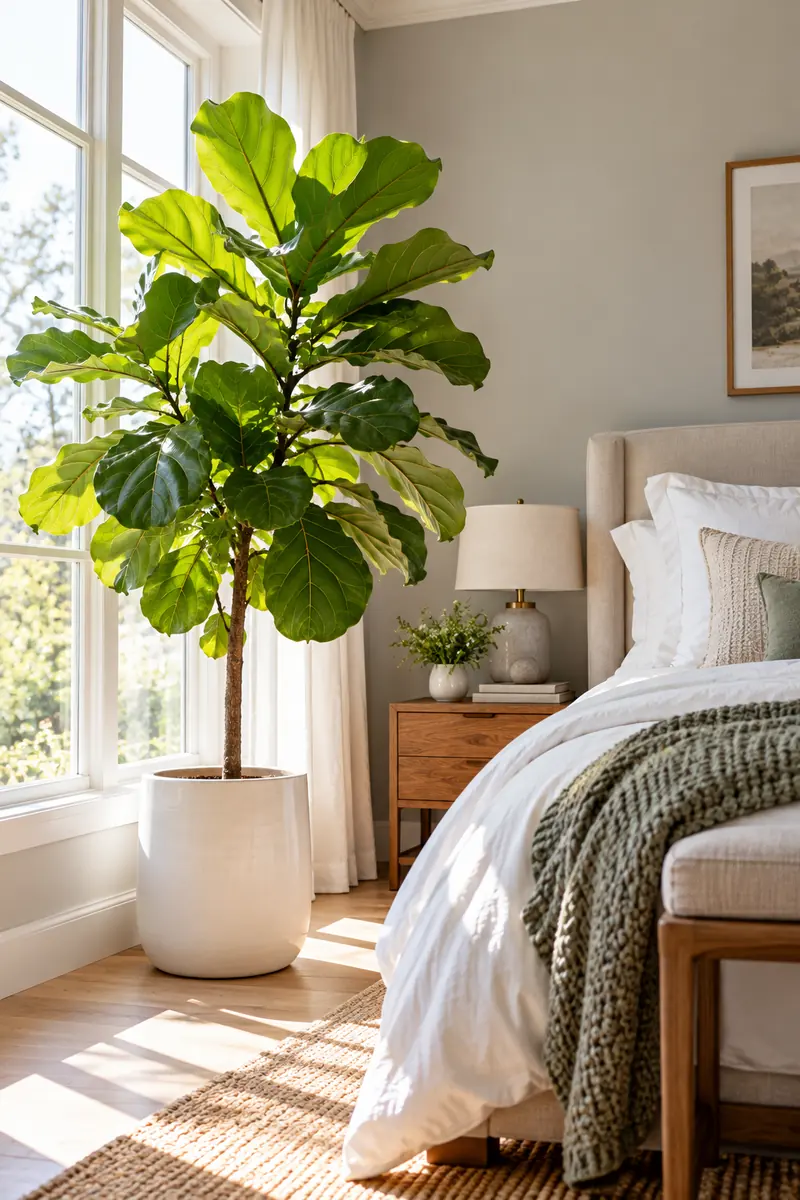
Most of the drama around fiddle leaf figs comes from bad placement. Give it your brightest bedroom window and then leave it alone. These plants hate being moved, so pick the spot once and commit.
Rotate the pot a quarter turn every month so it grows straight instead of leaning toward the glass. Wipe the big leaves with a damp cloth when dust builds up, because dusty leaves photosynthesize poorly. Brown crispy edges mean too little water or dry air. Brown soft spots mean too much water.
Grow Herbs on Your Bedroom Windowsill
Herbs in the bedroom sound odd until you try it. Basil, mint, and chives grow fine on a sunny sill, and brushing past them in the morning smells better than any plug-in freshener.
Use pots with drainage holes and a saucer, because a sill with no drainage becomes a swamp fast. Harvest often. Snipping the tops keeps herbs bushy instead of leggy, and you get free garnish for dinner. Two things to remember:
- Mint wants its own pot. It spreads fast and bullies its neighbors.
- Basil sulks in cold drafts, so keep it off the sill on frosty nights.
Use a Monstera as a Living Headboard Accent
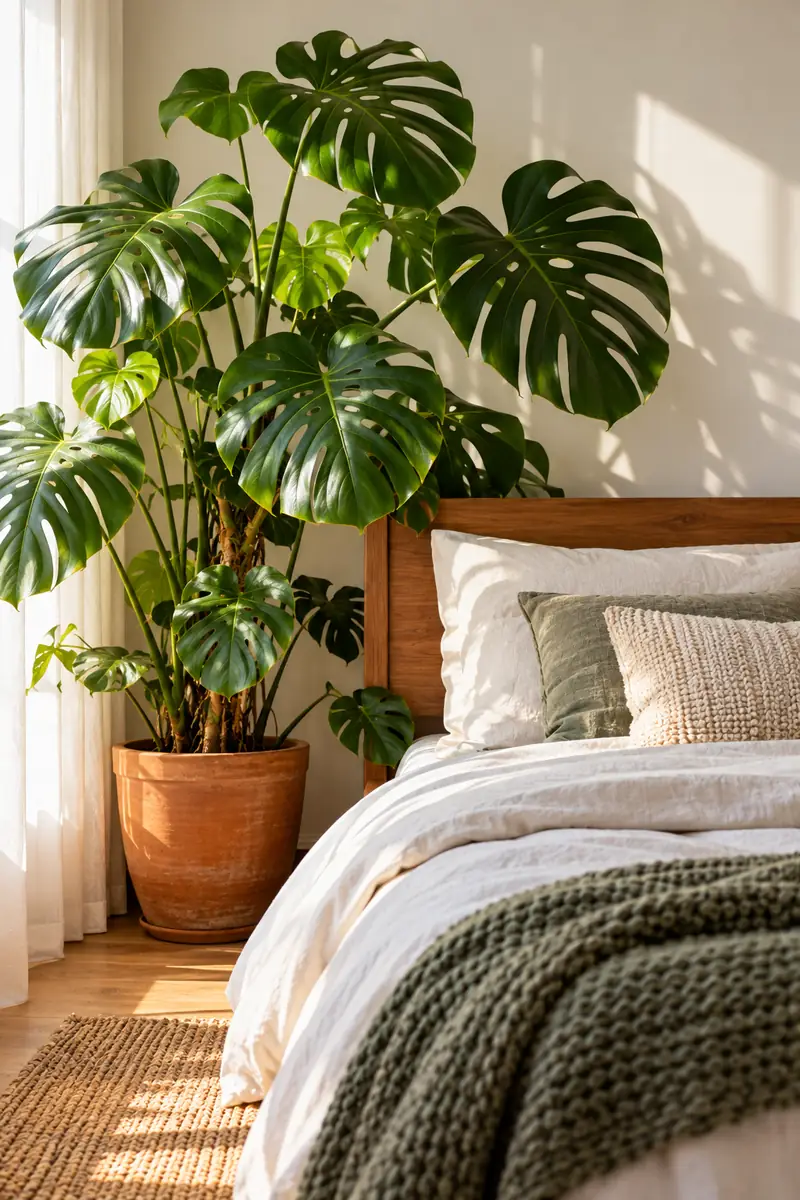
A monstera beside the bed does what a headboard does. It fills the empty wall and gives the bed a backdrop. The split leaves read as sculpture, especially against a plain wall.
Give it bright indirect light and a moss pole to climb, or the stems will sprawl across your nightstand within a year. Wipe the leaves monthly and water when the top two inches dry out. If new leaves come out small and solid with no splits, the plant wants more light. Move it closer to the window, never into harsh direct sun.
Water Less, Not More: the Bedroom Watering Rule
Here is the truth most beginners miss. Bedroom plants die from too much water far more often than too little. Bedrooms run cooler and dimmer than living rooms, so soil stays wet longer.
The fix is a simple habit. Stick your finger two inches into the soil. Dry? Water thoroughly until it drains out the bottom. Damp? Walk away. Lift the pot after watering to learn the heavy feeling, then water again only when it feels light. Write the date on a sticky note on the pot if you keep forgetting.
If the soil feels damp two inches down, do not water. Most bedroom plants die from kindness, not neglect. 💧
Style Plants on a Bedroom Dresser
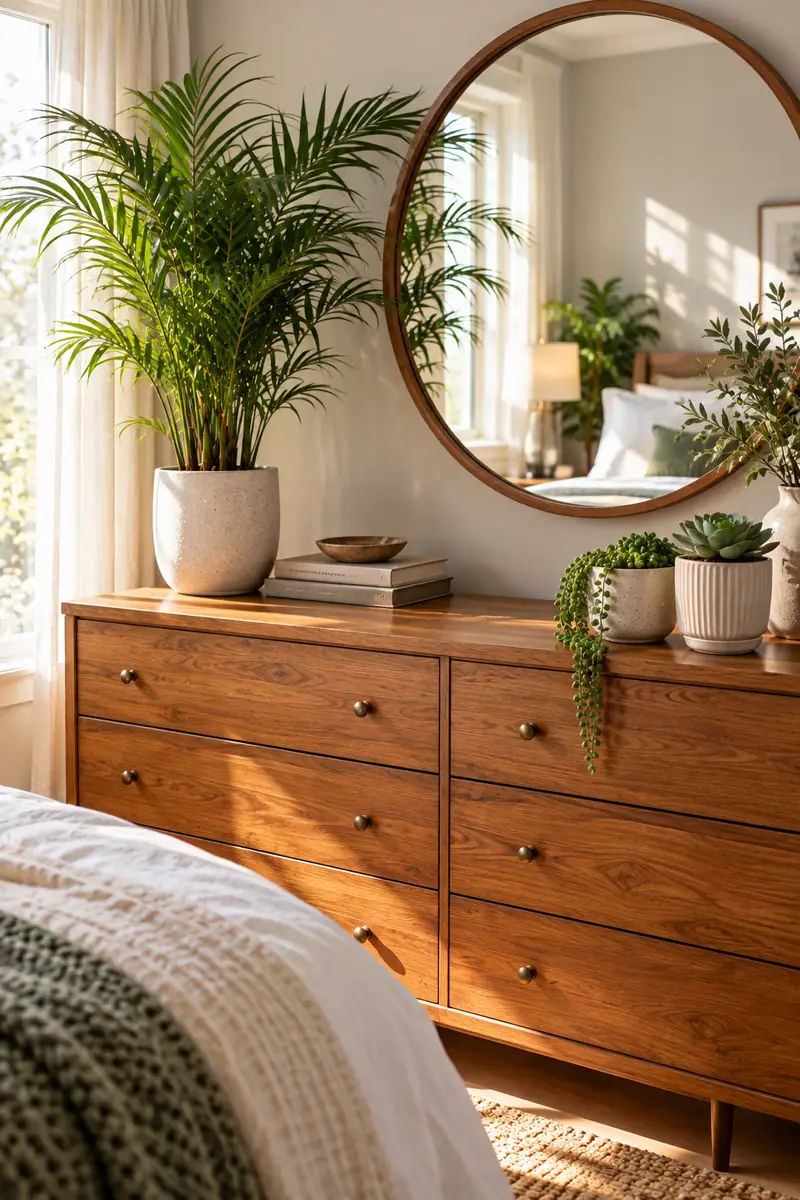
Dressers are plant stages waiting to happen. The trick is grouping: one tall plant at one end, two small ones clustered at the other, and the middle left clear for the things you grab daily.
A parlor palm or dracaena gives the height. Small succulents or a nerve plant fill the low cluster. Keep a tray or saucers under everything, because dresser wood and water rings are enemies. Dust the leaves when you dust the dresser. It takes thirty seconds and keeps the plants breathing well.
Add a Hanging Planter Over Your Reading Chair
The corner with your reading chair probably has decent light and an empty patch of ceiling. That is a hanging planter waiting to happen. A spider plant or Boston fern in a macrame hanger draws the eye up and makes a plain corner feel finished.
Hang it where you will not bump your head standing up. Water over the sink, let it drain fully, then hang it back. Ferns like a weekly misting. Spider plants could not care less. Both handle the slightly dimmer light of a corner better than most flowering plants would.
Keep One Easy Plant on Your Desk
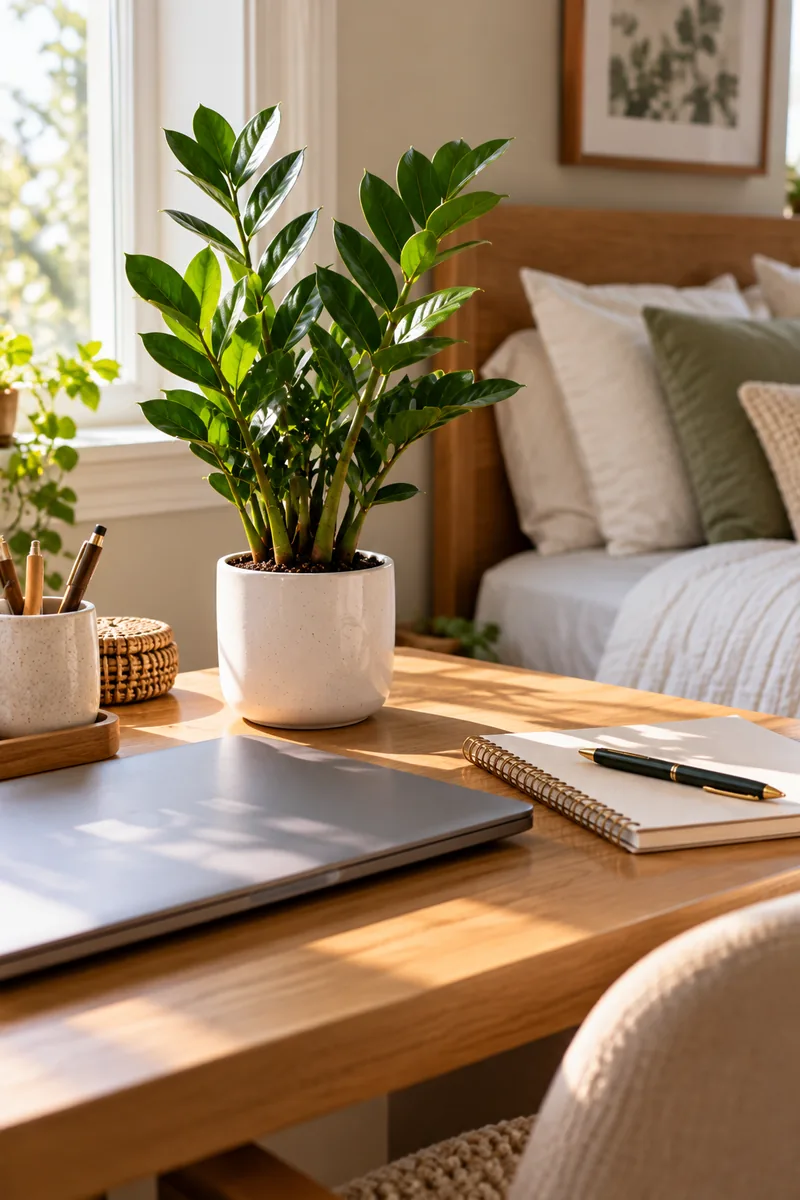
A desk plant makes work-from-bed mornings slightly better. Pick something that tolerates being ignored during busy weeks. A ZZ plant or pothos handles low attention and low light without sulking.
Keep it small so it never crowds your laptop. A four inch pot is plenty. Wipe the leaves when you wipe the desk. Two rules for desk plants:
- If your desk faces a wall with no window nearby, choose the ZZ. It survives on almost nothing.
- Skip flowering plants here. They want more light than a desk usually gives.
Choose Low-Light Plants for North-Facing Rooms
North-facing bedrooms get soft light all day and no direct sun. That rules out sun lovers, but plenty of plants prefer exactly this. Snake plants, ZZ plants, pothos, and Chinese evergreen all grow steadily in north light.
The mistake is buying a plant tagged for bright indirect light and hoping for the best. Read the tag in the store. If it says bright, put it back. Your north window gives gentle light, and the right plant will be happier there than a sun lover ever would be. Match the plant to the room, not the other way around.
Keep reading: low-light bedroom plants
Mix Plant Heights for a Lush Layered Look
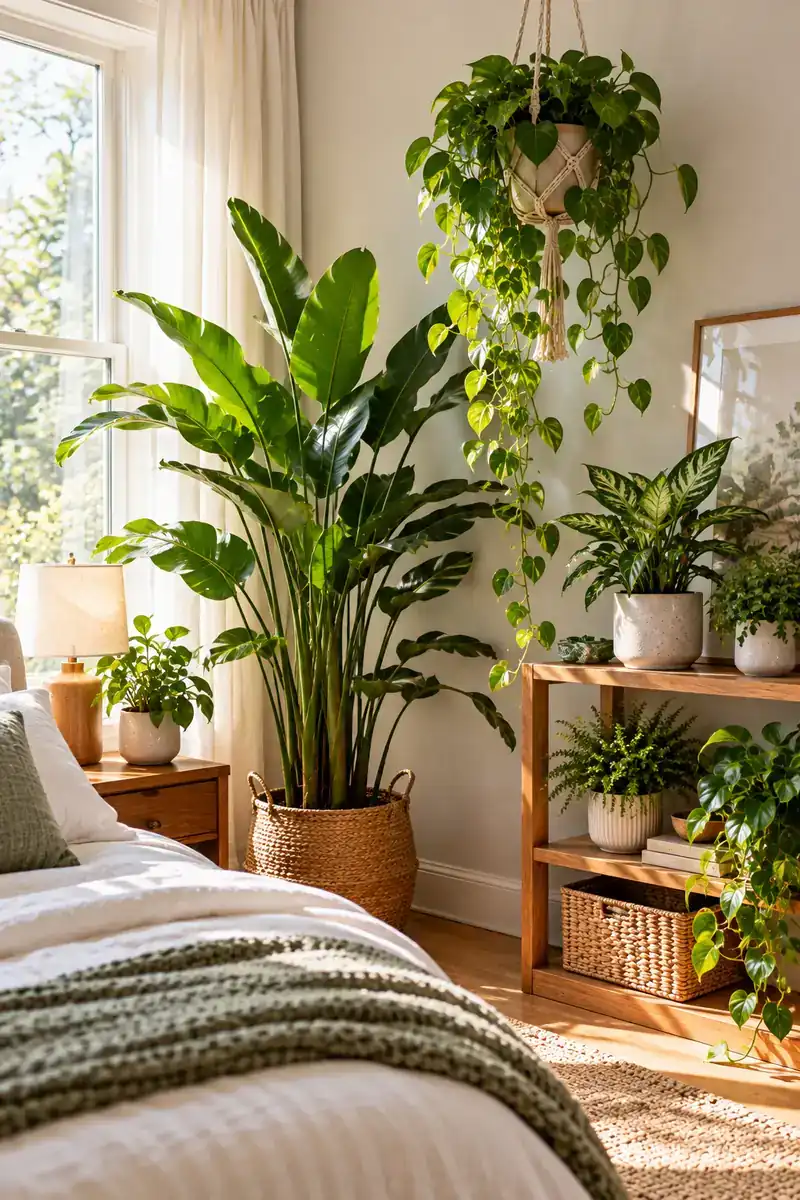
Rooms look flat when every plant sits at the same height. Layering fixes it fast. Put the tallest plant on the floor, medium plants on the dresser or shelf, and trailers hanging above. The eye travels up and down, and the corner suddenly looks full.
Three heights is the sweet spot. More than that starts to look cluttered in a small bedroom. Step back after arranging and squint. If you see one green band instead of three levels, move something until the layers separate.
One tall floor plant, one mid-height shelf plant, one trailer above.
Step back and squint for three clear green levels.
Five same-size pots lined up in a row on one shelf.
Crowding every surface until the room feels cluttered.
Use Woven Baskets Instead of Plastic Pots
Nursery pots are ugly. You do not need to repot to fix that. Drop the plastic pot inside a woven basket and the plant instantly looks styled. Seagrass and rattan suit bedrooms because they add warmth that plastic never will.
Put a plastic saucer or liner inside first, because water seeps through weave and stains floors. Baskets also hide the soil line, so a plant that looks a bit scruffy still reads as intentional. When the plant outgrows the basket, move up one basket size and keep the old one for the next small plant.
Low-Light Greenery Bedroom Ideas for Dark Corners
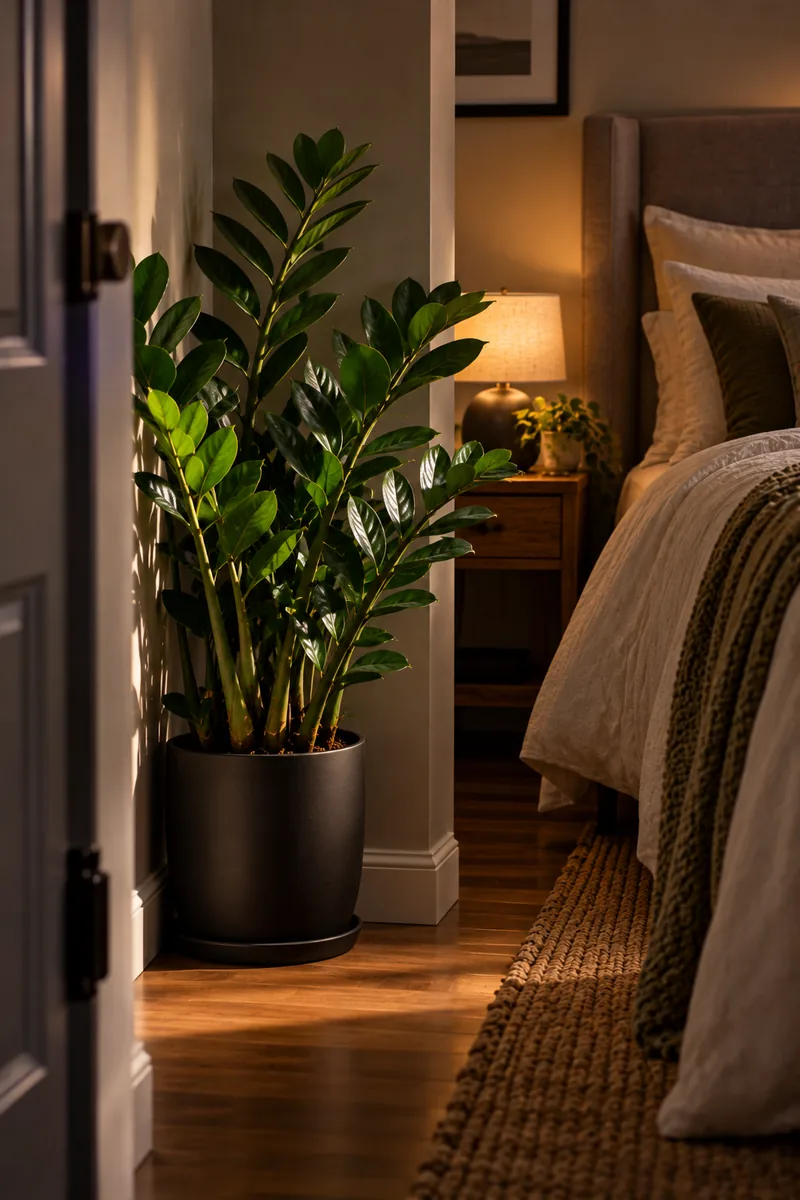
Every bedroom has one dead zone. The corner behind the door, the wall opposite the window, the shelf that never sees sun. That is ZZ territory.
ZZ plants store water in thick rhizomes underground, so they survive months of neglect and very little light. The glossy leaves look good even when the plant is just sitting there doing nothing. Water every three to four weeks. If a stalk turns yellow, you watered too often. Snip it off and wait longer next time.
Create a Mini Plant Shelf Above the Bed
The wall above the bed is prime real estate most people waste. A single floating shelf with three to four small plants turns it into a green headboard. Keep the plants light: small pots, trailing pothos, tiny ferns.
Anchor the shelf into a stud, because soil plus water plus ceramic gets heavy fast. Water with a long-spout can so you do not drip on the bedding. A few practical notes:
- Keep pots small, six inches or less, to limit the weight.
- Check the shelf monthly for water stains and wipe them before they set.
Mist Tropical Plants Twice a Week
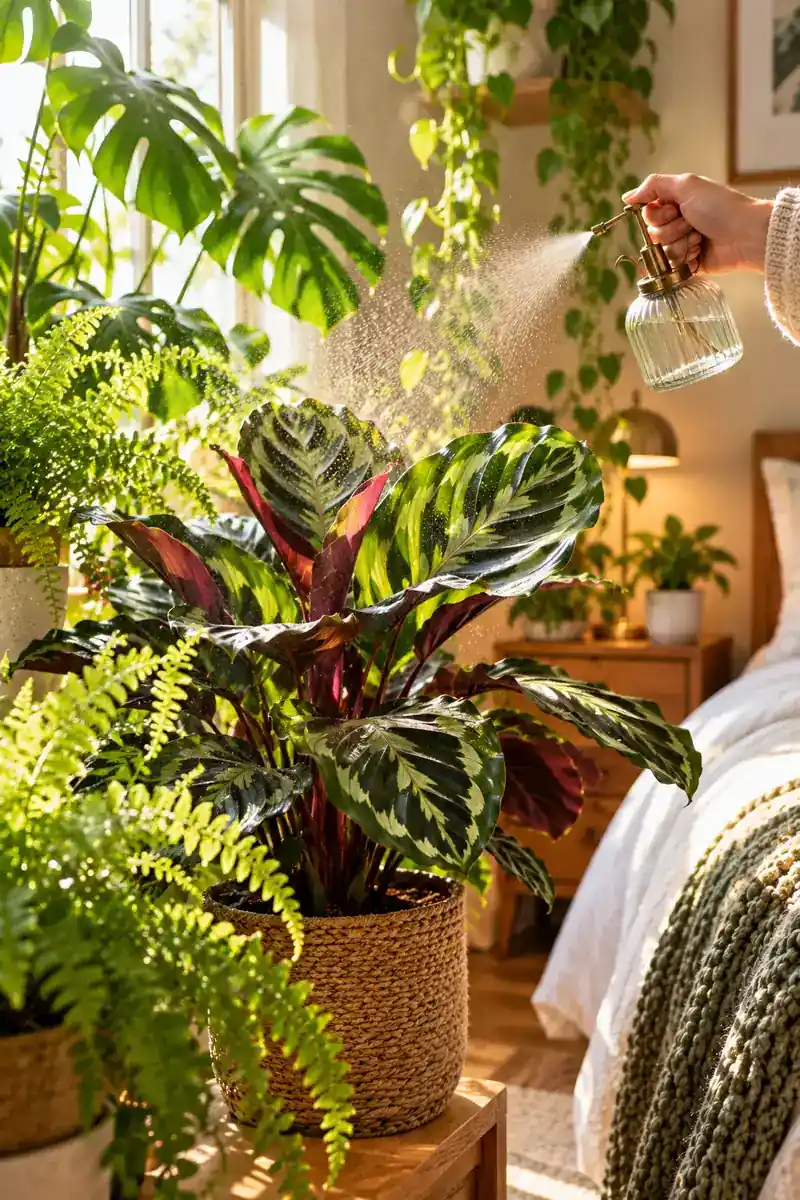
Bedrooms get dry, especially with the heating on. Tropical plants notice. Calatheas, ferns, and monsteras all prefer humid air, and brown crispy leaf edges are the complaint letter.
Misting twice a week helps, but only if you mist the air around the plant, not just the leaves. Morning misting works best so leaves dry by night. A small humidifier does more than any spray bottle if you own several tropicals. Grouping plants together also traps a little humidity between them.
Pick Pet-Safe Plants for Shared Bedrooms
Cats chew leaves. Dogs knock pots over. If a pet sleeps in your bedroom, plant choice matters more than style. Spider plants, parlor palms, Boston ferns, and calatheas are all non-toxic to cats and dogs.
Keep the risky ones out of the bedroom entirely. Lilies can be deadly to cats even in small amounts, and sago palms are dangerous for dogs. When in doubt, check the ASPCA list before you buy, not after the cat has already sampled the leaves.
You skip plants entirely because the cat chews every leaf in sight.
Spider plant, parlor palm, and calathea on a high shelf. Green room, safe cat.
Rotate Your Plants Toward the Light
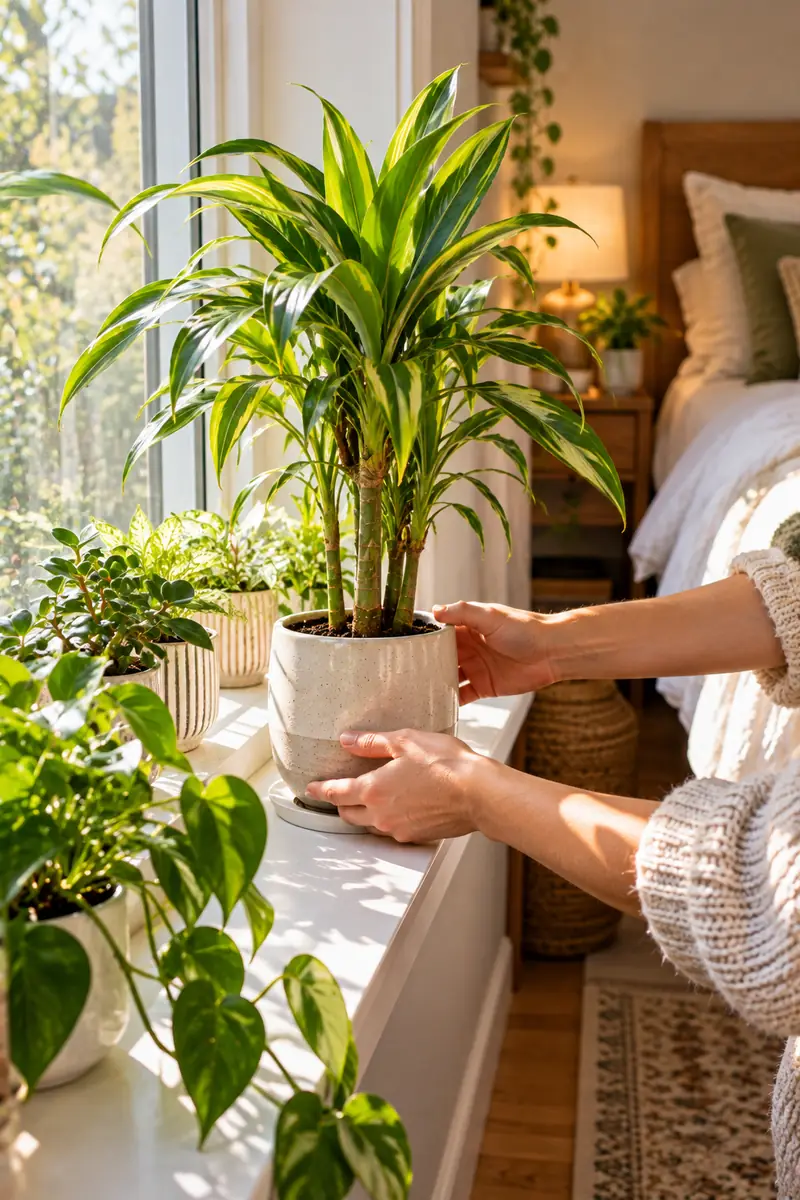
Leaning plants are not broken. They are just following the light. Every stem bends toward the window, and after a few months your plant looks lopsided.
A quarter turn every two weeks keeps growth even. Make it part of watering day so you do not forget. Tall floor plants need it most, because a leaning five-foot plant is hard to ignore. If one already leans badly, turn the bare side toward the window for a month and let new growth fill the gap.
Use a Tall Plant to Split a Studio Bedroom
Studio bedrooms need zones, and a tall plant divides space without blocking light the way a bookshelf does. A kentia palm or large dracaena between the bed and the desk marks where sleep ends and work begins.
Choose something with an open, airy shape so the room still feels like one space. Keep the pot on a rolling stand if you rearrange often. Watering stays the same. The plant does not care that it is also doing the job of a room divider.
Keep Succulents on a Sunny Ledge
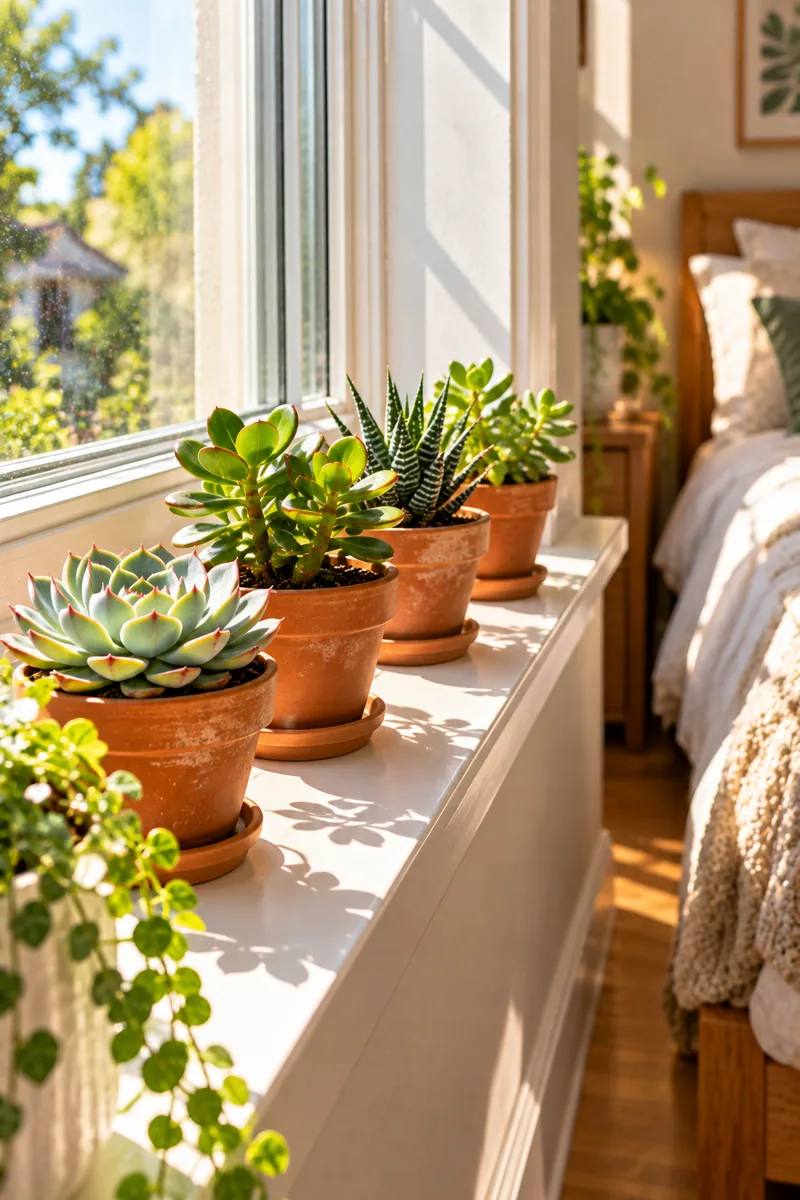
Succulents fail in bedrooms for one reason: not enough sun. They are desert plants wearing a cute disguise. If your bedroom has a genuinely sunny windowsill, four plus hours of direct sun, they thrive there.
Echeveria, jade, and haworthia are the easiest starters. Use gritty cactus soil, not regular potting mix, and pots with drainage holes. Water deeply, then wait until the soil is bone dry. Two signs to watch:
- Stretchy pale growth means it needs more sun. Move it closer to the glass.
- Soft translucent leaves mean too much water. Let it dry out fully.
Feed Plants Lightly in Spring and Summer
Bedroom plants eat, just slowly. From March through August, feed monthly with liquid houseplant fertilizer mixed at half the label strength. Half strength matters. Overfeeding burns roots faster than underfeeding starves them.
Skip feeding entirely from October through February when growth slows down. If white crust appears on the soil surface, flush the pot with plain water and cut back. That crust is salt buildup from too much fertilizer, and your plant noticed it before you did.
Style a Plant Corner With a Chair and Lamp
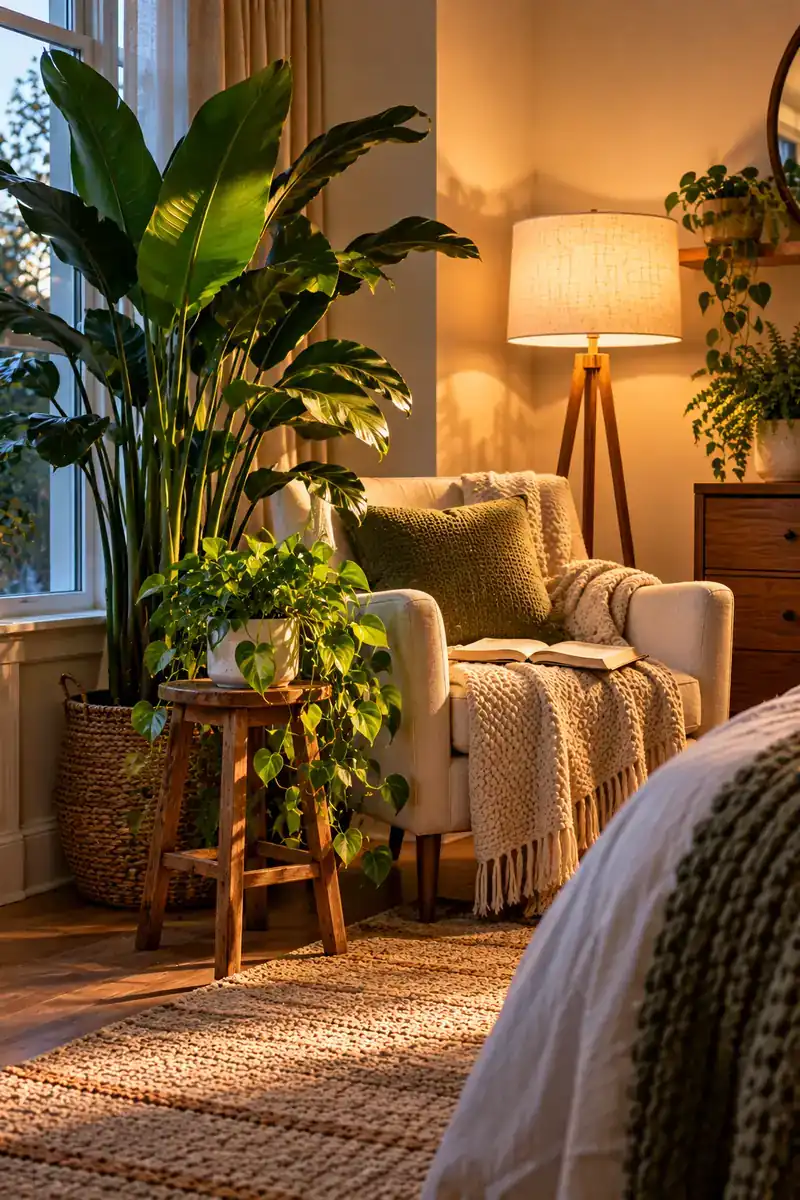
One plant in a corner can look lonely. A corner with a chair, a lamp, and two plants looks like a reading nook. The formula is simple. Chair angled toward the room, floor lamp behind it for evening light, one tall plant beside the chair and one trailer on a small stool.
You now have the best seat in the house. The lamp does not help the plants much, but it makes you actually sit there, which is the whole point. Watering does not change. Comfort is the upgrade here, not plant care.
Choose the Right Pot Size When Repotting
The classic repotting mistake is jumping three pot sizes at once. Roots sitting in too much wet soil rot. Go up just one size, about two inches wider in diameter.
Spring is the best time, when the plant wants to grow anyway. Tease the root ball gently if it is circling the pot, and use fresh potting mix, never garden soil. Water after repotting, then leave it alone for a week. Drooping for a few days is normal shock, not a dying plant. A few reminders:
- Repot only when roots circle the pot or poke through drainage holes.
- Fresh mix matters more than a fancy new pot.
End With One Statement Plant You Truly Love
After all the practical picks, buy one plant just because it makes you happy. The one with leaves you keep touching in the store. The weird one your friends do not get. A bedroom should hold at least one thing chosen for joy instead of logic.
Learn its three needs, light, water, and food, and give it the best spot you have. Plants you love get better care without trying. That is the whole secret, and it works better than any schedule taped to the fridge.
A bedroom full of greenery changes how a room feels faster than paint or new furniture, and it asks for less from you. Start with one plant in the right spot, learn its rhythm, and add more only when the first one thrives. You do not need a jungle. A few healthy plants in the right light do more than a dozen struggling ones ever will. If one of these greenery bedroom ideas caught your eye, save this list to your bedroom board so it is waiting when you are ready to begin.
More ideas: boho bedroom ideas with plants