
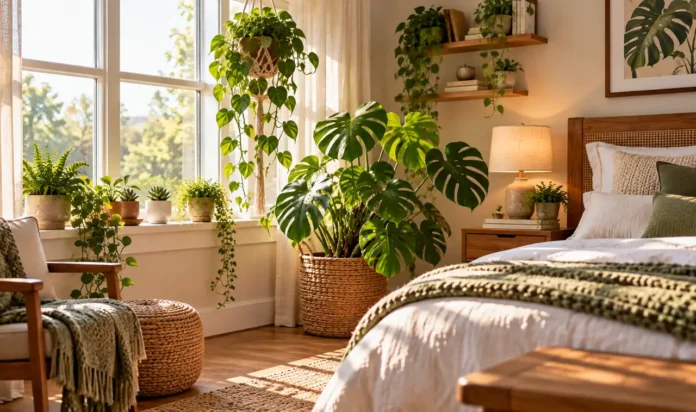


Your bedroom should feel like the calmest room in your home, but most of them don’t. They collect laundry chairs, dusty corners, and that one sad empty spot by the window. A plant fixes all of that faster than new paint ever could.
The catch is that most people buy the wrong plant first. They grab something pretty at the store, stick it in a dark corner, and wonder why it gives up two weeks later. These Bedroom Plant Décor Ideas skip that whole cycle. Every idea here pairs the right plant with the right spot, so your room looks alive instead of abandoned.
You don’t need a green thumb or a big budget. You need about twenty minutes, one trip to a nursery, and the willingness to water on a schedule. Some of these ideas take up zero floor space. Others turn a forgotten corner into the best seat in the house.
Start at the top and pick the three that fit your room. By tonight, your bedroom will feel fresher.
Related: greenery bedroom ideas
1. Anchor an Empty Corner With One Big Snake Plant
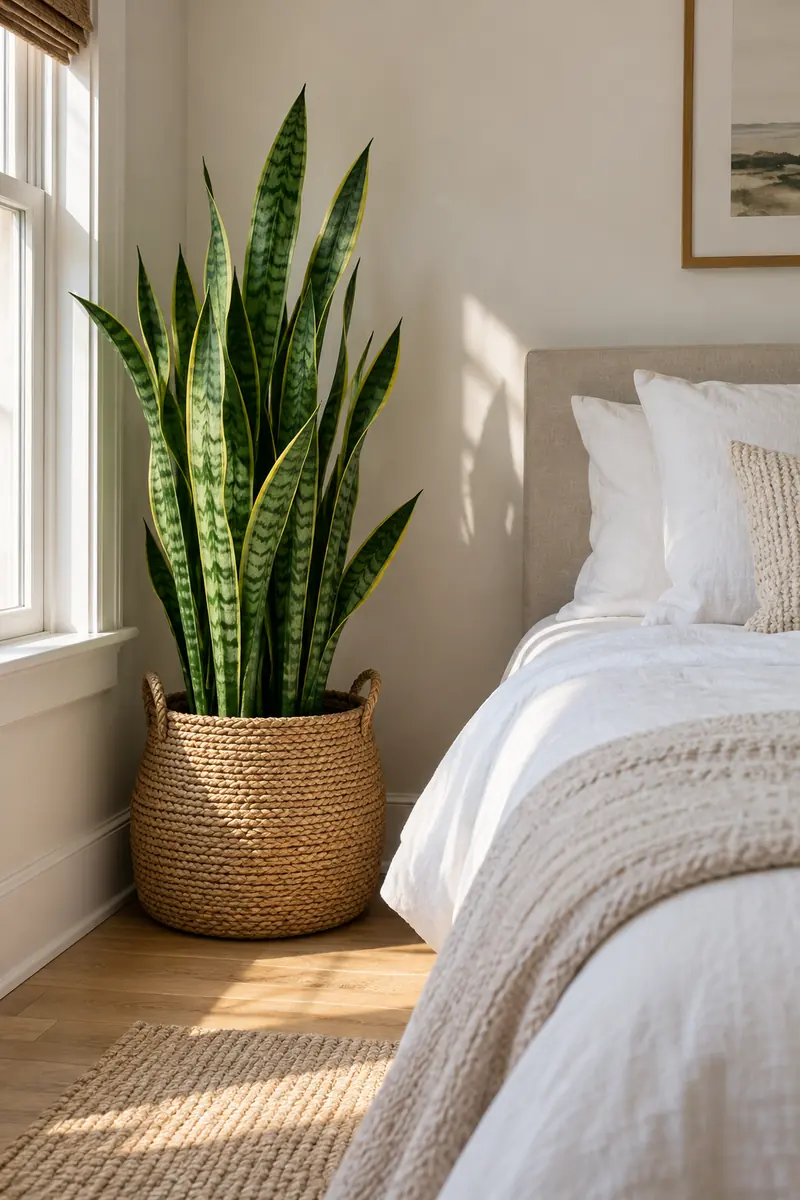
Every bedroom has that one corner where nothing seems to fit. A dresser crowds it, a chair looks lost, so it just sits there collecting dust. A tall snake plant solves it in one move. Its stiff, upright leaves grow straight up instead of sprawling out, which means it fits tight spots without brushing the walls.
Snake plants also forgive beginners. They handle low light, survive missed waterings, and only ask for a drink every two to three weeks. Drop it in a woven basket to hide the nursery pot, and that dead corner suddenly looks intentional. One plant, ten minutes, done.
2. Let a Golden Pothos Trail Over Your Nightstand
A nightstand is all hard edges: a lamp, a book, a phone charger. Draping a golden pothos over the side softens the whole thing instantly. The heart-shaped leaves catch the lamplight, and the vines spill down in a way that makes even a cheap table look styled.
Pothos might be the easiest plant you will ever own. It tolerates low light, bounces back from dry soil, and grows fast enough that you will see new leaves within weeks. Snip a vine, stick it in water, and you get a free second plant for the dresser. That is a lot of payoff for almost no work.
3. Turn the Windowsill Into a Succulent Row
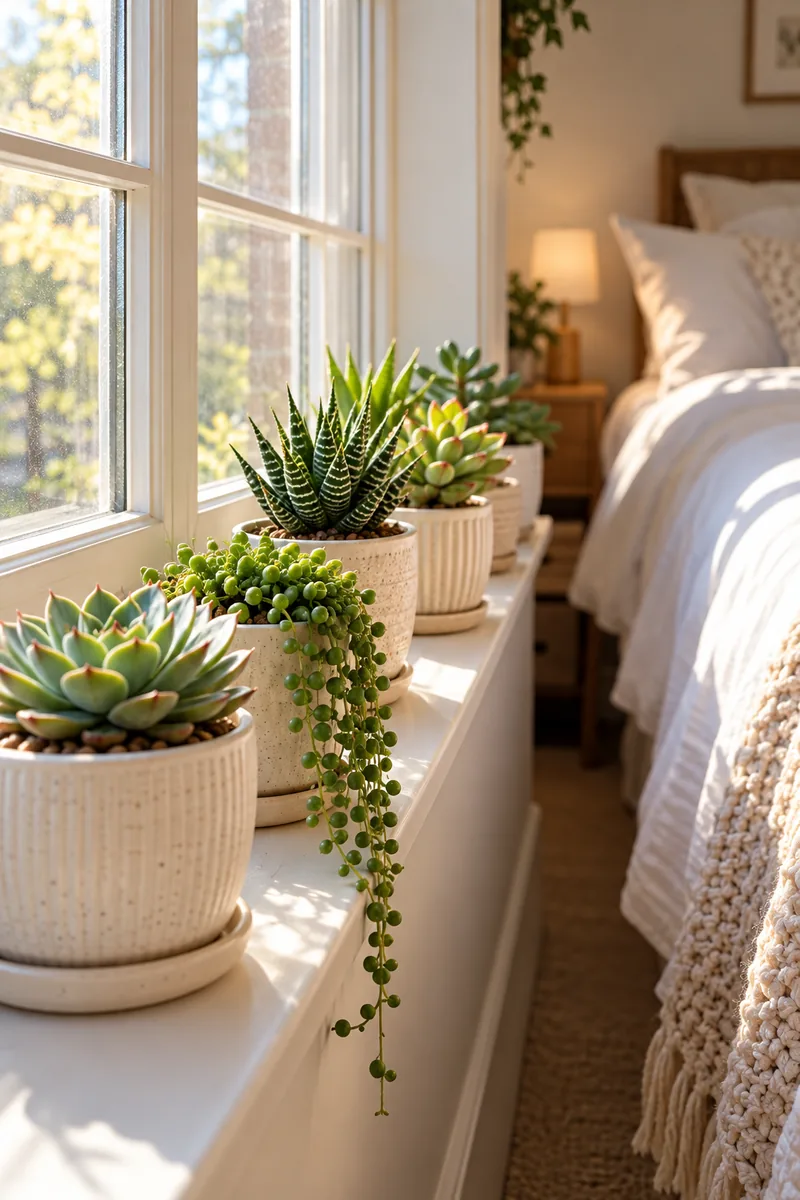
Windowsills are wasted space in most bedrooms. Line yours with small succulents and it becomes a little gallery that needs almost nothing from you. Pick pots in one color family, cream or terracotta work well, so the row looks collected rather than random.
Give them the sunniest sill you have and water only when the soil is bone dry. That is the whole job. Echeveria rosettes, jade plants, and haworthia all stay compact, so they never outgrow the ledge. If a leaf drops, leave it on the soil. It often sprouts roots and hands you a free plant.
4. Frame the Headboard With Two Tall Plants
Look at your headboard. Now look at the wall space on either side of it. Two tall plants there pull the eye upward and make the bed feel like the centerpiece it should be. Symmetry does the heavy lifting, so the rest of the room can stay simple.
A fiddle leaf fig on each side is the classic move, but a bird of paradise or a tall dracaena works just as well and forgives more mistakes. Keep the pots matching for a calm look, or mix textures if your bedding is plain. Either way, the bed stops floating in an empty room and starts feeling anchored.
5. Raise a Small Plant on a Wooden Plant Stand
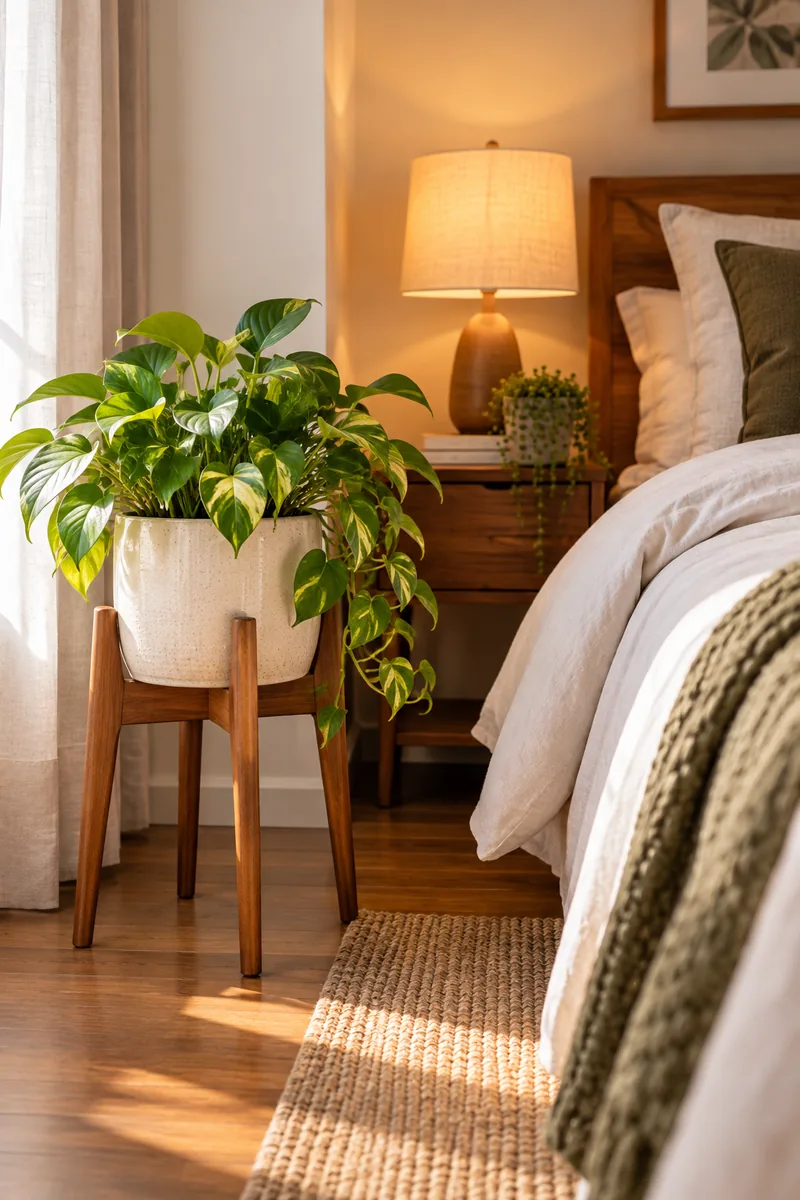
Small plants disappear on the floor. Lift one onto a wooden stand and it suddenly reads as decor instead of an afterthought. The stand adds six to ten inches of height, which puts the leaves at eye level when you walk in. That small shift changes how the whole corner feels.
Match the stand to your furniture and the plant becomes part of the room, not a guest in it.
- Light oak stands suit pale, airy bedrooms
- Dark walnut stands ground bolder, moody rooms
- Rattan stands add texture without visual weight
6. Run a Heartleaf Philodendron Along a Floating Shelf
Above the desk or the dresser, a floating shelf usually holds a candle and not much else. Run a heartleaf philodendron along it and the shelf earns its place. The vines trail down over the edge, softening the straight line of the wood, and the heart-shaped leaves add shape without clutter.
Philodendrons ask for very little: indirect light and water when the top inch of soil dries out. Every few months, trim the longest vines and tuck the cuttings back into the pot. They root on their own and the plant grows fuller. One shelf, one plant, and a corner that used to be boring now has movement.
7. Cluster Plants in Odd Numbers for a Styled Look
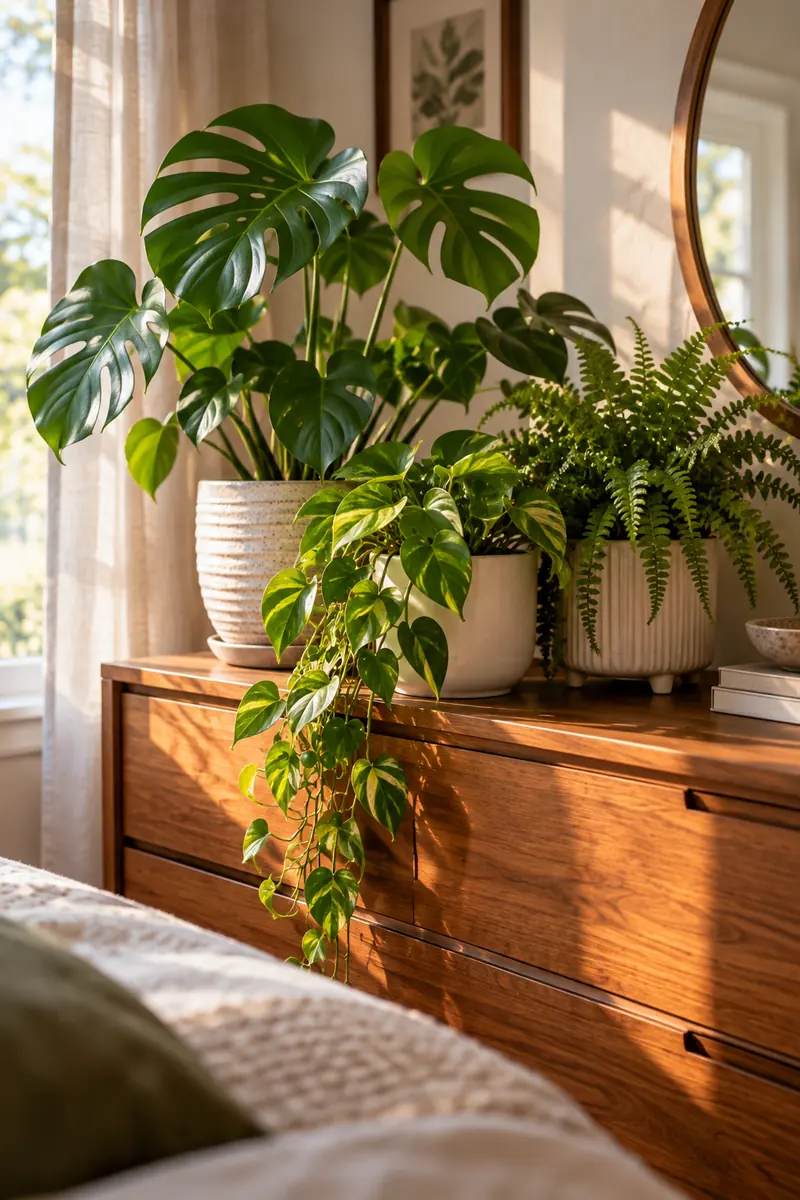
Most people place one plant per spot and call it done. That is why their rooms look a bit sparse. Designers group plants in threes or fives because odd numbers look intentional to the human eye, while even numbers look like you just set things down.
Build a cluster with three different heights: something tall in back, something bushy in the middle, something trailing in front. Keep the pots in the same material so the group reads as one arrangement. A dresser top, a wide windowsill, or the floor by an armchair all work. Three plants together always look like a decision.
8. Add a Prayer Plant to the Dresser for Pattern
The dresser is where style goes to die under a pile of chargers and half-read books. A prayer plant rescues it. Its oval leaves carry bold patterns in green, cream, and rust, and they fold upward at night like hands, which is how it earned its name.
It likes medium indirect light and slightly damp soil, nothing dramatic. Set it slightly off-center so it does not fight the lamp for attention. Guests always ask about it. It is the rare plant that works as both greenery and art, and it costs less than a takeout dinner.
9. Hang Macramé Planters to Free Up Surfaces
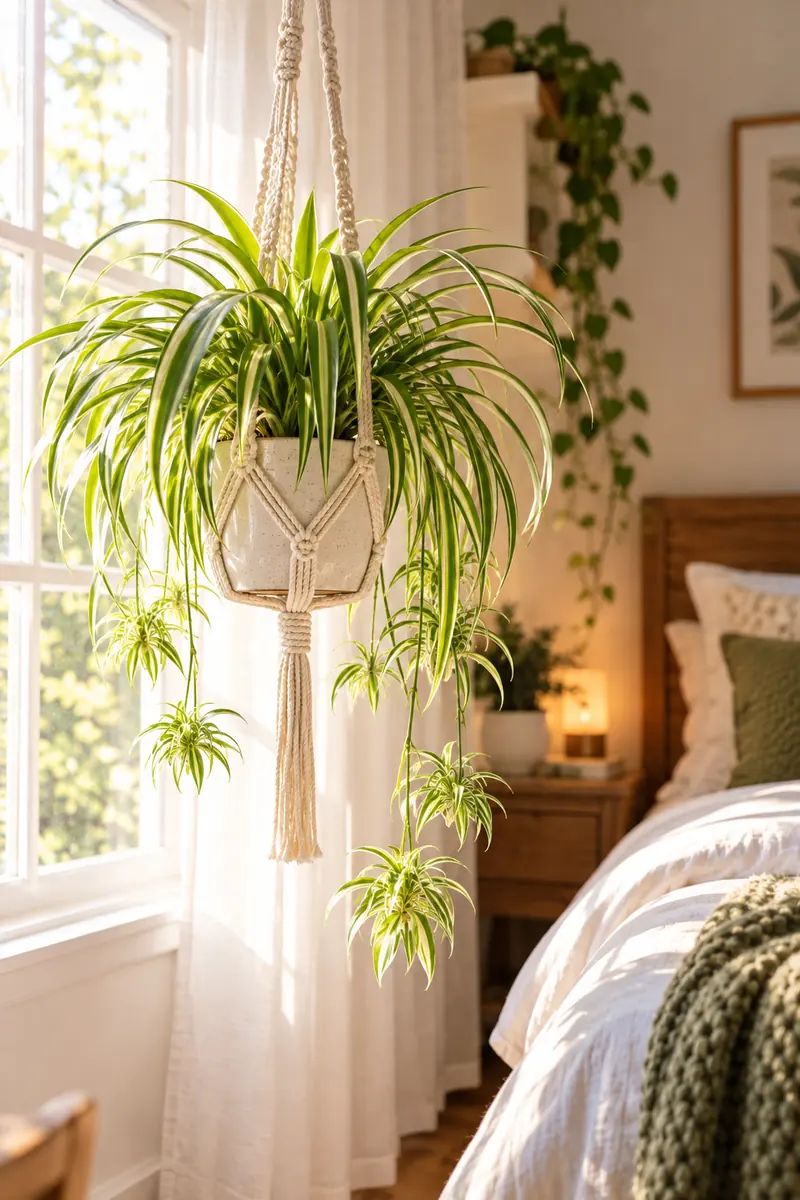
When every surface is taken, the only way is up. Macramé hangers let you add plants without sacrificing a single inch of dresser or nightstand. A spider plant is the classic pick because its striped leaves arc outward and baby offshoots dangle like a living chandelier.
Hang it in front of the window where it gets bright indirect light, and keep the bottom of the pot at about eye level so you can check the soil easily. Water when dry, snip the brown tips, and let it do its thing. Three hangers at staggered heights turn a plain window into a feature.
Keep reading: small-bedroom plant ideas
10. Rescue the Dark Corner With a ZZ Plant
Here is the mistake almost everyone makes: they buy a sun-loving plant and stick it in the darkest corner of the bedroom. Two weeks later it is a brown memory. The ZZ plant exists for exactly that corner. Its waxy, dark green leaves tolerate low light better than almost anything you can buy.
It also thrives on neglect. The thick rhizomes under the soil store water, so missing a watering or three will not faze it. Give it a drink about once a month, less in winter, and wipe the leaves now and then. That dark corner finally gets something alive, and you get a plant that asks for nothing.
Let the soil dry fully between waterings.
Wipe the leaves monthly so they stay glossy.
Watering on a fixed weekly schedule.
Blasting it with harsh direct sun all day.
11. Keep Dried Lavender by the Bed for Scent
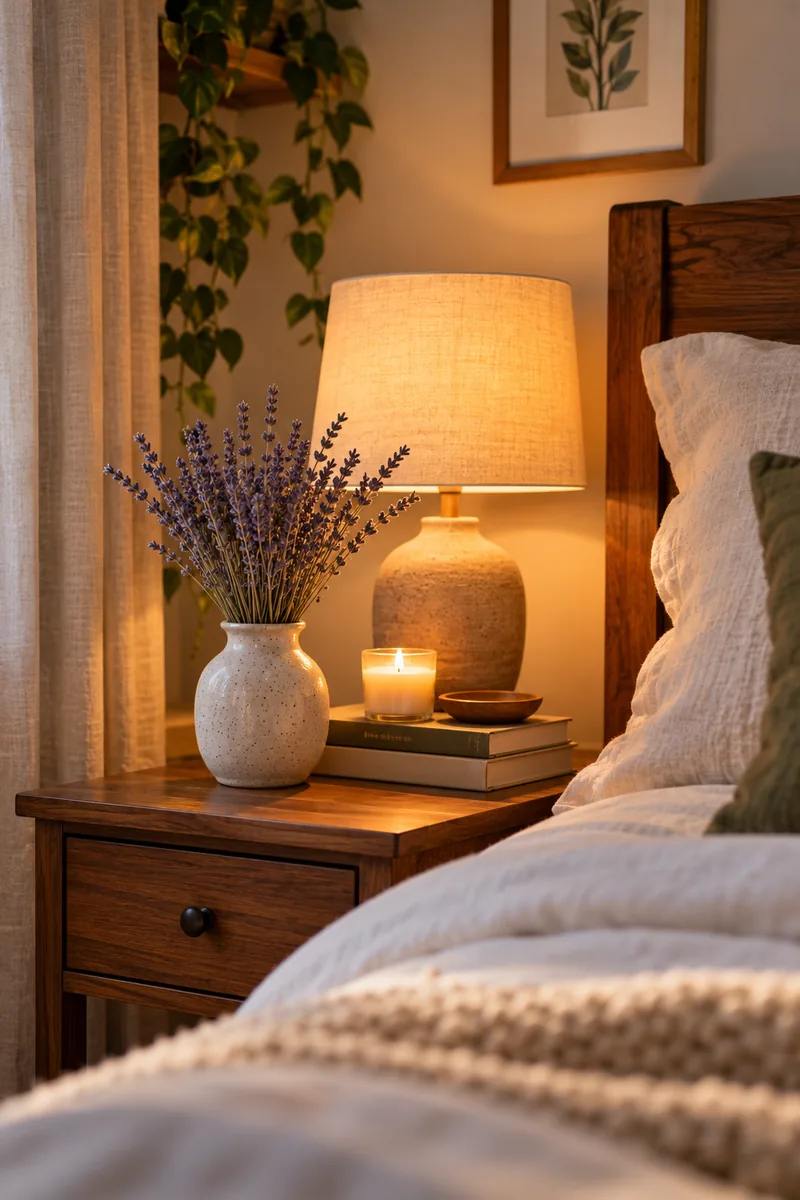
Live plants are not the only greenery that belongs in a bedroom. A small bundle of dried lavender on the nightstand adds scent without any care at all. No watering, no light requirements, no guilt when you travel for a week.
The smell does real work too. Lavender is tied to calmer evenings for a lot of people, so catching that scent when you turn off the lamp becomes part of the wind-down. Tie the bundle with twine, trim the stems even, and replace it when the scent fades in a few months.
- Keep it in a bud vase so the stems stay upright
- Tuck a sprig inside your pillowcase for stronger scent
- Pair it with eucalyptus for a fuller arrangement
12. Fill a Ladder Shelf With a Plant Collection
A ladder shelf leaning against the wall is basically a staircase for plants. Each rung gets its own resident, and the whole thing reads as one big styled moment instead of five random pots. Start with the tallest plant at the bottom and work up to the smallest at the top.
Mix leaf shapes so it does not blur together: a fern next to a snake plant next to a trailing pothos. Keep two or three pots in the same finish to tie it all together. Watering day takes five minutes because everything is in one place. It is the fastest way to look like a plant person.
13. Brighten the Desk With a Tiny Cactus Trio
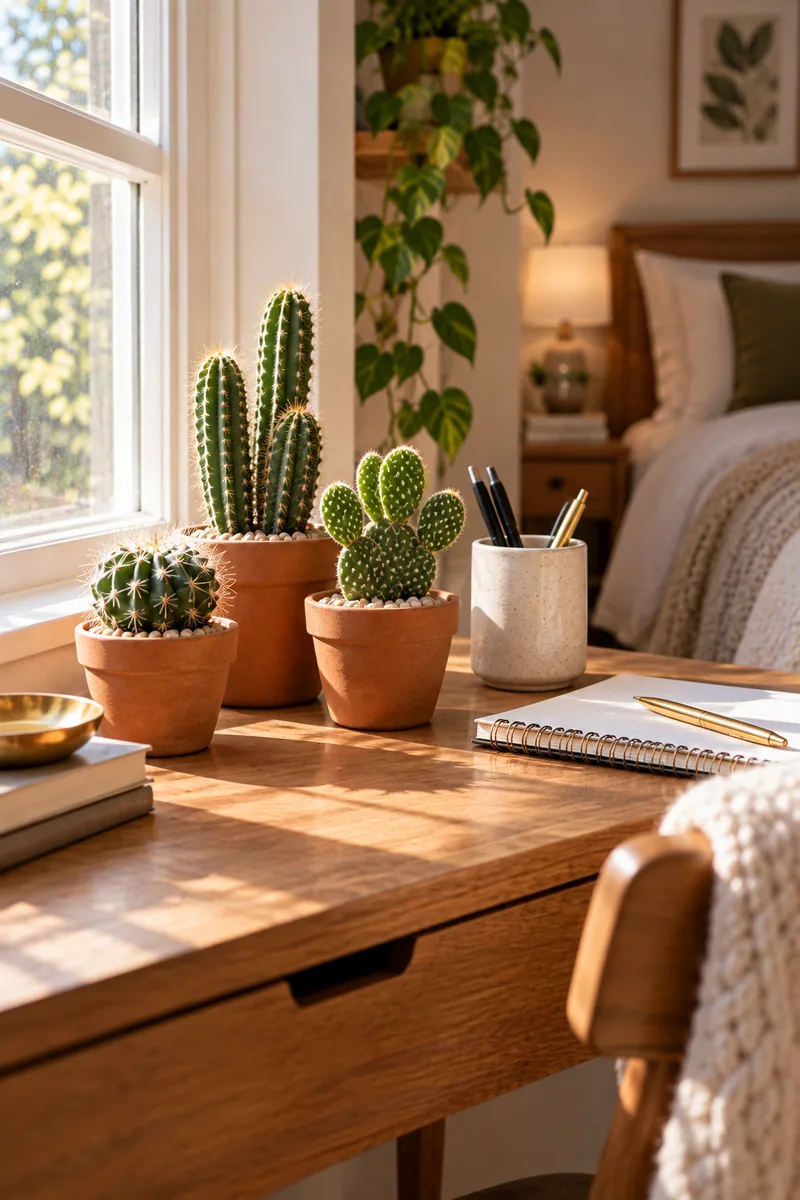
My desk used to be the saddest corner of my bedroom: laptop, charger, done. Three tiny cacti changed that. They take up less space than a coffee mug, and their sculptural shapes make the whole desk feel considered instead of purely functional.
Cacti want what desks near windows already offer: bright light and neglect. A sunny sill or a spot a foot from the glass is ideal. Water deeply but rarely, then leave them alone. Pick three different shapes, a round one, a tall one, a clustered one, and line them up like a tiny gallery.
14. Soften the Mirror Edges With Trailing Vines
A mirror already bounces light around the room. Add trailing vines along its edges and it bounces greenery too, which quietly doubles the number of plants your eye registers. A pothos or philodendron trained along the top corners works beautifully.
Use small clear adhesive hooks to guide the vines where you want them, and trim any stem that blocks the glass itself. Keep the vines to the frame so the mirror stays usable. The effect is subtle during the day and lovely at night, when lamplight catches the leaves in the reflection.
A bare mirror with hard edges bouncing plain light around the room.
Vines soften the frame and the reflection quietly doubles your greenery.
15. Go Bold With a Monstera in a Woven Basket
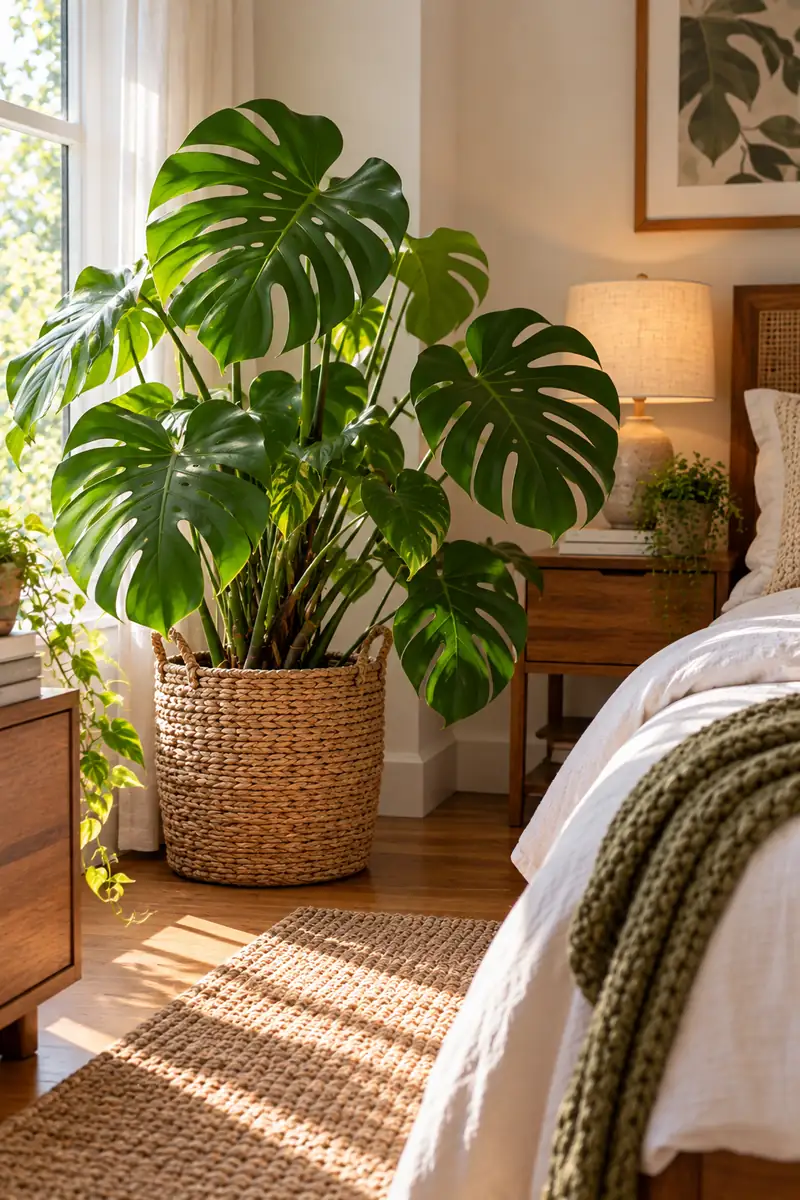
If one plant could change a whole room, it would be the monstera. Those big split leaves read as instant jungle, and a single healthy plant fills a corner that would otherwise need three smaller ones. It is the highest impact move on this list.
Monsteras like bright indirect light and a drink when the top two inches of soil dry out. They also like something to climb, so a moss pole keeps new leaves growing large. Drop the nursery pot inside a woven basket and the whole thing looks like it came from a boutique.
- Bright indirect light keeps the leaf splits coming
- A moss pole encourages bigger new leaves
- Wipe the leaves monthly so they photosynthesize well
16. Swap Plastic Pots for Natural Baskets
Here is a comparison worth making: the same plant in a black plastic nursery pot versus a seagrass basket. The plant has not changed, but the room feels completely different. Baskets add texture and warmth that plastic never will, and they hide the utilitarian pot underneath.
You do not need to repot anything. Just set the nursery pot inside a basket that is slightly larger, and add a plastic liner if you are worried about water. Thrift stores are full of baskets for a few dollars. It is the cheapest upgrade in this entire list, and the effect is immediate.
17. Build a Reading Nook Plant Corner
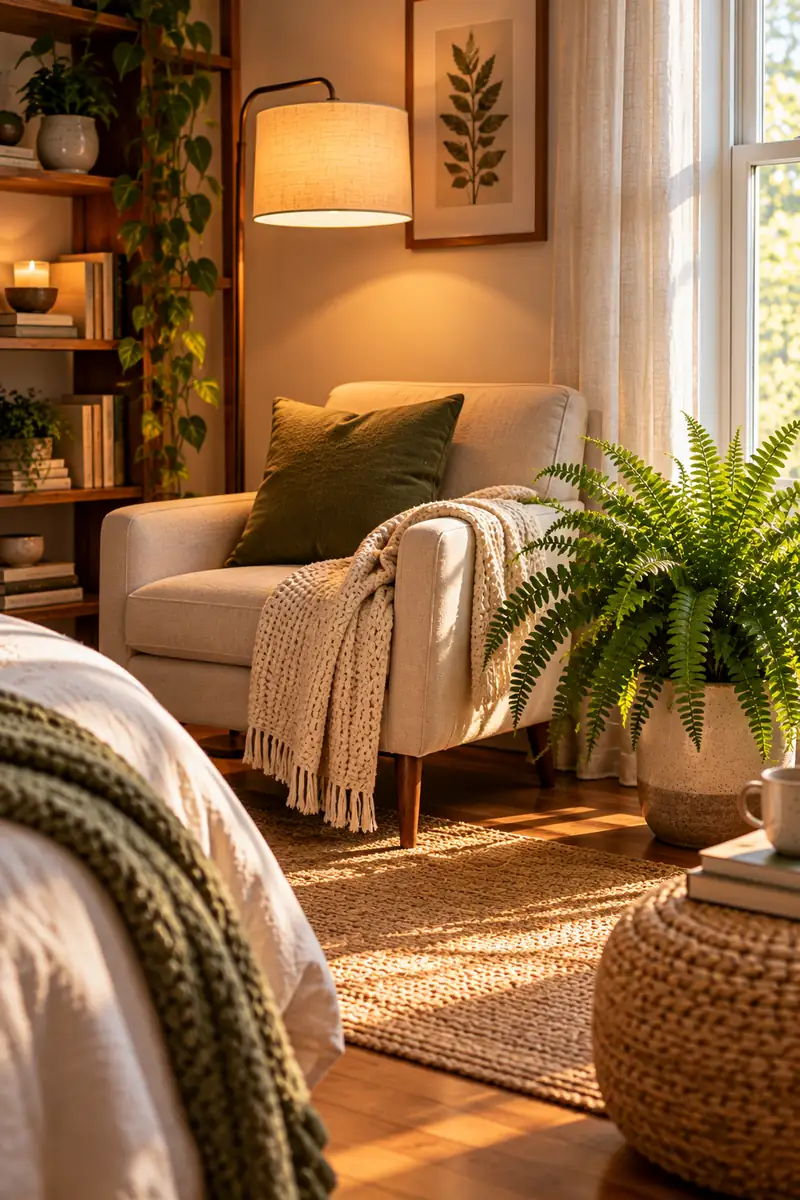
That chair in the corner could be the best spot in your bedroom if it had a little company. Tuck a lush fern beside it, add a small side table, and suddenly you have a reading nook instead of a chair. The plant makes the corner feel sheltered, like a tiny indoor garden.
Boston ferns love this setup because they enjoy the indirect light near a chair and the humidity of a lived-in room. Keep the soil lightly moist and mist the fronds now and then. Add a throw blanket, and the nook becomes the place everyone gravitates toward.
18. Add a Bird’s Nest Fern for Soft Texture
Most bedroom plants have straight or pointed leaves. A bird’s nest fern breaks that pattern completely with wide, wavy fronds that ripple outward like a green fountain. That texture contrast is what makes a plant collection look designed instead of accidental.
It wants bright indirect light and soil that stays lightly moist, never soggy. Bathrooms are ideal, but a bedroom works fine if you mist the fronds a few times a week. Place it where its ripples catch the light, on a dresser or a low stool, and let the texture do the talking.
Ferns love humidity. Mist the fronds a few times a week, or set the pot on a pebble tray with water.
19. Water on a Schedule So Plants Actually Thrive
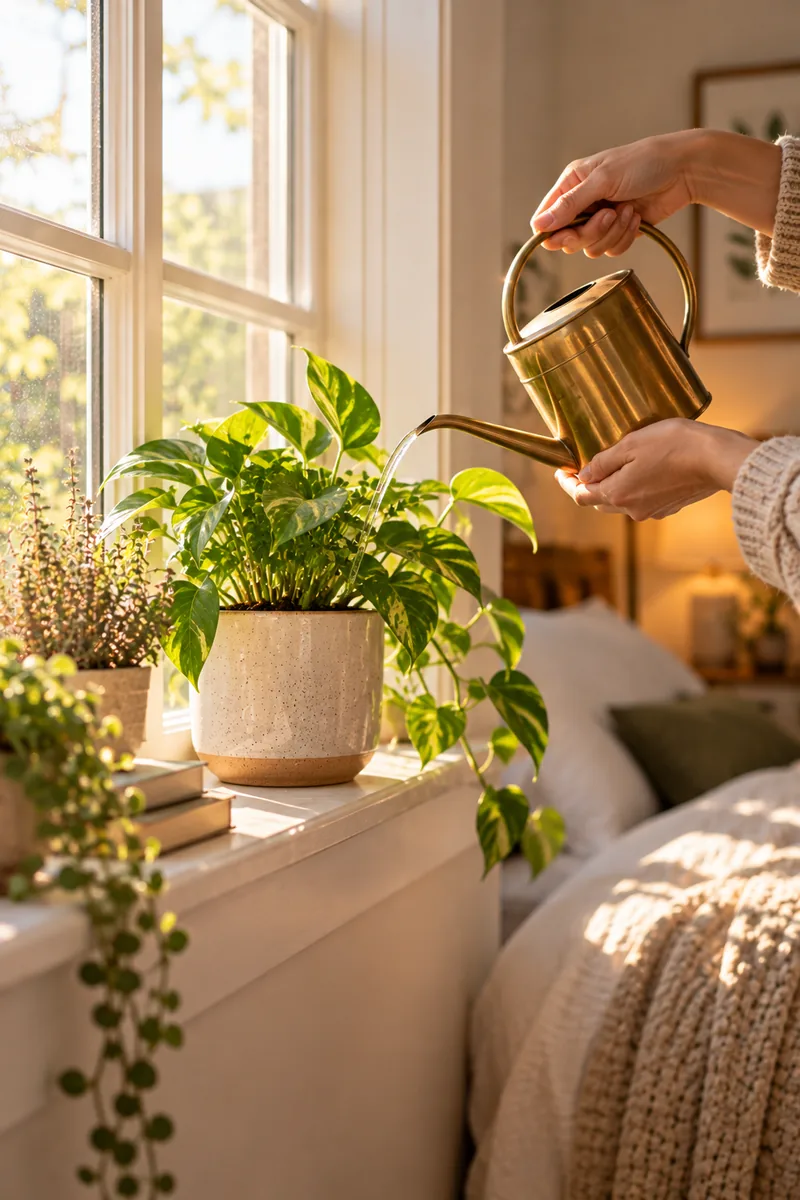
Here is the uncomfortable truth: most houseplants die from random watering, not from neglect or too much attention. One week they drown, the next they bake. A simple schedule fixes it. Pick one day a week, check the soil, and water only the thirsty ones.
Stick your finger an inch into the soil. Dry means water, damp means wait. That one habit will keep more plants alive than any fertilizer or fancy pot ever will.
- Watering day: the same day each week
- The finger test: dry one inch down means water
- Empty saucers so roots never sit in water
20. Start Small if You’re New to Plants
There is a common belief that a plant-filled bedroom requires ten plants and expert skills. It does not. One forgiving plant, a snake plant or a pothos, teaches you everything: how light moves through your room, how fast soil dries, what a thirsty leaf looks like.
Once that first plant thrives for a few months, adding a second feels easy instead of risky. Confidence compounds. Start with the one plant you cannot kill, learn its rhythms, and let the collection grow at your pace. Every jungle started with a single pot.
Your bedroom does not need a renovation to feel new. It needs something alive in the corners, something trailing near the window, something green catching the morning light. Pick the two or three ideas that fit your space and your light, and give them a month. Plants reward patience quietly.
Start tonight by moving one plant to a better spot. That single small change usually sparks the next one. Before long, the room feels like yours again, calmer and fresher without spending much at all.
If you found an idea worth trying, save this post to your bedroom board on Pinterest so it is there when you are ready.
More ideas: low-light bedroom plants