



Every fall, the same thing happens. You see a photo of a woman in a plaid sweater under a camel blazer, a wool coat over that, and she looks sleek and put-together. You try it at home and the mirror shows someone else entirely: wide shoulders, no waist, sleeves that will not stay put. Learning how to layer a plaid sweater the right way changes that picture completely.
The problem is never the sweater. It is the order, the weights, and the fit of everything around it. Most women pile a thick sweater over a thick shirt, then add a boxy coat, and wonder why the result feels heavy. A layered outfit should move with you, not fight you.
This guide walks you through a nine-step method that keeps every layer thin where it counts and structured where it shows. You will end up with an outfit that looks polished from the front, the side, and sitting down. The hands-on time is about 15 minutes once your pieces are picked out, and the difficulty is beginner. If you are still hunting for the right sweater first, browse these plaid sweater outfits for ideas, then come back. By the last step, you will have a repeatable formula for any cold morning from 50°F down to freezing.
One promise: nothing here needs a new wardrobe. Each step works with pieces you already own and takes a minute or less. Lay your pieces on the bed in the order below, then get dressed.
What You Need
- A thin, fitted base layer (120–150 GSM thermal or long-sleeve tee)
- A plaid sweater in medium weight (200–300 GSM), fine or medium knit
- A structured blazer or tailored vest
- A slim belt, 1 to 1.5 inches wide
- A streamlined wool or wrap coat
- Dark straight-leg jeans or trousers
- Ankle boots
- A full-length mirror
At a Glance: The 9 Steps
- Start with a thin, fitted base layer
- Choose a medium-weight knit
- Apply the thin-to-thick rule when you layer a plaid sweater
- Add a structured blazer or vest over the sweater
- Define your waist with a belt
- Pick a coat that skims, not swallows
- Balance cropped layers over longer ones
- Tame the sleeves and hems
- Do a final bulk check in the mirror
Why does this order work? Each step removes one source of bulk before the next layer goes on. By the time the coat closes over everything, there is nothing left to bunch, ride up, or stick out. Follow the steps in order and do not skip ahead.
A quick note on fit: every piece should skim your body with about half an inch of ease, no more. If you can pinch more than an inch of fabric at the side seam, that piece is too roomy to layer cleanly and will add visual weight no matter what sits over it. When trying on, button or zip everything fully first, because a piece that fits open can still pull once closed.
Start With a Thin, Fitted Base Layer
The bulkiest-looking outfits usually fail at the very first layer. Pull on a fitted thermal top or a snug long-sleeve tee in a 120 to 150 GSM fabric that sits flat against your skin. This base does two jobs: it keeps you warm so your middle layers can stay thinner, and it gives every layer above it a smooth surface to glide over instead of catching. Watch for a base that is even slightly loose, because extra fabric gathers under the sweater and shows as lumps at the waist. A fitted turtleneck or bodysuit works the same way.

Choose a Medium-Weight Knit
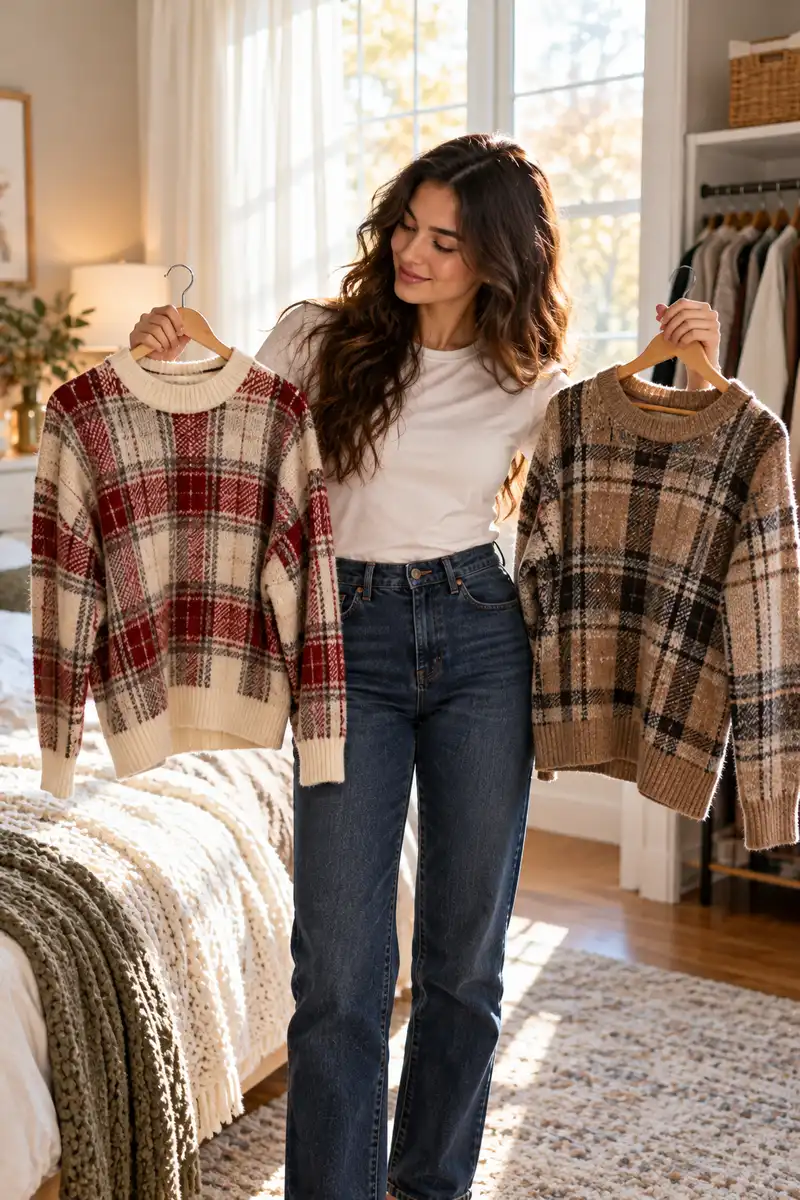
If your sweater could stand up on its own, it is too thick for layering. Reach for a plaid sweater in a 200 to 300 GSM medium weight with a fine or medium knit, the kind that drapes when you hold it up rather than holding its shape. Heavy cable knits are beautiful on their own, so save yours for solo wear and see these oversized plaid sweater outfits for ways to style thick knits without layers. A medium knit still reads as cozy and autumnal, but it folds flat under a blazer instead of fighting it.
Apply the Thin-to-Thick Rule When You Layer a Plaid Sweater
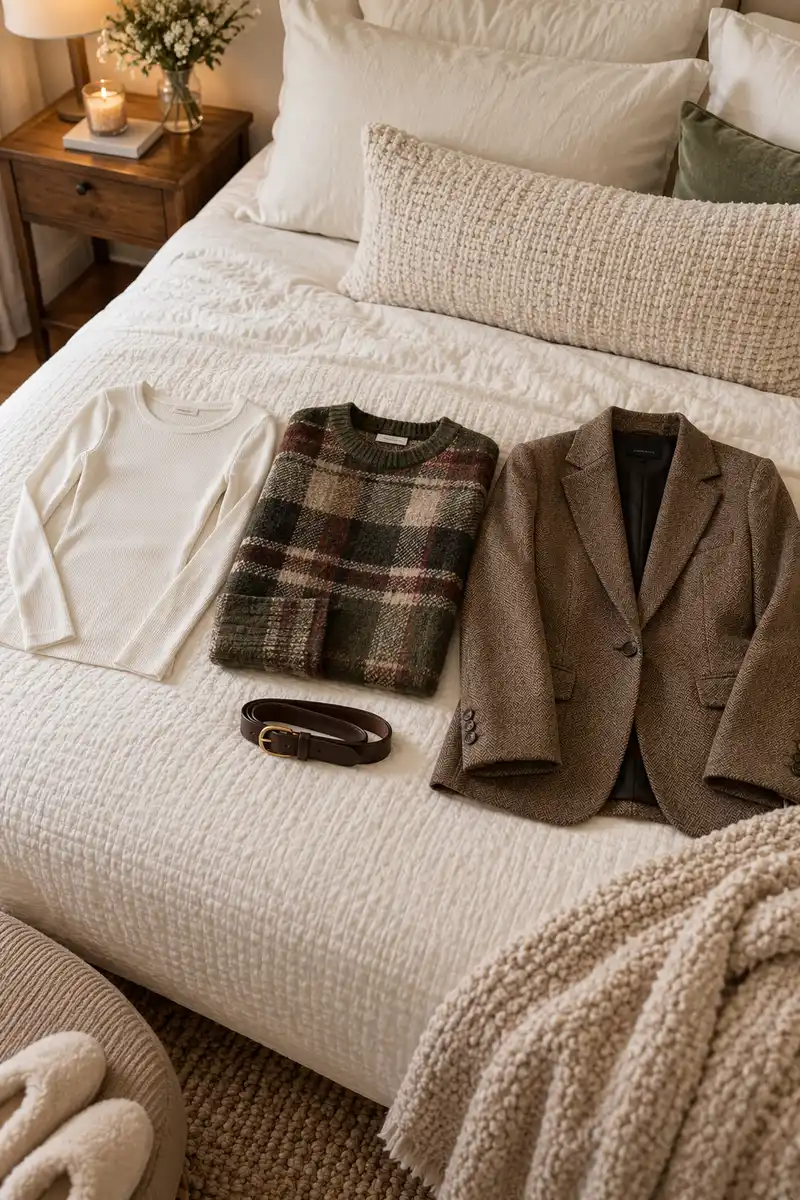
Every layer should be slightly thicker than the one beneath it. Your thin base goes first, the medium plaid sweater second, and anything structured on top of that. This order matters because a thick layer trapped under a thinner one has nowhere to go, so it bunches at the elbows and waist. When the order runs thin to thick, each piece lies flat and the eye sees one clean silhouette. Before moving on, run your hands down your sides. If you feel ridges, something is out of order.
Add a Structured Blazer or Vest Over the Sweater
One structured piece changes the whole silhouette. Pull on a tailored blazer with defined shoulders, or a quilted vest if the day is milder, and let it do the shaping work your knit cannot do alone. Structure on the outside tells the eye where your frame actually is, which is exactly what soft layers blur. Keep the blazer unbuttoned or half-buttoned so the plaid stays visible at the center, because hiding the sweater defeats the point. A sleeveless long vest works as an alternative when blazers feel too formal for your plans.
Define Your Waist With a Belt
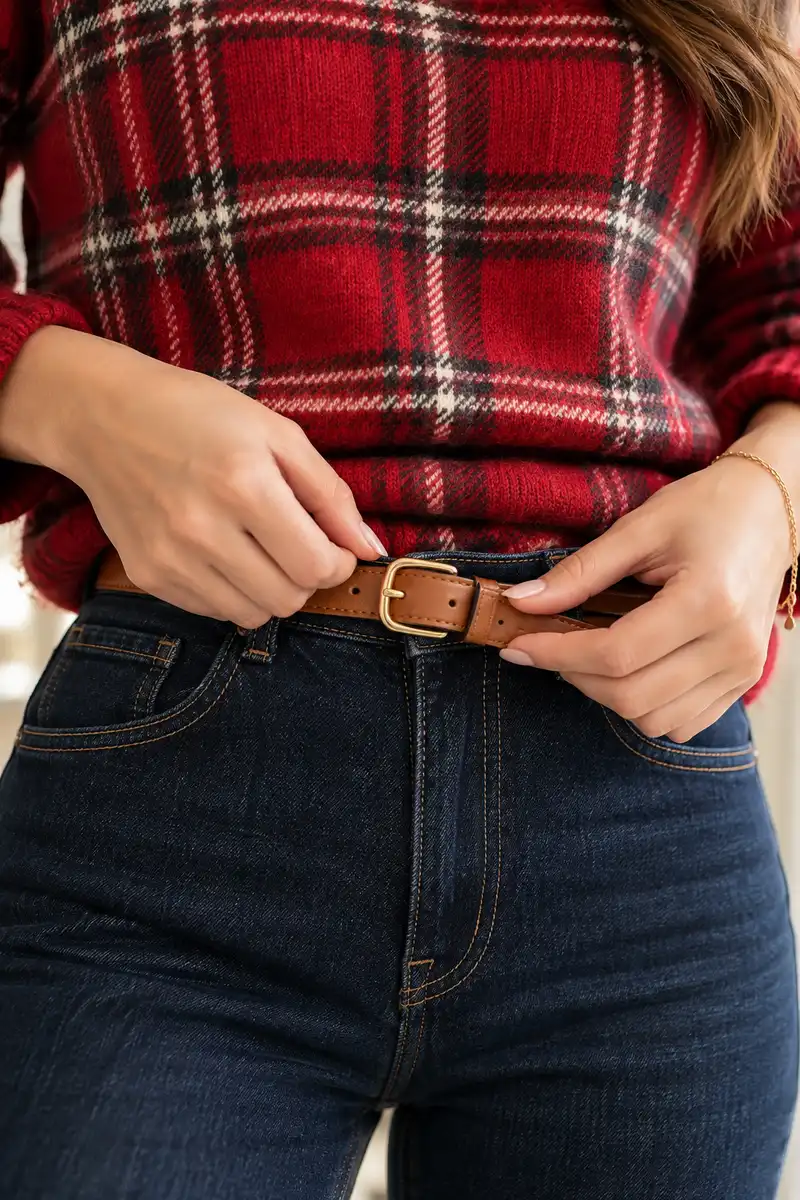
Layers hide the waistline, so you have to put it back. Fasten a slim belt, 1 to 1.5 inches wide, over the sweater at your natural waist, which sits about 2 inches above your navel on most women. The belt creates a visible anchor point that breaks the outfit into proportions instead of one long column of knit. Do not belt over the thickest part of the sweater, or the leather will roll and dig. A thin leather belt reads polished, while a fabric sash keeps the mood relaxed.
Pick a Coat That Skims, Not Swallows
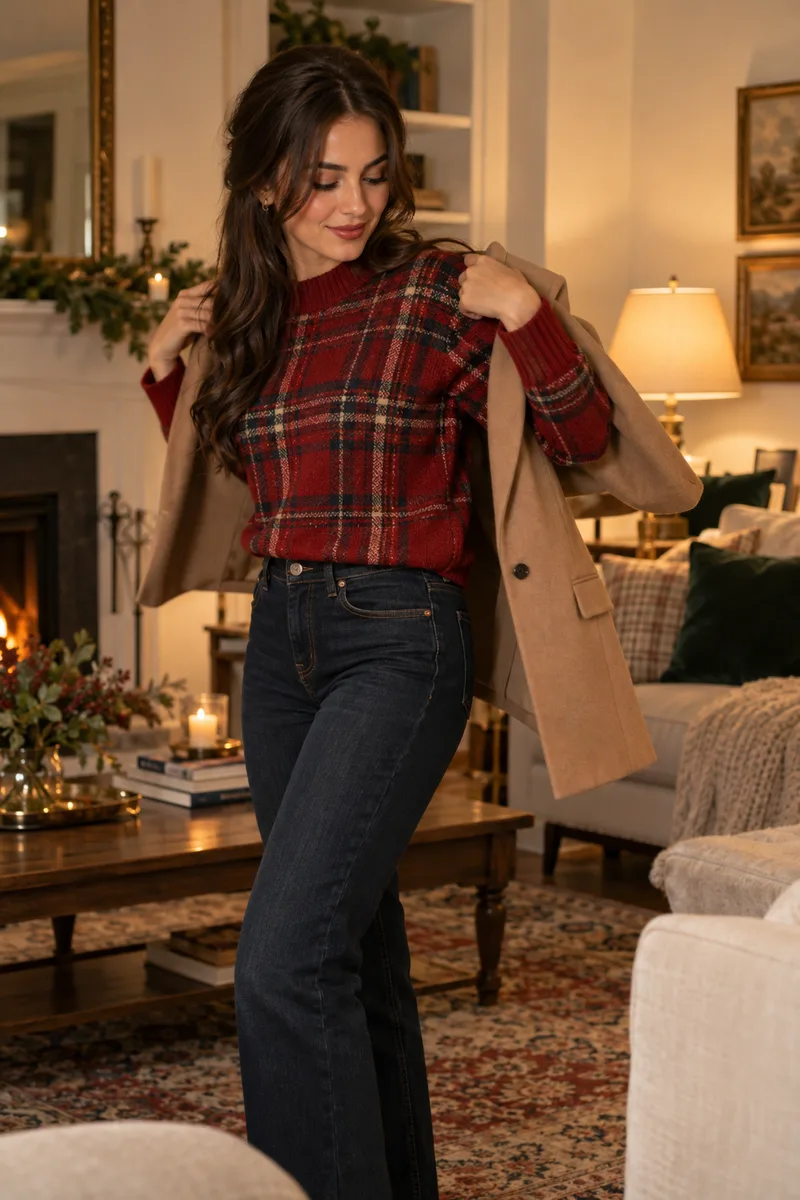
Below 40°F, you need real outerwear, and this is where most layered outfits fall apart. Choose a single-breasted wool coat or a wrap coat with minimal padding, cut close enough to skim your blazer without pressing it flat. The classic failure here is throwing a puffer over everything, which erases all the careful shaping from the earlier steps in one move. Check the shoulder seams in the mirror: they should sit at your actual shoulder line, not droop halfway down your arm. A belted wrap coat is a strong alternative because its tie does the waist-defining work for you.
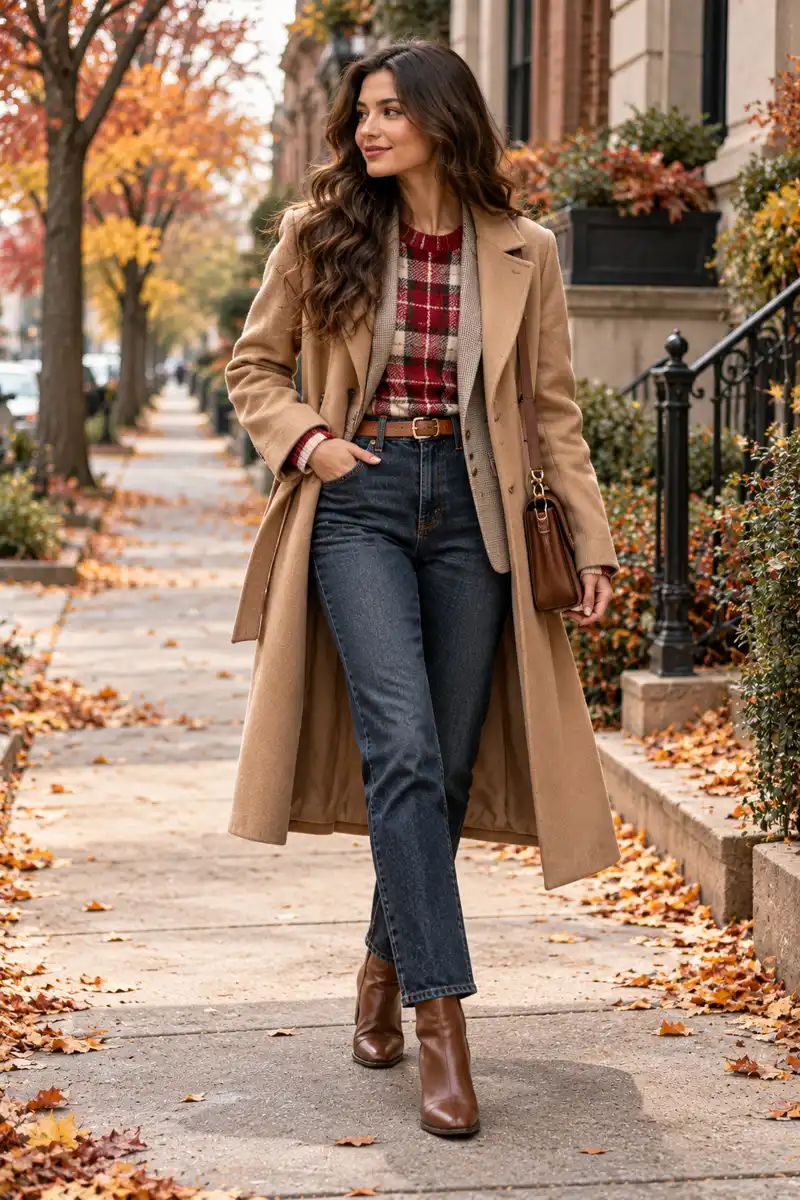
Balance Cropped Layers Over Longer Ones
The eye reads the shortest visible hem first, so use that to your advantage. Let the plaid sweater hem peek out 2 to 3 inches below a cropped blazer, or wear a longer sweater under a shorter vest for a clear staggered line. When every layer ends at the same point, the hems stack into a thick band that reads as bulk around the hips. Staggering breaks that band into separate, intentional lines. For more long-layer ideas, look through these plaid cardigan outfits and notice how the longest piece usually sits closest to the body.
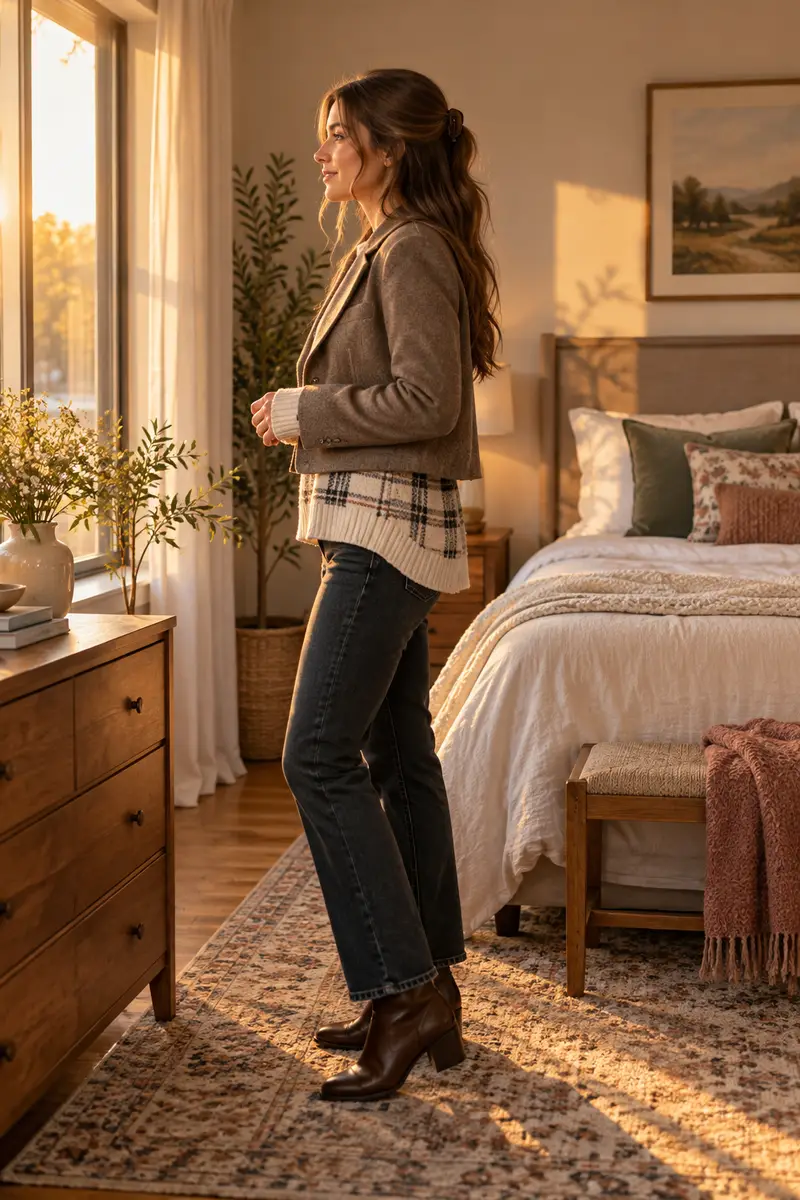
Tame the Sleeves and Hems
Push or roll the sweater sleeves up so 2 inches of the base layer shows at the wrist, then do the same check at the blazer cuff. Visible slivers of each layer signal intention, while sleeves that all end in one thick cuff look heavy. Smooth the sweater hem flat under the belt and let the base layer stay hidden everywhere except the wrists. Bunched sleeves are the fastest way to add visual weight to your arms, so take the extra thirty seconds here.
Do a Final Bulk Check in the Mirror
Stand sideways first, because the side view reveals what the front hides. Sit down, raise your arms overhead, then reach forward. If anything pulls, rides up, or gaps, remove one layer or swap it for a thinner version. Turn a circle and check the back too, since coats pull across the shoulders where you cannot see. Smooth the sweater hem and fix the belt if it shifted. Passing this check means the outfit will behave all day, not only in the hallway mirror.
Common Mistakes to Avoid
Read through these before you start. Each one is a shortcut to the bulky look we are fixing.
1. Layering a chunky cable knit in the middle. Thick knits belong on top of nothing or under nothing. As a middle layer they create lumps no blazer can hide.
2. Skipping the base layer. A sweater worn directly on skin sticks and shifts, and the blazer on top has nothing smooth to slide over. The thin base is doing quiet structural work.
3. Belting over the thickest fold. A belt cinched across bunched knit rolls upward all day. Smooth the sweater flat first, then belt at the natural waist.
4. Ending every hem at the same length. Matching hems stack into one heavy band at the hips. Stagger each layer by at least 2 inches so the eye sees separate, intentional lines.
5. Choosing a coat with dropped shoulders. Dropped shoulder seams push the whole coat outward, adding inches you did not earn. A coat with seams at your true shoulder line keeps all the layers underneath reading slim.
You did it. The mirror now shows the sleek, put-together version of the layered look you have been picturing, and every piece is one you already owned. Wear this formula tomorrow with dark jeans and ankle boots, then try swapping the blazer for a vest when the week warms up. On truly cold days, repeat the same nine steps with a heavier coat and the method still holds, because the order never changes. Now you know how to layer a plaid sweater without the bulk, and that skill works with every knit in your closet. Pin this guide to your fall outfits board so it is waiting the next cold morning you need it. And when a friend asks how you look so pulled-together in four layers, send her the link.
Quick Reference Card
What you need: thin fitted base (120–150 GSM), medium plaid sweater (200–300 GSM), structured blazer or vest, slim belt (1–1.5 in), streamlined coat, dark jeans, ankle boots.
- Thin, fitted base layer first
- Medium-weight knit sweater (200–300 GSM)
- Thin-to-thick order, no exceptions
- Structured blazer or vest on top
- Belt at the natural waist
- Coat that skims below 40°F
- Stagger hems by 2–3 inches
- Show 2 inches of base at the wrist
- Sideways mirror check: sit, reach, adjust