
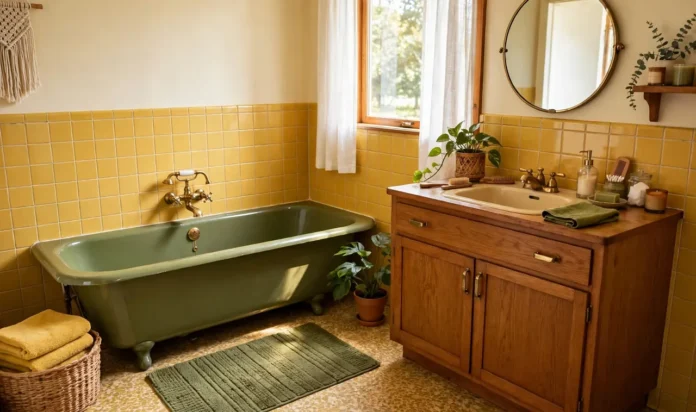


Mustard and olive green are the two colours that define the 70s bathroom. Together they are warm, earthy and unmistakably retro, like a harvest field against a garden hedge. The trick is balance: one colour leads and the other supports, with cream and warm wood to keep the pair from feeling heavy. This mustard and olive green 70s bathroom list shows twenty ways to work the pair into a bathroom, from a full coloured suite to a single towel. Every idea is practical, and most of them cost very little to try.
1. The Pair Itself, One Leading One Supporting
Mustard and olive work best when one colour leads. Pick olive for the big surfaces and mustard for the accents, or the other way round, but do not split them evenly or the room feels split too. A leading colour gives the room its mood, the supporting colour gives it warmth. Cream paint and warm wood sit between them and keep the pair calm. Once you pick a leader, every choice after it gets easier.
2. An Olive Suite With Mustard Tiles
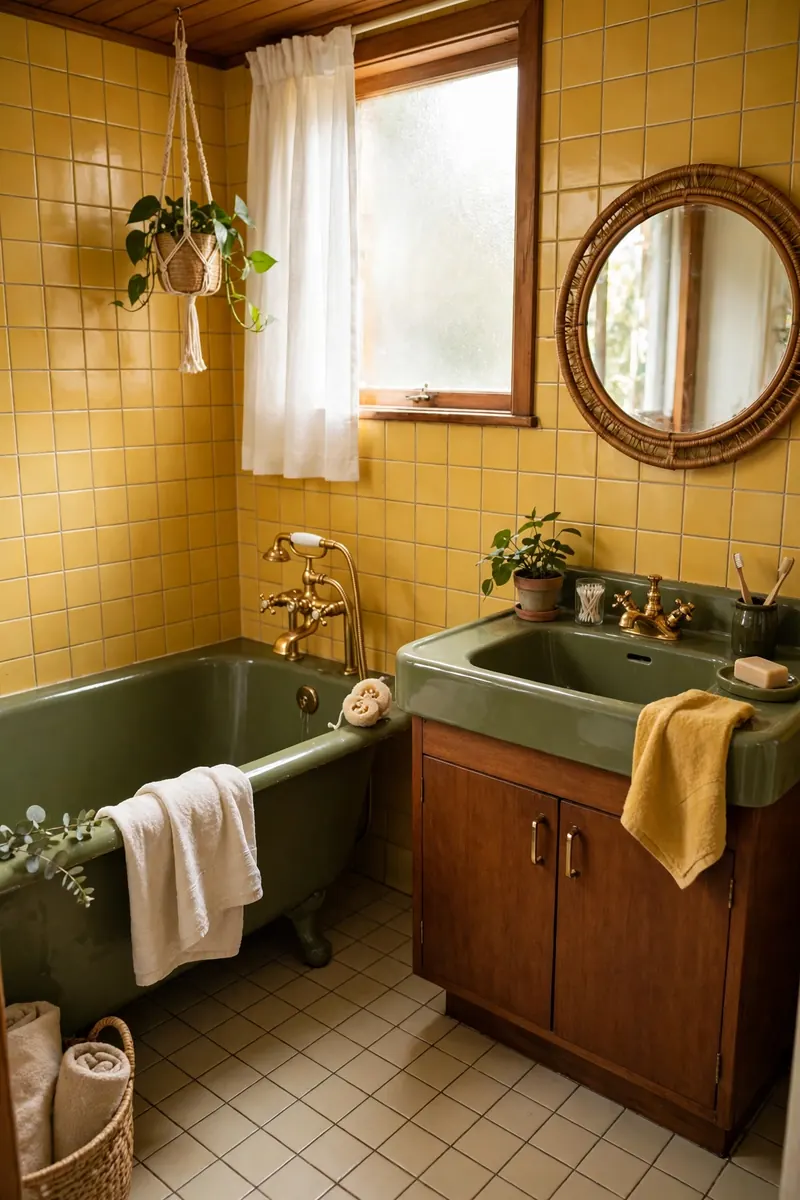
An olive suite with mustard tiles is the boldest version of the pair, and it works because the tiles are small. An olive bathtub and basin with mustard wall tiles bring both colours in at full strength, while cream floor tiles keep the room bright. The mustard tiles catch the light and warm the olive, which can feel cold on its own. If a coloured suite is too much, paint the vanity olive and use mustard tiles instead.
The balance rule
One colour leads, one supports, cream and wood hold the middle. Mustard warms olive, olive steadies mustard, and neither one takes over the room.
3. Mustard Walls, Olive Vanity
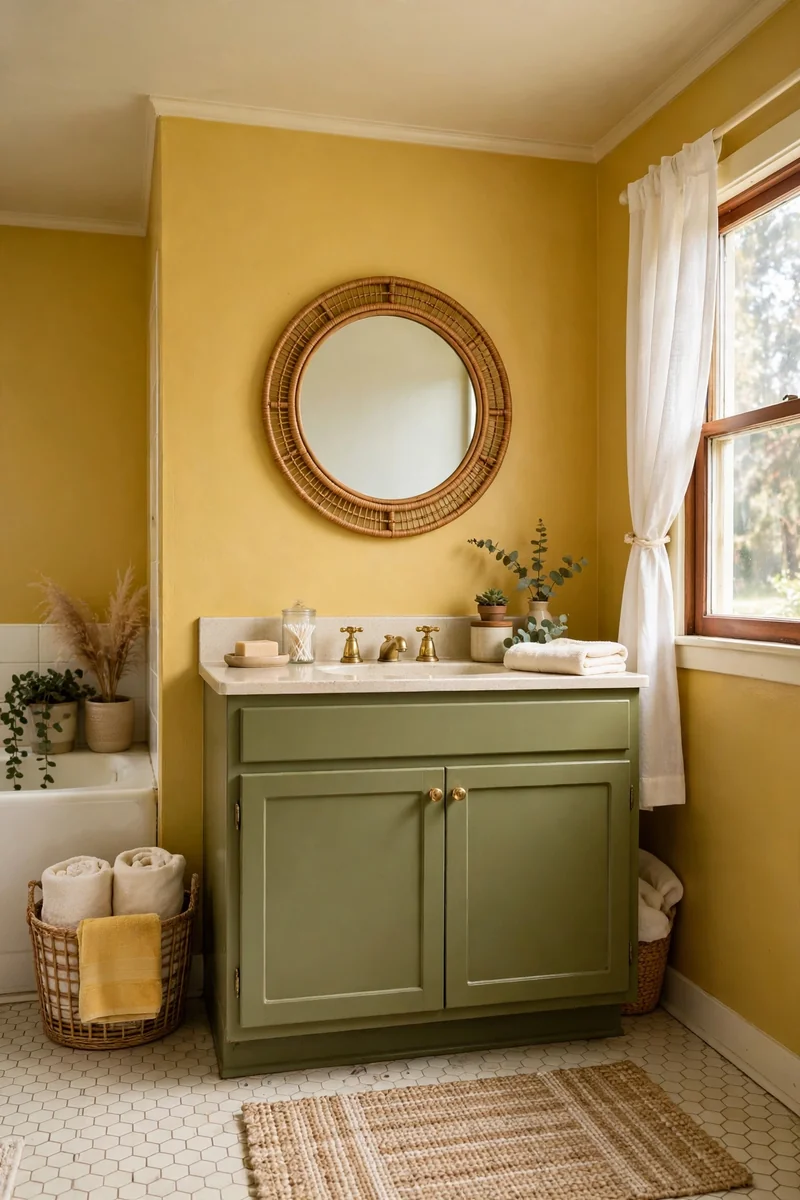
Mustard walls with an olive vanity flip the balance and feel brighter. Muted mustard paint on two walls with cream on the others gives warmth without glare, and an olive vanity grounds the room. The vanity colour repeats in a small detail, maybe the frame of the mirror or the bath mat, so the olive does not appear only once. Warm white light keeps the mustard soft. Keep the ceiling white and the room stays tall.
4. A Two Tone Tile Band
A two tone tile band is the cheapest way to bring both colours onto the wall. Run mustard tiles as a band at eye level with olive tiles above and below, or mustard below and olive above. The band breaks the wall into sections, which makes a small bathroom feel wider. Cream grout keeps the band crisp, and plain floor tiles keep the room calm. A band works in a shower too, where the colours show through steam.
5. Mustard Towels, Olive Bath Mat
Mustard towels with an olive bath mat bring the pair in for the price of linen. The towels hang bright against cream tiles, and the mat grounds the floor. Roll the towels so the mustard shows, and fold the mat if you want less olive. This is the way to test the pair before committing to paint or tile. If the colours feel right after a month, move on to a bigger piece. More towel and linen ideas sit in our 70s vintage bathroom ideas.
6. Olive Wallpaper, Mustard Accessories
Olive wallpaper with mustard accessories gives the room a pattern and a colour at once. A muted olive print, maybe leaves or geometric shapes, on one wall with mustard soap dishes and a mustard bath mat picks up the pattern colours. The wallpaper should be washable vinyl in a bathroom, and the mustard accessories repeat its warmest tone. Keep the other walls cream and the print stays the star. Seal the wallpaper edges well.
7. Wood That Suits Both Colours
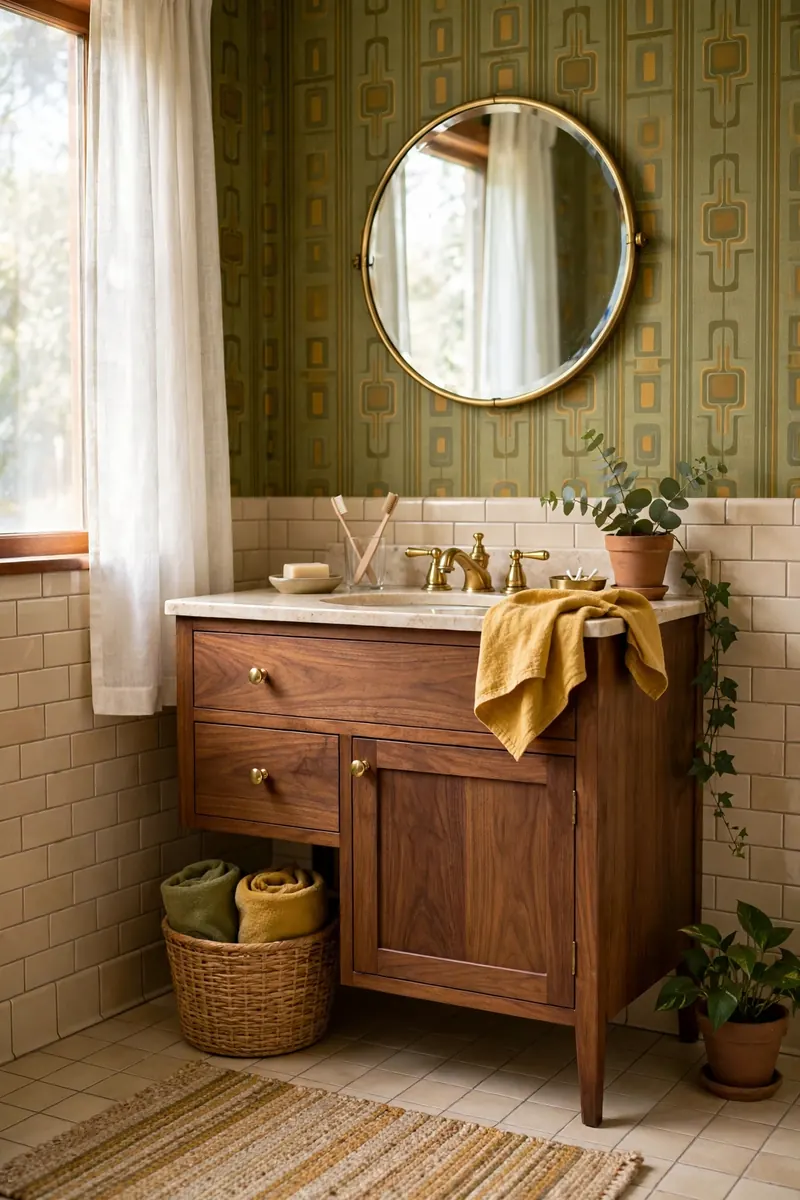
Warm wood suits mustard and olive better than pale wood does. Walnut and teak bring a deep brown that sits between the two colours and ties them together. A walnut vanity, a teak bath tray and a wooden mirror frame all repeat the same wood tone. Keep the wood oiled and sealed for steam. Pale pine can make mustard look washed out, so save it for a different palette. For more wood ideas, see our 70s bathroom ideas, which cover vanities and panelling in detail.
Three cheap ways to try the pair
- Mustard towels with an olive bath mat.
- A mustard curtain with an olive rug.
- Amber bottles and a mustard soap dish.
8. Brass Fixtures Tying Them Together
Brass fixtures tie mustard and olive together because brass holds both gold and green tones. Brass taps, a brass shower head and a brass towel rail warm the mustard and stop the olive from looking flat. Keep the finish consistent across the room, and brushed brass is the easier choice because water marks show less. A brass mirror frame repeats the colour once more and finishes the set.
9. A Patterned Curtain in Both Colours
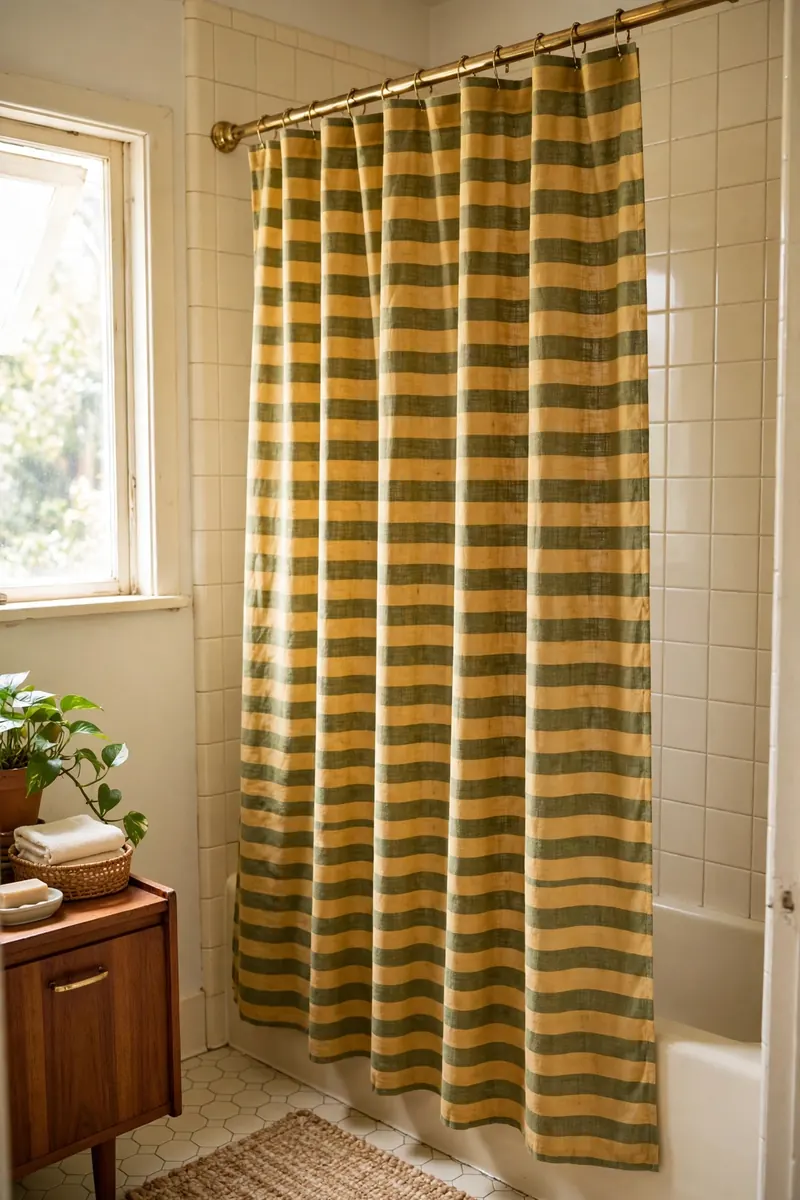
A patterned curtain in both colours is the simplest big move in this palette. 70s stripes or arches in mustard and olive on a brass rail give the pair in one piece, and the curtain can change with the seasons. Keep the tiles plain and the suite quiet so the curtain carries the pattern. A fabric curtain washes well and hangs better than plastic. Choose a curtain where both colours are present in equal measure, since it is the one place the split works.
10. Layering a Mustard Mat and an Olive Rug
Layering a mustard bath mat over an olive rug gives the floor the pair without any tiling. Place a small mustard mat in front of the bath on a larger olive rug, and the floor reads as intentional. Both pieces should wash well, and the rug must have a non slip backing. The layering also warms cold tiles underfoot. Keep the rest of the floor plain so the layers stand out.
11. Olive Plants, Green on Green
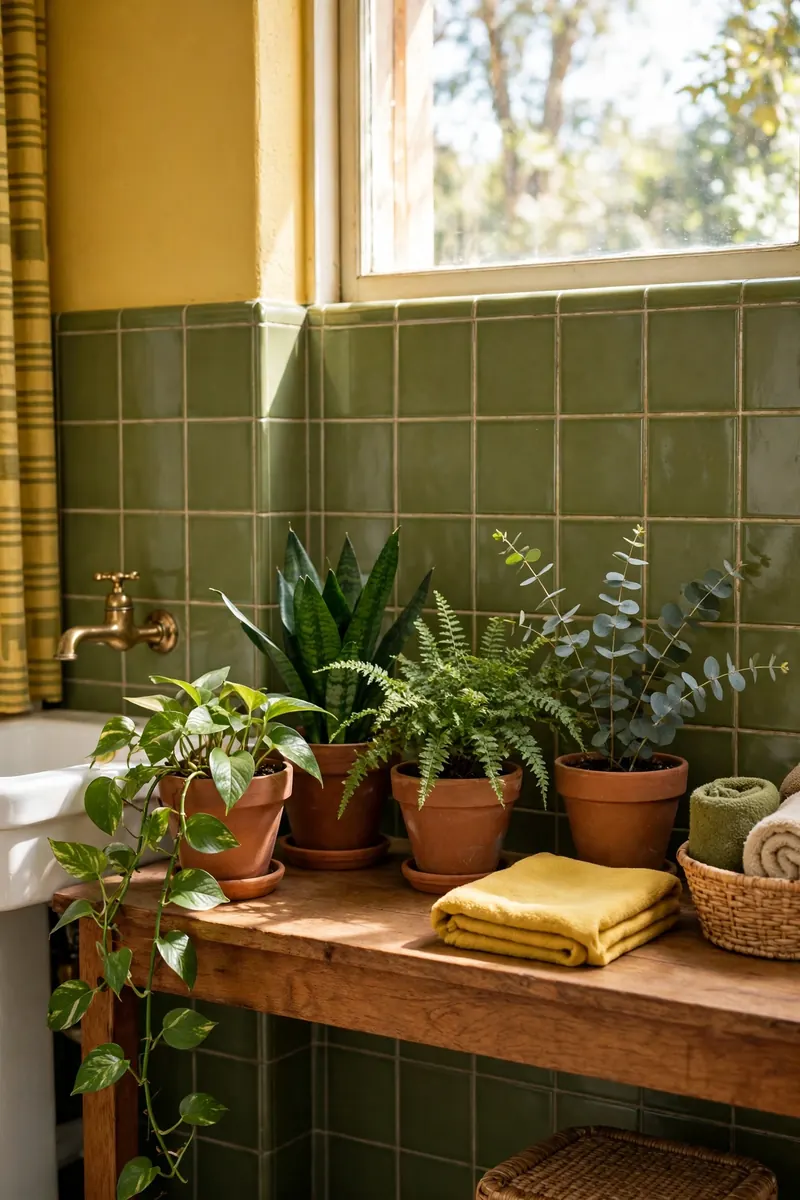
Green plants on olive tiles are green on green, and it works because the plants are alive. A trailing pothos, a fern and a small succulent in terracotta pots bring fresh green against the olive walls. The plants love the humidity and soften the hard surfaces. Hang one from the ceiling and keep two on the sill, so the green sits at different heights. Terracotta pots break the green with a warm earthy note, and the whole corner feels like a garden.
12. Amber Glass With Mustard
Amber glass sits naturally next to mustard because they share the same warm gold tone. Amber bottles on the basin, an amber soap dish and an amber pendant shade repeat the mustard colour in glass and light. The bottles hide the contents a little, so the basin never looks messy. Two or three amber pieces are enough, more than that and the gold starts to dominate. The olive in the room keeps the amber from feeling too sweet.
Start with linen. Towels and a bath mat cost less than a tin of paint, and a month of living with the pair tells you more than any sample card.
13. Retro Prints in Mustard and Olive
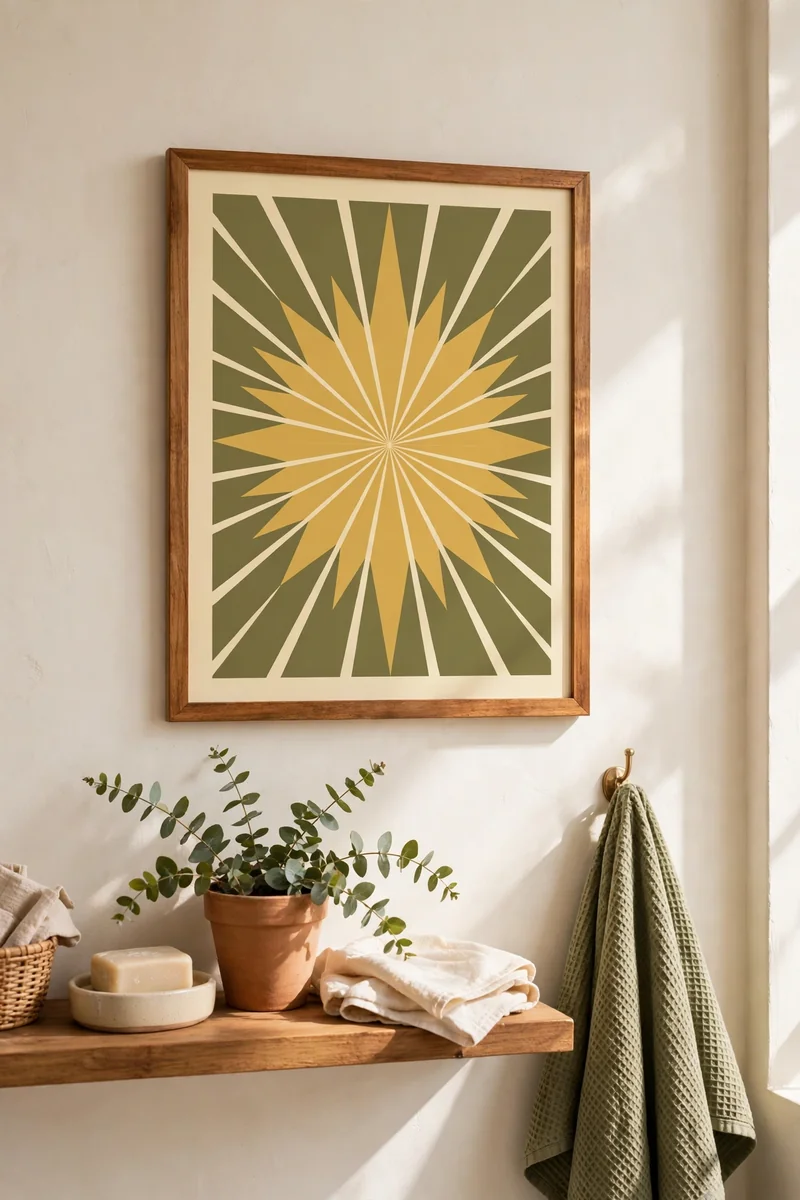
Framed retro prints in mustard and olive bring the pair onto the wall in a controlled way. A sunburst print with both colours and a wood frame suits the bathroom well, and the frame protects the paper from steam. Hang one large print over the toilet or two small ones beside the mirror. Wood frames suit the palette, and the print colours can guide the towels and mat. Keep the glass clean and the colours stay bright.
14. A Two Tone Painted Vanity
A two tone painted vanity brings the pair into the furniture itself. Paint the vanity body olive and the drawers mustard, or the frame olive and the doors mustard, with brass knobs to finish. The two colours sit side by side on one piece, which is the clearest version of the palette. Use bathroom safe paint and seal the edges. A second hand vanity is a good candidate for this, since the paint covers old marks.
15. A Ceiling in Muted Mustard
A ceiling in muted mustard is a bold move that makes the room glow. Warm light bounces off the mustard and fills the room with a soft golden tone, especially in the evening. Keep the walls cream and the floor pale so the ceiling does not lower the room. The mustard should be muted, almost a warm honey, not a bright yellow. This works best in a bathroom with a window, where daylight keeps it fresh.
16. Olive Towels Rolled on an Open Shelf
Olive towels rolled on an open shelf bring the colour in quietly. Roll three olive towels in a row on a wood shelf above the toilet or beside the mirror, with a mustard soap dish on the shelf below. The rolled towels read as a colour block, and the shelf keeps the room tidy. Keep the shelf shallow so nothing falls behind. The olive repeats in the bath mat, so the colour appears twice and looks deliberate. For more revival ideas in this palette, our 1970s retro bathroom ideas show how the same colours work in a bolder room.
17. Mustard Curtain, Olive Screen
A mustard shower curtain with an olive bath screen brings the pair to the wettest wall. The curtain gives the pattern and the screen, if you have one, gives the solid colour. Together they frame the bath in mustard and olive. Keep the tiles plain behind them so the pair shows clearly. An olive screen is unusual, but a painted panel or a coloured glass panel both work. This is the most practical way to colour a shower area.
18. Terracotta as a Bridge Colour
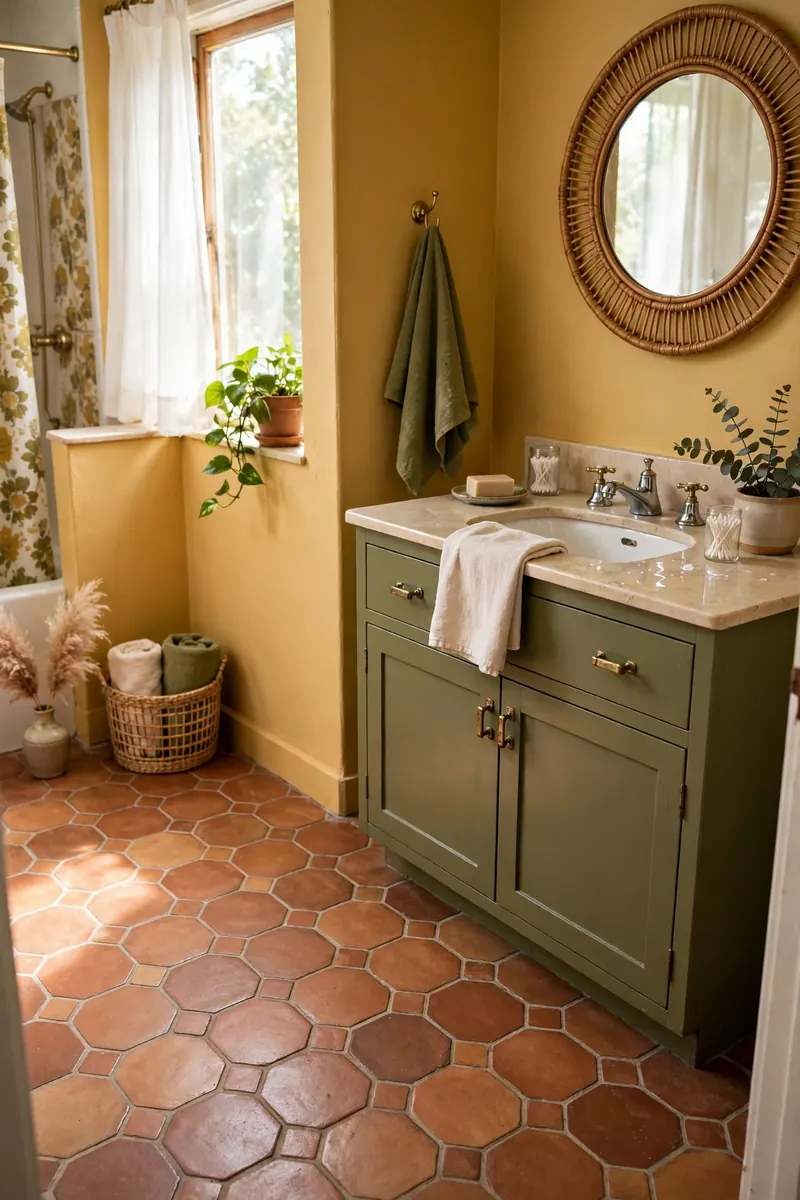
Terracotta is the bridge colour between mustard and olive. A terracotta floor, a terracotta pot or a terracotta soap dish sits warmly between the two and stops them from clashing. The earthiness of terracotta matches both colours, and it brings a natural texture the pair needs. Use it sparingly, one or two pieces, and the room gains depth. Terracotta tiles with mustard walls and an olive vanity is the full version of the palette.
19. Warm Light to Keep Mustard Soft
Warm light keeps mustard soft and olive rich. Cool white bulbs make mustard look sour and olive look grey, so warm white at 2700K is essential in this room. An amber pendant, brass sconces and a dimmer let the light change through the day. In the evening the room glows golden, which is exactly the mood these colours were made for. Change the bulbs before you change anything else in the room.
What to avoid
Bright yellow instead of muted mustard, grey green instead of warm olive, and cool white light. Each of those three breaks the pair.
20. Small Accents First, Commitment Later
Start with small accents and commit later. A mustard soap dish, an olive bath mat, amber bottles and a rolled towel tell you whether the pair suits your room before you paint a wall. Live with the accents for a month, and if the colours still make you smile, move on to the vanity or the tiles. The 70s bathroom was built on colour confidence, but the best rooms were built one warm piece at a time.
Conclusion: Your Mustard and Olive Green 70s Bathroom
Mustard and olive green are the warmest pair in the 70s palette, and they ask for very little. One colour leads, one supports, cream and wood hold the middle, and brass ties it all together. Start with linen, test the pair for a month, and build from there. Save the looks you love to your bathroom board on Pinterest, and let the room grow warm one piece at a time.