


You wiped down the cooktop after dinner, looked down under the kitchen light, and there it was: a thin silver line running straight across the glass. Maybe two. Once you see a scratch on a glass cooktop, you can’t unsee it, and the search for how to fix a scratched glass cooktop usually leads to a pile of conflicting advice. Some sites say to scrub it out with a razor blade. Others say toothpaste works miracles. A few say the cooktop is basically ruined and you need a new range.
Most of that advice ignores what appliance manufacturers actually say. Cooktop glass is tempered and coated, and the wrong product can turn a light scratch into a permanent problem or strip the coating meant to protect it.
This list sticks to methods that manufacturers themselves recommend or that match their care guidelines, so you know what’s safe to try and what’s a waste of your Saturday morning. Some scratches you can soften. Some you can’t. Here’s how to tell the difference before you touch anything.
1. Check This Before You Touch the Scratch
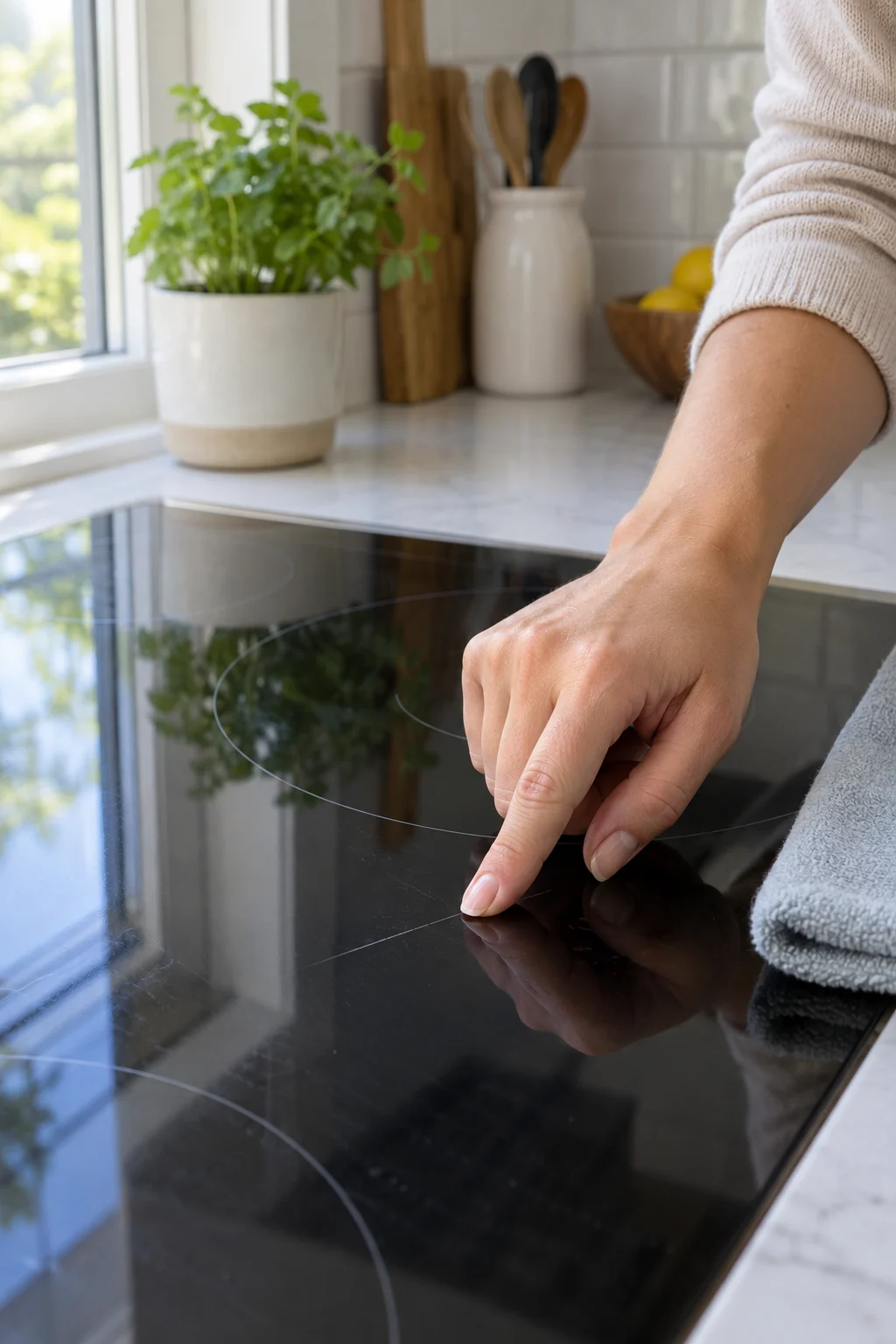
Before you reach for anything, stop and look at the scratch under real light, not the dim glow of a range hood bulb. A lot of what looks like scratching is actually cooked-on residue sitting on top of the glass, not damage underneath it. Run your fingernail across the mark. If it catches, you’re dealing with an actual scratch. If it’s smooth, it’s residue, and step one just saved you an hour of unnecessary scrubbing. Gather these four things before you start anything else.
What to grab first
2. Why Dragging Cast Iron Is the Number One Cause
Most scratches don’t come from dropping something. They come from sliding a heavy pan two inches to check what’s underneath it, or dragging a cast iron skillet off the burner instead of lifting it. Cast iron and stoneware are the two worst offenders because their rough bottoms act like sandpaper on tempered glass. Enamel-coated pans and copper bottoms cause it too, especially once grit or spilled sugar gets trapped underneath. The fix isn’t buying new cookware. It’s building the habit of lifting, not sliding, every single time.
Lift pans straight up, even for small adjustments.
Wipe grit off pan bottoms before setting them down.
Sliding cast iron or stoneware across the surface.
Setting pans down without checking the bottom first.
3. The Baking Soda Paste Method Cooktop Brands Recommend
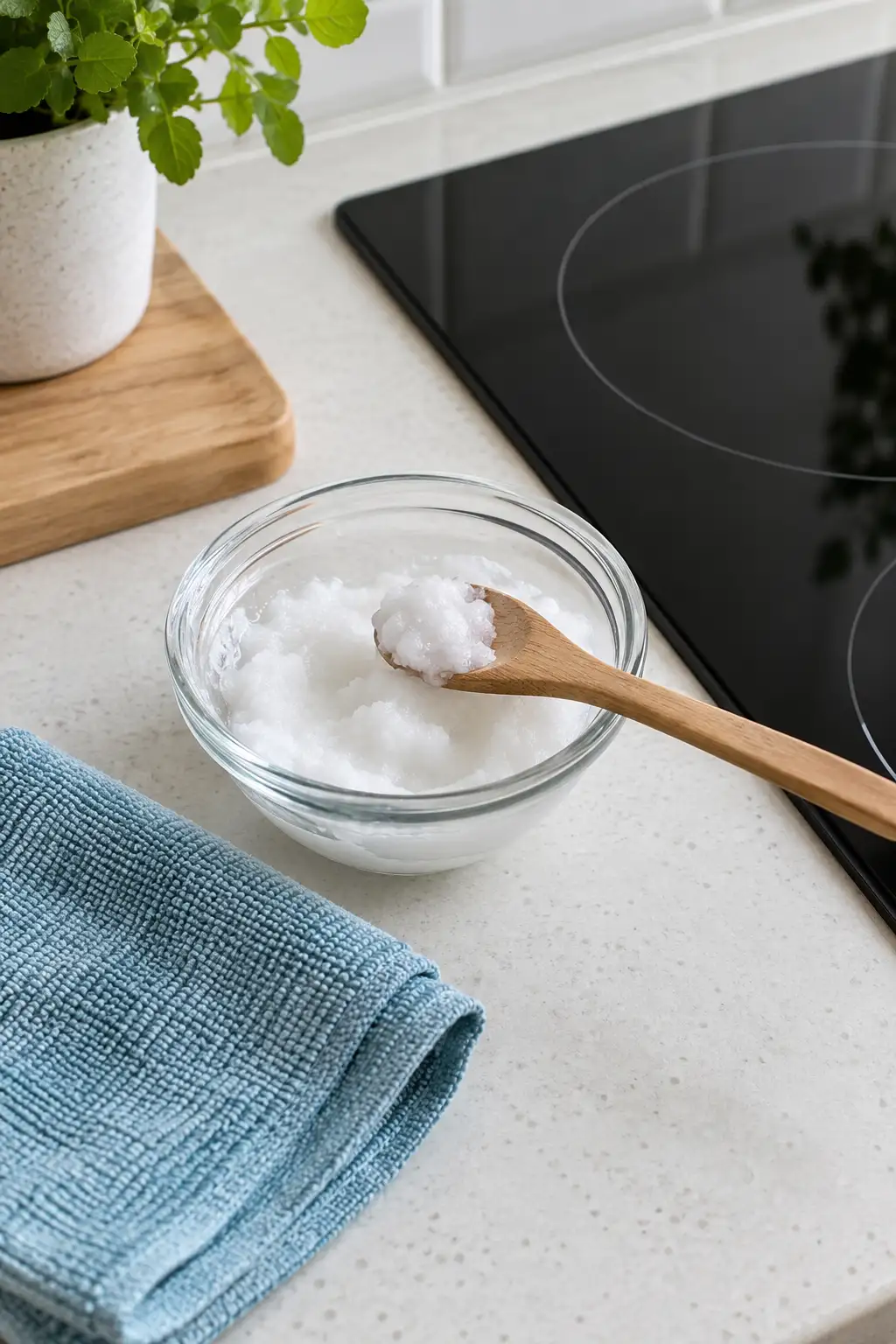
Mix baking soda with a few drops of water until it turns into a thick, spreadable paste, about the texture of toothpaste. This is one of the few home methods that shows up in actual manufacturer cleaning guides for ceramic and glass cooktops, because baking soda is mild enough not to eat into the coating. It won’t erase a deep scratch, but it lifts stuck-on grime and softens the look of light surface marks. Work in small circles instead of long strokes, and rinse completely before you turn the burner back on.
1
Spread the paste over the scratch and let it sit for 5 minutes.
2
Buff gently in small circles with a damp microfiber cloth.
3
Rinse with clean water and dry completely before use.
4. Cream Cleaners: What They Can Fix and What They Can’t
Cream cleaners made for ceramic and glass cooktops are not all the same, and reading the label matters more than the brand name. Some are polishing creams built to buff out light haze and faint scuffs. Others are just heavy-duty degreasers with grit added, which can make a real scratch worse instead of better. Check the label for words like “safe for ceramic glass” or “non-abrasive polish” before you use anything on a scratch you’re trying to soften rather than just clean.
| Polishing Cream | Heavy Duty Cleaner |
|---|---|
| Softens light haze and faint scuffs. | Built for burnt-on food, not scratches. |
| Usually labeled non-abrasive. | Often contains fine grit or bleach. |
| Safe for regular scratch upkeep. | Can deepen a scratch if overused. |
5. Always Test in One Small Spot First
The back left corner of most cooktops rarely gets used, so it’s the safest place to test anything new before it touches the scratch. Apply a small amount of whatever cleaner or paste you’re trying, wait a few minutes, then wipe it away and check the glass for any dulling, cloudiness, or color change. This step takes less than five minutes, and it’s the difference between a small mistake and a cooktop you regret touching. Skip it only if the product is already listed as cooktop-safe by the manufacturer.
Quick Tip
Test on the back left corner, the spot that gets the least use and the least attention if something goes slightly wrong.
Rotation check for this batch: checklist → do/don’t → numbered steps → table → tip box. No repeats back-to-back, three lighter and two rich, matching the plan.
Trim karne ke liye maine sabse strong aur distinct ideas rakhe hain, kuch overlapping items (jaise repair kits + warranty, aur professional advice + replacement) ko merge kar diya hai taake har item still valuable rahe. Visual rotation bhi adjust ki hai taake 10 items mein 5 rich aur 5 lighter visuals ka balance bana rahe.
6. Surface Haze vs a True Scratch: How to Tell the Difference
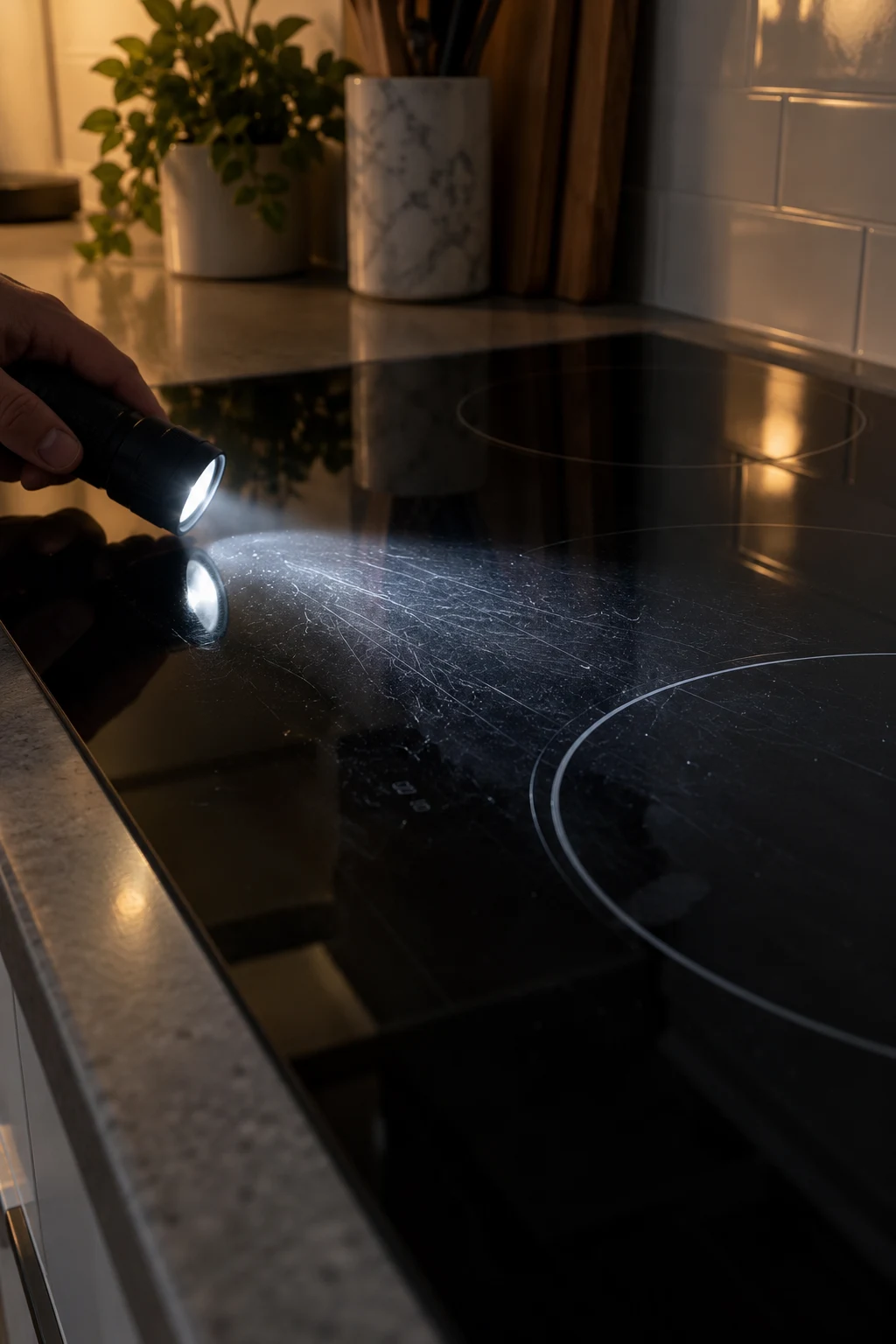
Hold a flashlight at an angle across the cooktop and the difference becomes obvious fast. Haze looks like a cloudy patch that shifts when you change the angle of the light. A real scratch stays put no matter how you tilt your head, and it usually has a defined start and end point instead of a soft, spread out shape. Haze comes from mineral deposits or cleaner residue sitting on the surface. A scratch is physical damage to the glass itself. Knowing which one you’re looking at saves you from scrubbing a permanent mark, or ignoring something a good wipe down could have solved.
7. The Microfiber Buffing Trick That Softens Light Marks
Fold a microfiber cloth into a thick pad, add two or three drops of olive oil or a dab of cooktop cream, and rub the scratch in tight, overlapping circles for about a minute. Light marks, the kind that catch the edge of your nail but don’t dig in deep, often soften enough that they stop reflecting light the same way. Deep gouges won’t disappear this way, and no amount of buffing pulls glass back together. Think of it as smoothing, not erasing. Rinse and dry the spot fully before you turn a burner on near it.
The scratch catches light and looks silver under the kitchen lamp.
The mark is softened and barely visible under normal lighting.
8. The Vinegar and Baking Soda Combo to Skip
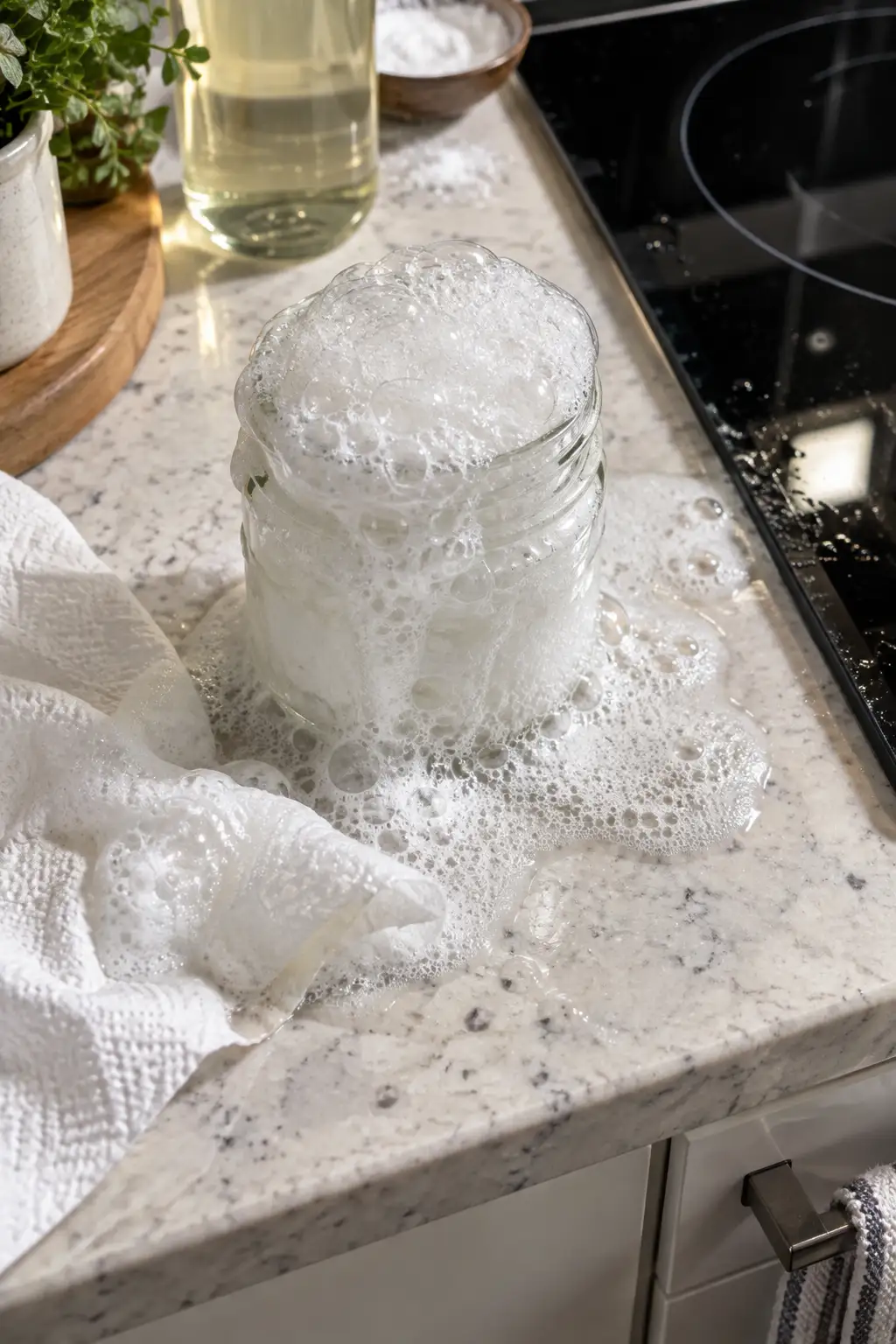
A lot of cleaning posts tell you to mix vinegar and baking soda on a cooktop scratch, and that’s exactly the combination most manufacturer guides warn against. The moment they touch, the two cancel each other out into a fizzy, watery paste with almost no cleaning power left by the time it hits the glass. Worse, the acid in vinegar can sit inside a scratch and dull the coating around it over time. Baking soda alone works well. Vinegar alone, used sparingly and rinsed fast, is fine for general grease. Together, they just make a mess that looks productive.
9. Scratch Repair Kits and Your Warranty: What Actually Matters
Repair kits promise a lot on the packaging, but two things decide whether one is worth buying: how deep the scratch actually is, and whether your cooktop is still under warranty. Most kits are just a finer version of the cream cleaner method, useful for haze and light marks, not for anything that catches your nail. Using one on a still-covered appliance can also void the warranty if the manufacturer treats it as an unauthorized repair. Call the brand’s support line or check the paperwork before you spend money on a kit that might solve nothing, or cost you a covered replacement.
10. When to Call a Professional or Plan a Replacement

Some scratches are a cosmetic annoyance. Others are a sign the glass has been compromised, and that’s a different problem entirely. If a mark has a rough edge you can feel with your finger, if the surface flexes or clicks near the scratch, or if you notice a crack starting to branch off it, stop trying home fixes and call an appliance technician. Cooktop glass under stress can fail suddenly, and that’s a safety issue, not a cleaning one. If repairs would cost close to half of a new cooktop, replacement usually makes more financial sense than chasing a fix that only helps the surface look better.
A scratch you can feel with a fingernail is cosmetic. A crack, click, or flex near it means it’s time to call a professional.
Conclusion
Most scratches on a glass cooktop are more manageable than they first look, as long as you match the fix to the type of mark you’re actually dealing with. Baking soda paste, a soft microfiber buff, and a little patience handle the light stuff. Deep gouges, cracks, or anything that flexes near the mark call for a professional instead of another home remedy. Knowing how to fix a scratched glass cooktop really comes down to testing gently, checking your warranty before you spend money, and building habits that stop new scratches before they start.