
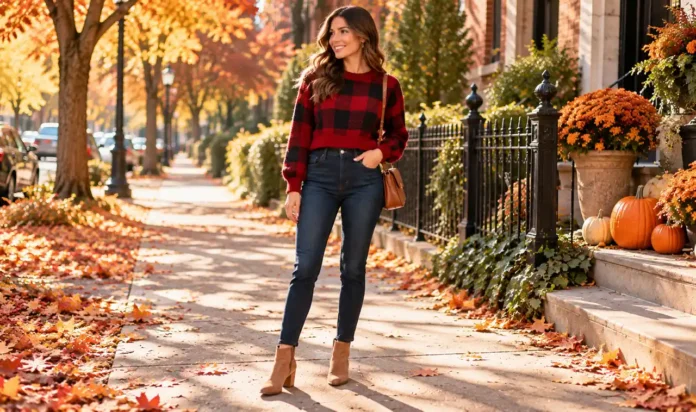


If plaid sweaters ever made you feel wider than you are, you are not imagining it. A big check stretched across the bust or hips adds visual width, and most styling advice pretends bodies are all the same.
What you want is simple. You want the cozy look of plaid without the bulk. The fix is not a smaller size, and it is definitely not a different body. It is proportion. A tuck here, a longer hem there, and the right plaid scale for your frame change everything.
These 15 Flattering Plaid Sweater Outfits are built around real bodies: petite, tall, curvy, apple, pear, athletic, plus size, and everything in between. Every look below gives you the exact moves, so you copy the outfit and the reasoning behind it.
If you love a roomier fit, start with our oversized plaid sweater outfits and use the proportion tricks below to keep each one flattering.
Flattering Plaid Sweater Outfits for Petite Frames Start With a Crop and a High Rise
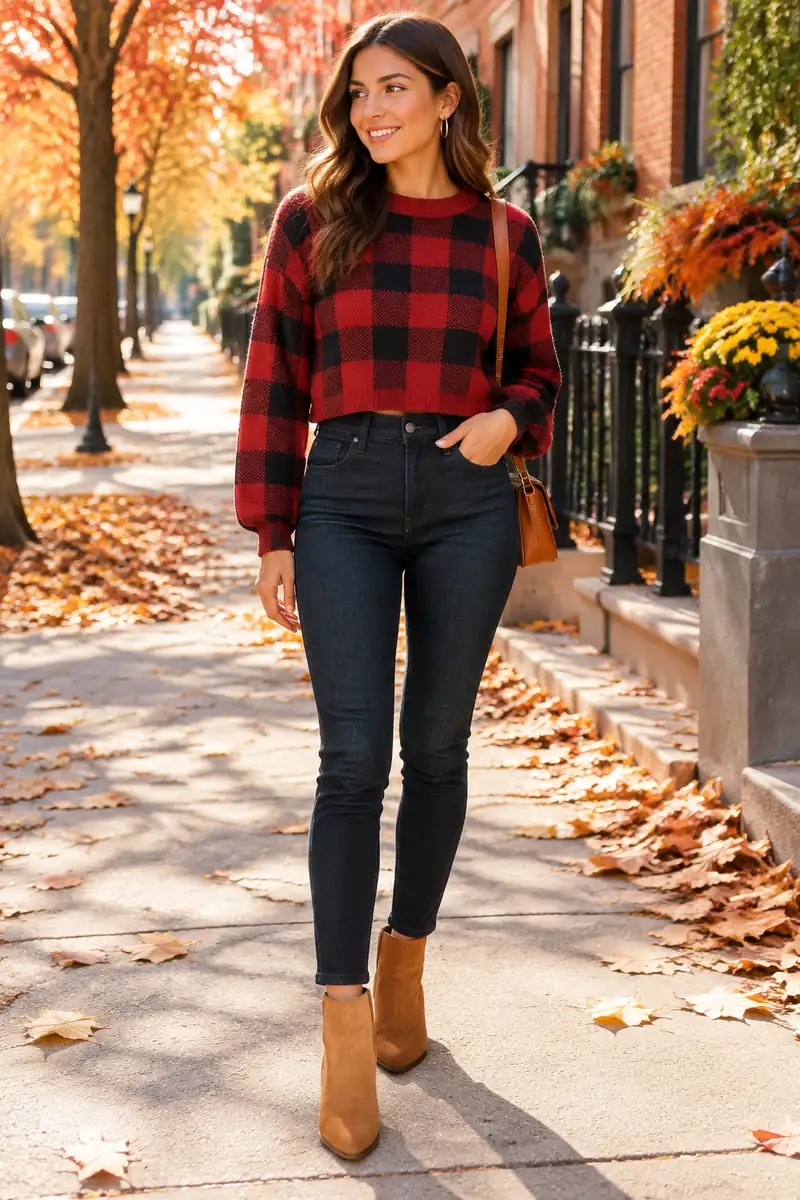
Petite frames drown in long sweaters, so start by shortening the line.
A cropped plaid sweater that ends right at your natural waist shows exactly where your legs begin, and that reads as height. Pair it with high-rise jeans so the two meet with no skin showing.
- Keep the checks small. Big plaid swallows a small frame.
- Pick ankle boots with a low vamp to show more of your foot.
- Push each sleeve up one turn. A flash of wrist adds to the effect.
That little bit of wrist and ankle shows more leg than heels ever will.
Longline Tunic Sweaters Over Leggings for Tall Women
Height is an asset here, and a longline sweater makes the most of it.
A tunic-length plaid sweater over leggings gives tall women one clean line from shoulder to ankle. It skims the hips instead of cutting across them, which is where shorter tops go wrong on a long frame. Side slits keep the hem from looking heavy.
- Stick with black or charcoal leggings so the sweater stays the star.
- Finish with knee-high boots to continue the long line.
- Add a long pendant necklace to echo the vertical shape.
The tall-frame formula
Do the hallway mirror test: one unbroken line, no horizontal chop.
Half-Tuck a Relaxed Plaid Sweater to Define a Curvy Waist
Curvy waists disappear under straight-cut sweaters. The half-tuck fixes that in seconds.
Tuck just the front center of your sweater into your jeans and leave the sides loose. The tuck marks your narrowest point while the loose sides skim everything else. It works best with a medium-weight knit that holds the tuck without bunching.
- Stand in front of a mirror and pinch the front center of the hem.
- Push about two inches into your waistband, slightly off center.
- Pull the sides out a touch so the drape stays soft.
Tip: Skip the belt here. The waistband does the talking.
An A-Line Sweater Skims an Apple Midsection Without Clinging
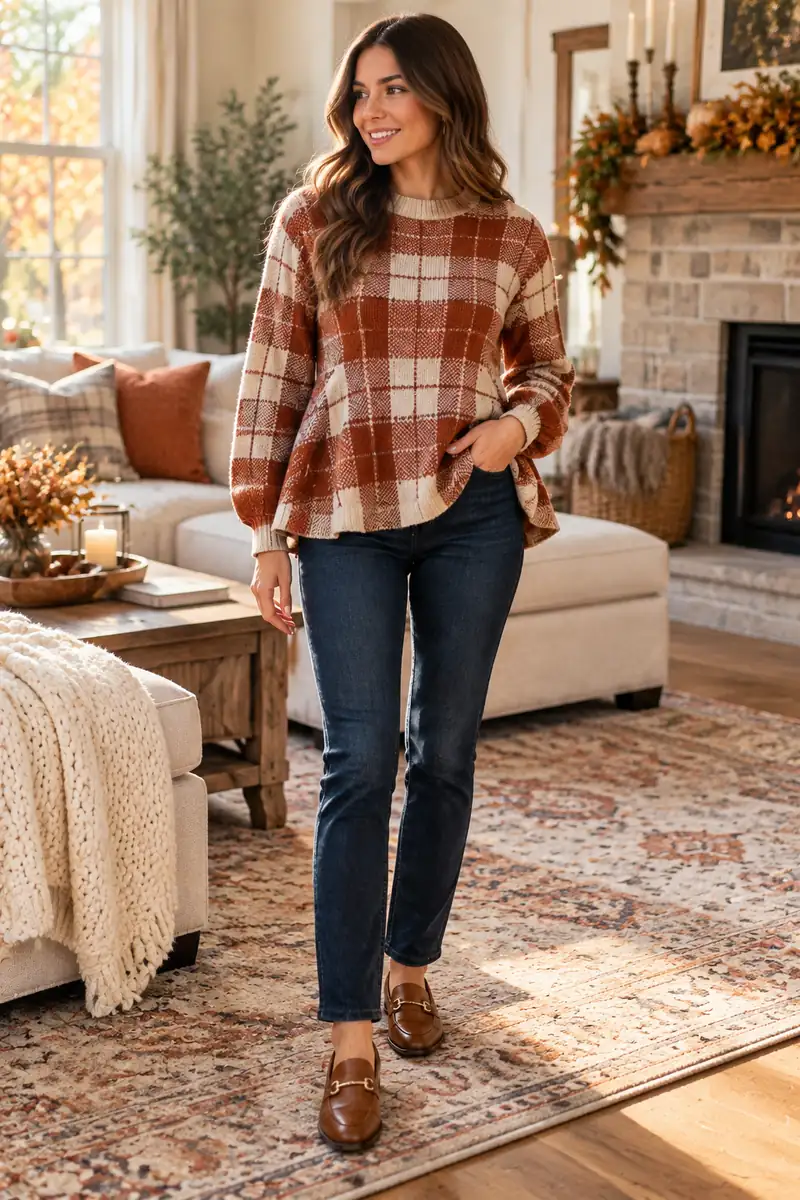
Plaid is not off limits if you carry weight around your middle. The cut matters more than the print.
An A-line plaid sweater flares gently from the bust, so it floats over the stomach instead of clinging to it. Look for a knit with some structure, since limp fabric collapses inward. A longer back hem keeps the line clean from behind.
- Choose medium checks. Tiny prints can look busy on a fuller torso.
- Keep necklaces short so the eye stays near your face.
- Dark straight-leg jeans underneath keep the bottom half quiet.
You get the pattern with none of the cling.
Dark Jeans and a Bright Plaid Sweater Balance a Pear Shape
Grab your darkest jeans first. Then let the sweater do the talking.
Pear shapes carry width at the hips, so the goal is to draw the eye upward. A plaid sweater in warm reds or mustard pulls focus to your shoulders and face, while dark indigo jeans recede below. Tuck the front so your waistband shows, which marks the narrow middle between the two.
| Keep dark and quiet | Let it shine |
|---|---|
| Jeans, boots, and your bag | The plaid sweater itself |
| Bottom half recedes | Top half gets the attention |
A scarf at the neck keeps the eye where the interest is.
Belt a Plaid Cardigan to Mark an Hourglass Waist
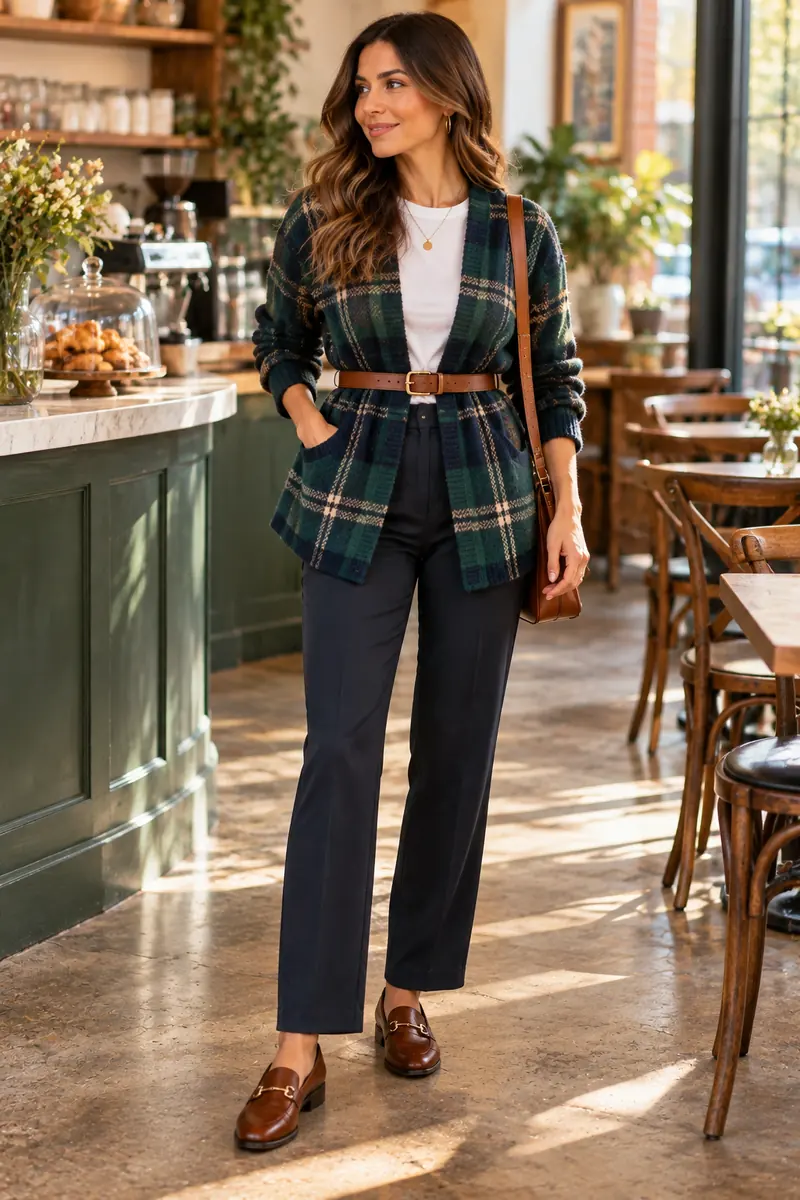
A belt cinches a drapey plaid cardigan and the waist appears. The hips get context and the outfit gains intention.
Hourglass figures already have the shape. The job is to show it instead of hiding it under a boxy knit. Leave the cardigan open, add a medium-width belt at your natural waist, and let the front panels fall on either side. The vertical panels slim the torso while the belt does the defining.
- A brown leather belt warms up red and green plaids.
- Keep the cardigan hip-length so the belt sits at the true waist.
- Straight-leg trousers below keep the line long.
Polished enough for dinner, easy enough for a school run.
Boxy Plaid Sweaters Need Slim Bottoms on Athletic Builds
One volume per outfit. That is the whole rule.
Athletic builds with straight lines through the waist can wear boxy plaid well, as long as the bottom half stays slim. The contrast is what creates shape. Skinny jeans or sleek leggings under a roomy sweater make the shoulders look strong.
- Roll the sleeves to show your forearms and add a human touch.
- A low sneaker or flat boot keeps the look grounded.
- Skip the belt here. The sweater should hang straight.
Think borrowed-from-the-boys on top, all yours on the bottom.
A Dark Monochrome Base Under an Open Plaid Sweater for Plus Sizes
You know the fitting room moment. The sweater fits the shoulders but pulls at the buttons, or it skims fine but swallows your shape.
Solve it with layers. Wear a dark fitted top and dark jeans as one quiet base, then leave the plaid sweater or cardigan open over it. The dark column underneath reads as one long line, and the open plaid frames it like a jacket. Nothing pulls and nothing clings.
This layered approach is a favorite in our plaid sweater outfits for women over 40, where easy polish matters most.
Dark base in one tone, top to bottom.
Plaid left open so the base shows through.
Three-quarter sleeves to show your wrists.
Buttoning the plaid all the way up.
Light-wash jeans that chop the line.
Tucking a bulky knit into tight jeans.
Comfort and shape can share the same outfit.
Side-Slit Hems Elongate Short Legs
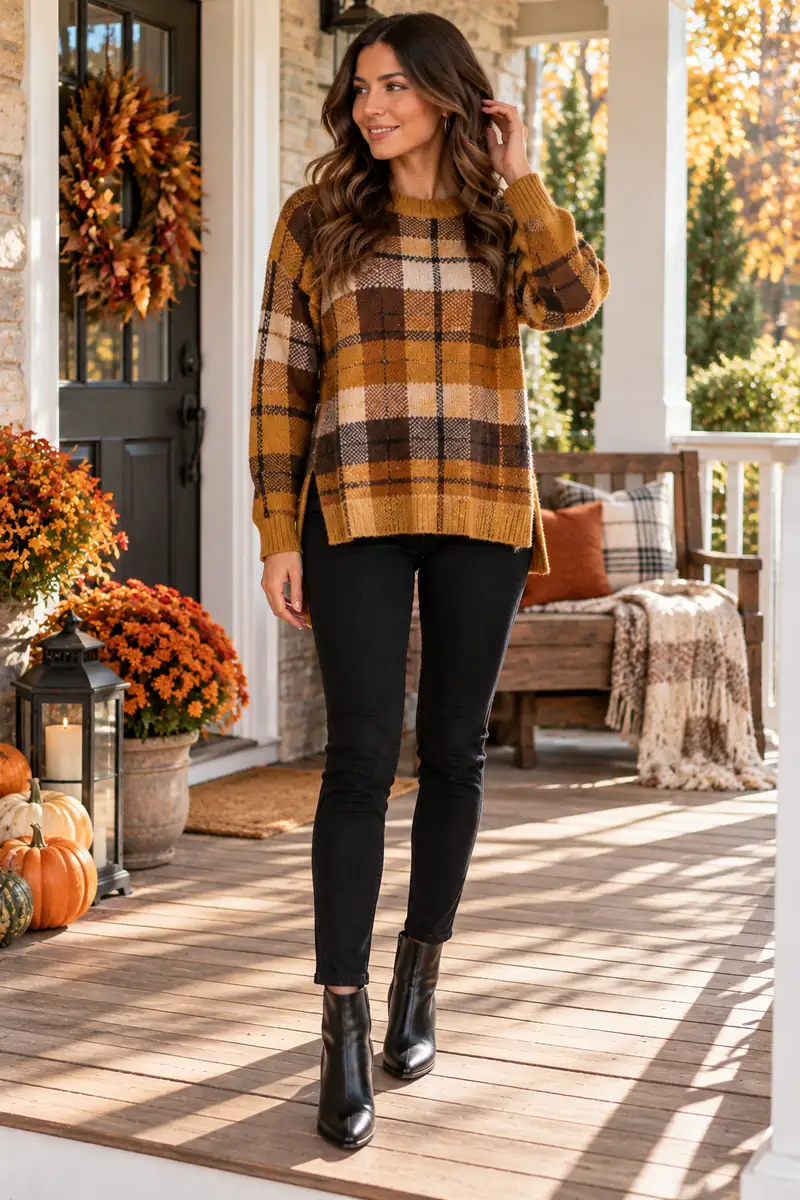
Tucking a long sweater into jeans and hoping for the best usually ends with bunching at the waist.
A side-slit hem does the job better. The slits break the hemline so it does not cut straight across your thighs, and each slit shows a flash of the leg beneath. On shorter legs, that broken line reads as length. Hip-bone length works best.
- Wear it untucked and let the slits do the work.
- Match your shoes to your jeans to extend the leg line.
- Keep the plaid medium scale so the slits stay visible.
It is the rare detail that looks relaxed and works hard at the same time.
Tuck the Front to Balance a Long Torso
I have watched friends with long torsos fight the same battle: every sweater makes their legs look short.
The front tuck rebalances the ratio. Tuck the front of your plaid sweater into high-rise bottoms so your waistline sits higher than it really does. The eye takes the tuck point as the waist, which shortens the torso and lengthens the legs in one move.
- High-rise jeans are non-negotiable here.
- A thin knit tucks cleaner than a chunky one.
- Leave the back out for an easy, undone finish.
Small move, big ratio change.
A V-Neck Plaid Sweater Softens Broad Shoulders
A crew neck draws a straight line across the shoulders. A V-neck breaks it.
If your shoulders are the widest part of your frame, the V opening creates a vertical line that pulls the eye down toward your face and chest. The shoulders read narrower without any padding or structure tricks. It is a neckline change, not a body change.
A V-neck does more to balance broad shoulders than any sleeve or seam trick.
Layer a thin long-sleeve tee under the V for warmth without adding width.
Puff Sleeves Add Gentle Shape to Narrow Shoulders
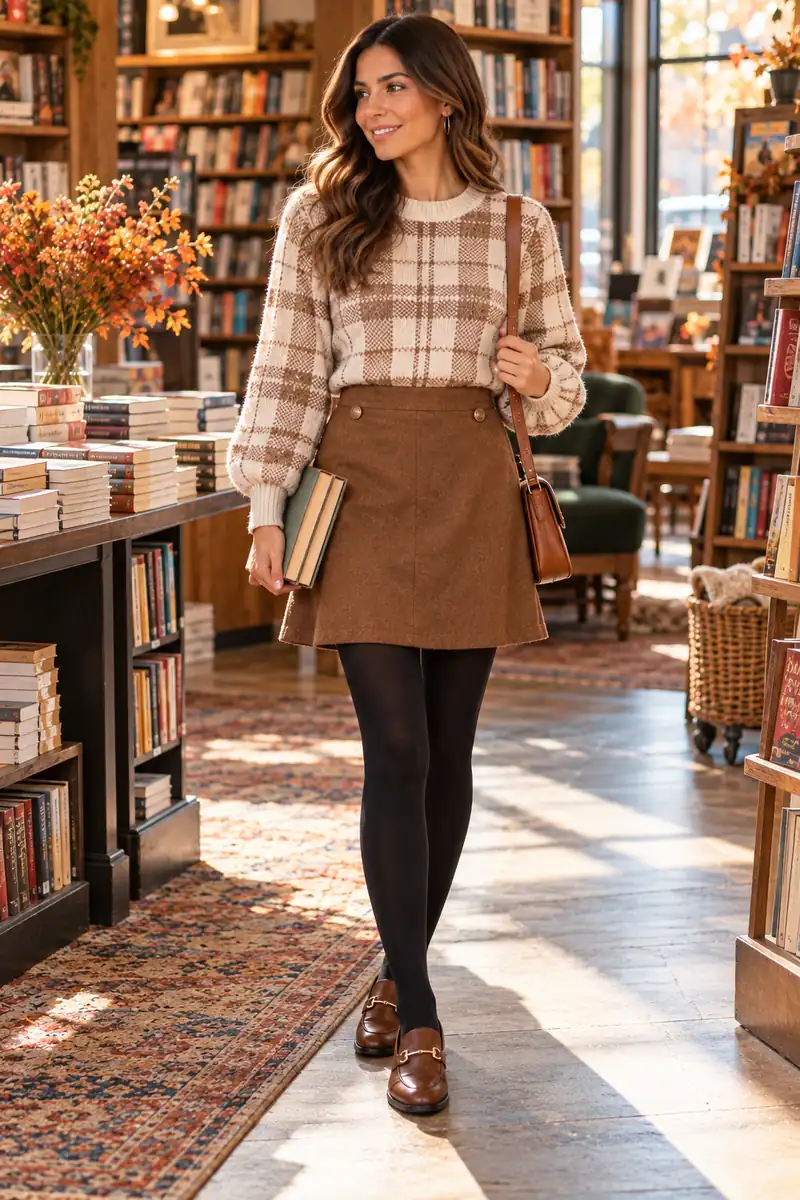
A little volume at the shoulder changes the whole silhouette.
Narrow shoulders can make a plaid sweater hang straight down with no shape. A gentle puff or gathered sleeve adds width exactly where you want it, which balances wider hips and gives the top half presence. Keep the puff small and the cuff fitted so it reads soft, not costume.
- An A-line skirt and opaque tights balance the lower half.
- Skip shoulder pads. The sleeve already does the work.
- A round neckline keeps the focus wide and open.
Shape where you want it, softness everywhere else.
Small Checks or Big Checks: Match Plaid Scale to Your Frame
Match the check to your frame and the sweater stops fighting you.
Plaid scale is the quiet detail most people miss. Small, tight checks suit petite and slender frames because the pattern stays in proportion. Big, bold checks suit taller and curvier frames because a tiny print would look lost. Hold the sweater up to your chest in the mirror before you buy. If the checks look like they belong to you, they do.
- Petite: checks under two inches read best.
- Tall or curvy: three-inch checks and up hold their own.
- In between: medium checks are the safe middle ground.
Get the scale right and almost any cut becomes flattering.
A Plaid Sweater Vest Layers Without Adding Bulk
Start with a fitted turtleneck, add the vest, and stop there.
A plaid sweater vest gives you the pattern with half the fabric. Because the arms stay slim in the turtleneck, the vest reads as a layer rather than a lump. This is the move for anyone who runs warm or feels buried in full sweaters. The V opening of most vests also lengthens the neck.
The vest layering checklist
All the plaid, none of the bulk.
A Midi Skirt, Plaid Sweater, and Opaque Tights Balance Curves
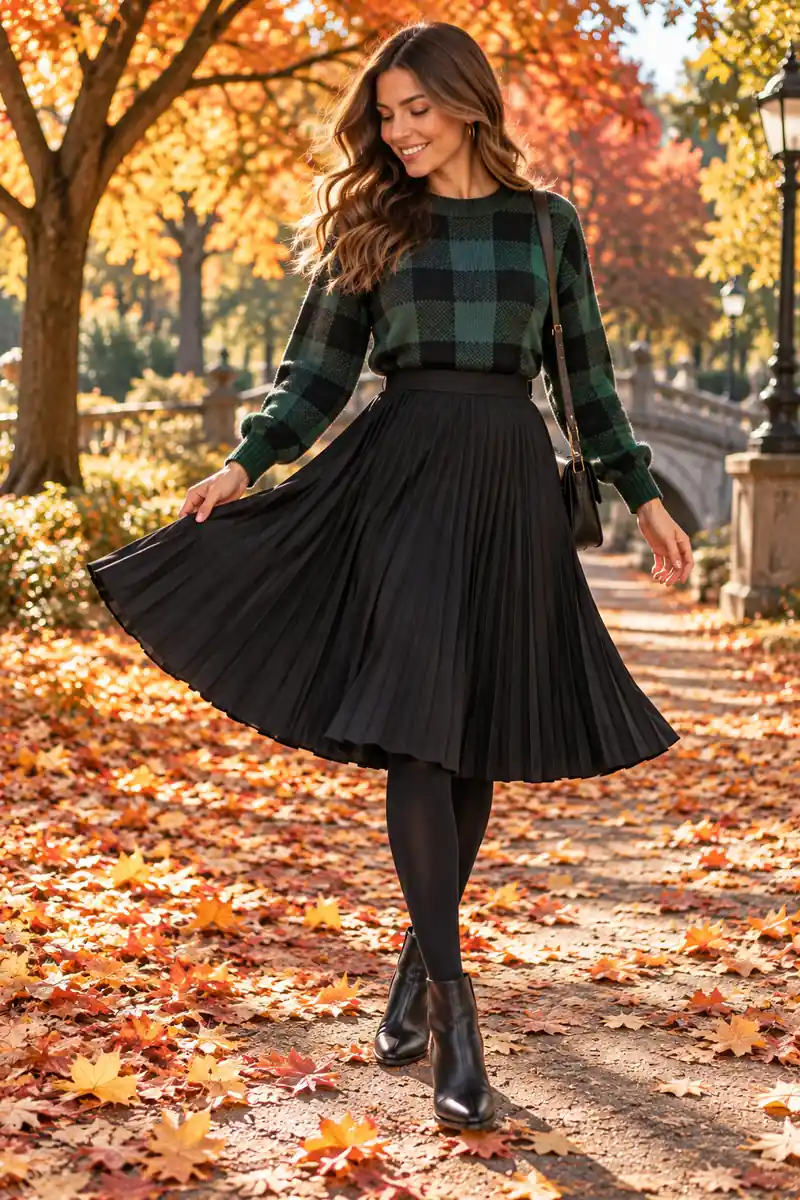
The swish of a midi skirt next to a tucked-in sweater is a combination that never misses.
Tuck a soft plaid sweater into a high-waisted midi skirt and add opaque tights. The tuck defines the waist, the skirt flares over the hips, and the tights keep the leg line dark and long. It works on curvy, pear, and hourglass shapes because each piece does one clear job.
- A-line or pleated skirts move best. Pencil skirts fight the cozy top.
- Match the tights to your boots for the longest leg line.
- A cropped sweater also works if tucking feels fussy.
Twirl once in the fitting room. If it moves, it works.
The common thread is not a body type. It is intention. Every look above uses a tuck, a hem, a layer, or a plaid scale chosen on purpose, and that is what makes these flattering plaid sweater outfits work across so many shapes.
Pick one idea that matches your frame and try it this week with pieces you already own. If the skirt look caught your eye, browse our plaid sweater and skirt outfits for more ways to wear it.
Save this list to your fall style board so it is there the next time you reach for plaid.