
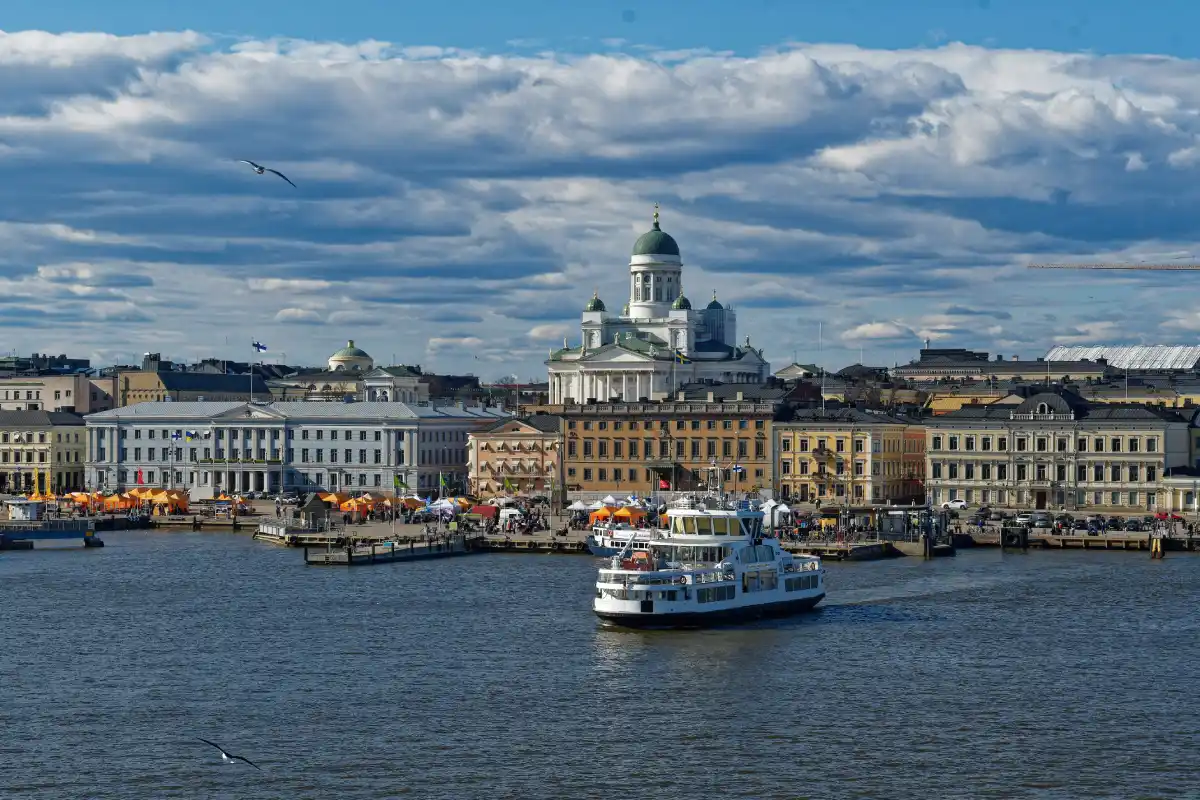
Morning in Helsinki carries a particular clarity. The air feels rinsed rather than warmed, even in late spring. Sound travels cleanly across the harbour and up the wide steps of Senate Square. The city does not rush to declare itself northern; it simply behaves that way — measured, pale, attentive to light.
The cathedral rises without aggression. Its white façade absorbs brightness and releases it softly. Around it, buildings hold a restrained symmetry, leaving the square open enough for wind to pass through without obstruction.
Domes Against a Moving Sky
The Helsinki Cathedral’s green domes appear almost muted from a distance, their colour deepening only when clouds thin and sunlight presses directly against copper. Up close, the surface carries subtle variations — oxidised patches, faint streaks from rain. The steps leading upward feel broader than necessary, encouraging a slower ascent.
People cross the square without clustering. Footsteps scatter rather than gather. The cathedral does not demand interpretation; it occupies its elevation quietly, holding the horizon in a contained arc.
Many first encounter this space as part of wider tours to Finland, though the structure itself resists being framed as a singular highlight. It sits within the rhythm of the capital rather than above it. Ferries move in the harbour behind you. Trams glide along streets that seem to curve without urgency.
Light shifts rapidly in Helsinki. A bright interval narrows into overcast grey within minutes. The domes adjust accordingly, sometimes luminous, sometimes subdued. Nothing in the architecture strains for permanence; it settles into the day’s atmosphere.
Where the Land Flattens
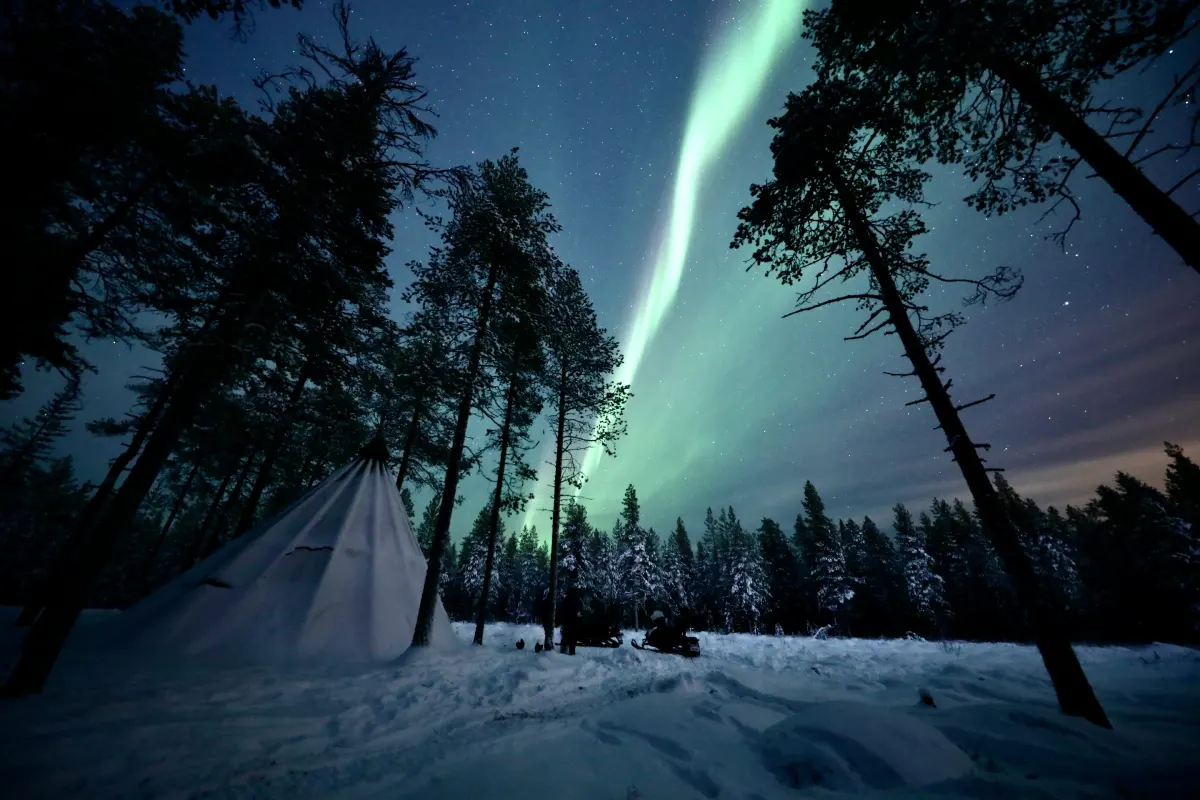
Further north, the terrain loosens. Forest thins. Trees become shorter, spaced more widely apart. The horizon extends until it feels almost continuous with the sky. Lapland does not announce its scale dramatically. It expands gradually, as if the land itself were exhaling.
Reaching this region often forms part of longer tours of Lapland, which move beyond cities into stretches where roads narrow and then seem to dissolve into snow or tundra. The transition does not fracture the experience of Helsinki; it extends it.
On the tundra, colour simplifies. Moss, lichen, low shrubs — all remain close to the ground. The wind travels without interruption. Sound disperses quickly, leaving a softened quiet. Even in summer, there is a sense of restraint in the landscape, as though excess has been pared back.
The sky dominates, but not theatrically. It stretches, shifts, alters tone. Clouds travel in elongated formations. Light lingers longer in the evening, thinning rather than fading.
Echoes in Scale
At first glance, a cathedral dome and an open tundra horizon appear unrelated. One curves upward; the other stretches outward. Yet both engage the sky as their primary reference. Both rely on proportion rather than ornament.
Standing on Senate Square, you sense the expanse beyond the city even if you cannot see it directly. Standing in Lapland, you feel an architectural clarity in the way the land meets air. There is little clutter in either setting.
Movement between them feels unforced. Trains and planes connect south and north without drama. Windows frame forests, lakes, then wider emptiness. The journey becomes another layer of the same aesthetic — restrained, open, defined by light.
Light That Lingers
In Helsinki, evening gathers slowly. The cathedral’s façade shifts from white to a faint blush before cooling again. The square empties without ceremony. Footsteps fade into the surrounding streets.
In Lapland, the same hour does not close the day entirely. During certain months, light hovers just above the horizon, neither full nor gone. Shadows lengthen but do not disappear. The tundra holds this ambiguity without resistance.
The two landscapes begin to overlap in memory. The green domes echo against stretches of moss. The white façade mirrors pale expanses of snow. The scale differs, yet the atmosphere aligns.
Nothing insists on contrast. The capital and the Arctic coexist within the same latitude of light. Architecture and terrain respond to similar conditions — wind, frost, brief summers, extended twilight.
Later, recalling both, the order of experience loosens. The steps of the cathedral merge with the open ground of the north. The harbour wind blends with tundra air. The horizon remains, wide and unclaimed, while the domes hold their quiet curve against a sky that continues to change without announcing why.
Where the Sky Remains Unfinished
Long after the square has emptied and the tundra has fallen back into its low, wind-brushed silence, what lingers is not monument or distance but the shared openness above them. The domes keep their softened green against shifting cloud, and far to the north the horizon continues without interruption, as if the land has chosen not to enclose itself. Nothing resolves between city and Arctic plain. The light adjusts, withdraws, returns again — and both cathedral and tundra remain beneath it, unchanged except for the way they hold the sky.