
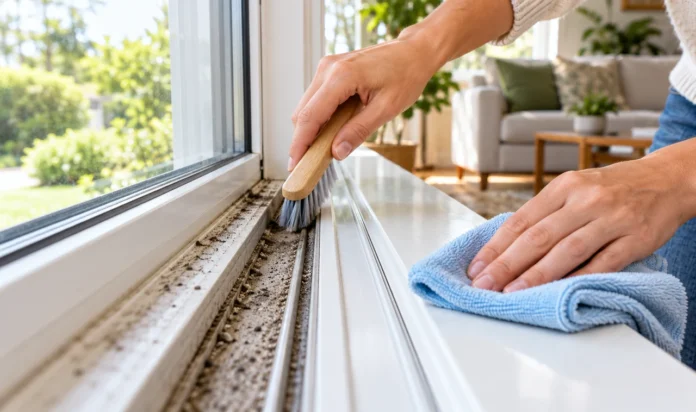


Grime packed into a window track can feel impossible to reach. A paper towel slides over the top, but dark dirt stays wedged in the corners and narrow grooves. The good news is that you do not need a steam cleaner or a special detailing kit. This method for how to clean a window track uses a vacuum, an old toothbrush, a wrapped butter knife, and a small amount of mild soapy water.
The order matters. Dry debris must come out before any water goes in. If loose dust gets wet, it turns into mud and spreads deeper into the track. You will vacuum first, loosen the packed dirt, clean each channel, clear the drain openings, and dry everything before closing the window. Most tracks take about 25 to 35 minutes. Very dirty tracks may need a second pass, but the work is still beginner-friendly.
Open the window, place an old towel below it, and work from the cleanest area toward the dirtiest corner. By the end, the window should slide more smoothly and the track should look clean without being soaked.
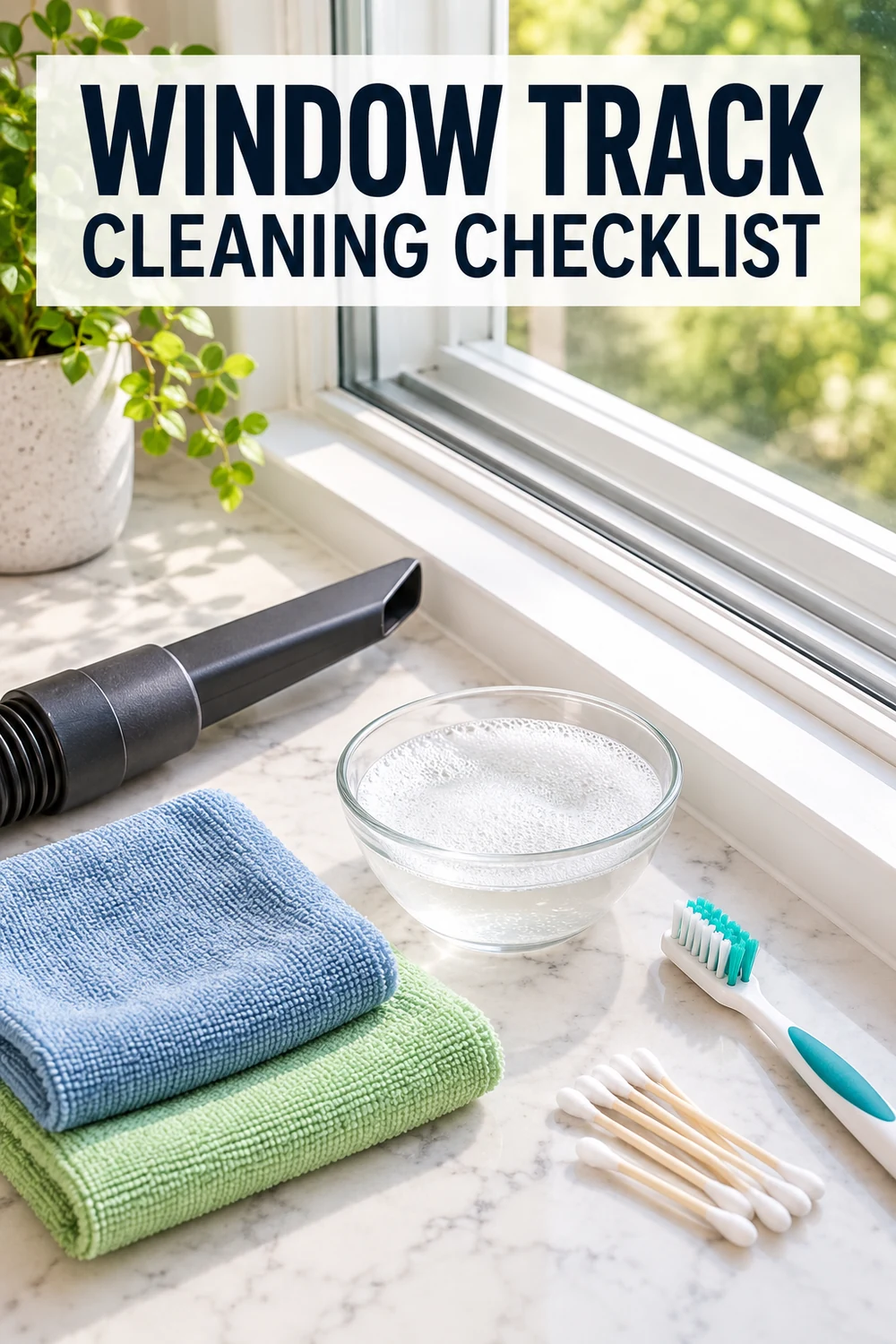
What You Need
At a Glance
- Open the window and protect the sill.
- Vacuum the loose dirt.
- Brush the dry corners.
- Wrap a dull knife with cloth.
- Lift grime from tight corners.
- Mix a mild cleaning solution.
- Dampen the cleaning brush.
- Scrub each narrow channel.
- Wipe away the loosened grime.
- Clear the drainage holes.
- Dry the entire track.
- Test the window movement.
Open the window and protect the sill
Raise or slide the window as far as it safely goes. Remove the screen only if it blocks the track; most screens lift out after the small tabs are pulled inward. Lay an old towel across the sill and floor below. The towel catches grit and prevents dirty drips from reaching paint, curtains, or carpet. Use a flashlight to check the back corners before you begin.
Vacuum the loose dirt
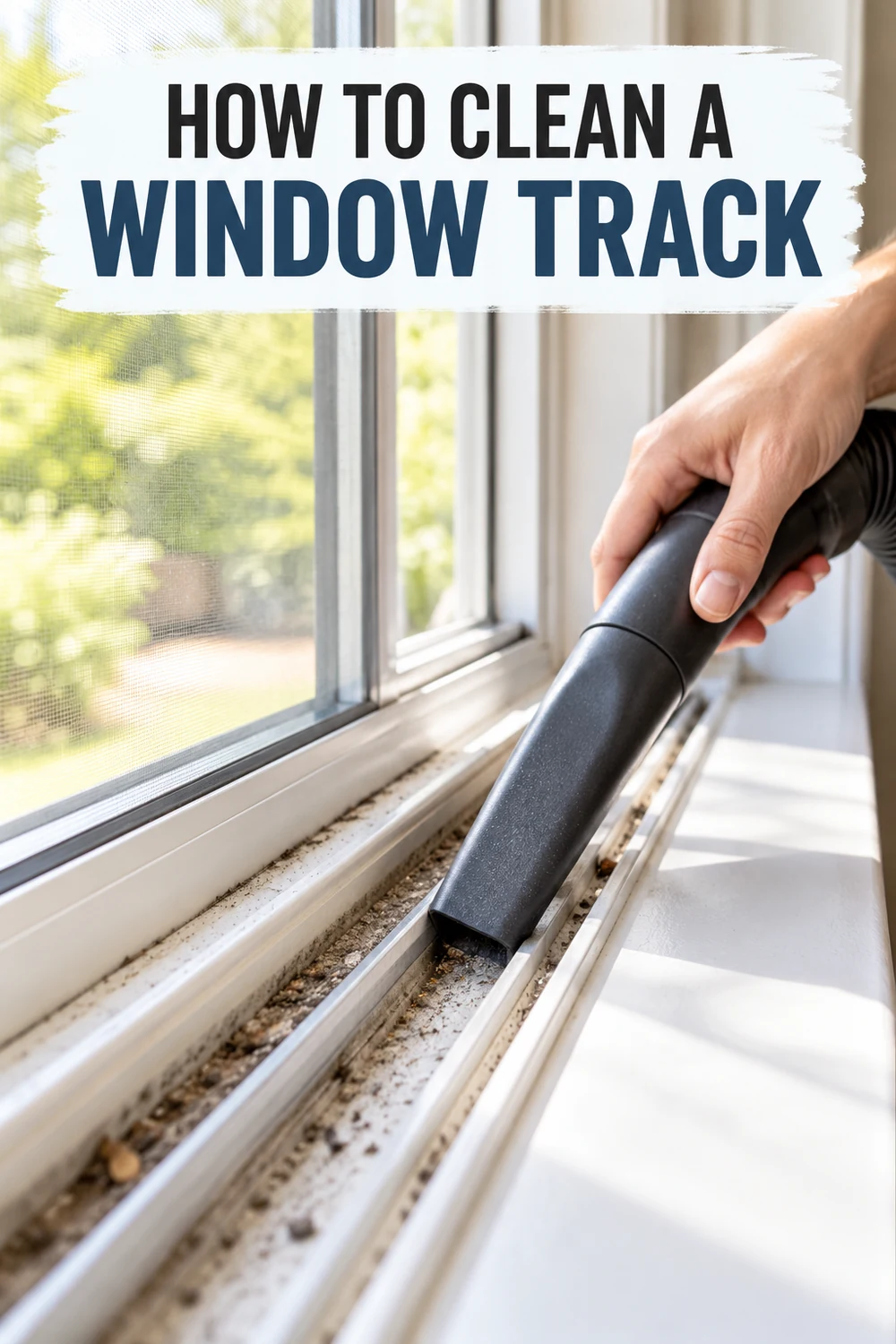
Fit the crevice tool onto your vacuum and move it slowly through every open channel. Hold the nozzle over each corner for 5 to 10 seconds so it can pull out sand, dead insects, and loose dust. Do not add water yet. Dry dirt is much easier to remove, and vacuuming now keeps it from turning into a sticky paste later.
Brush the dry corners
Use an old, dry toothbrush to break up the dirt that the vacuum could not lift. Work with short strokes toward the center of the track. Keep the brush nearly upright so the bristles reach the edges. If the dirt is hard, press firmly but avoid scraping painted or vinyl surfaces with the plastic head.
Wrap a dull knife with cloth
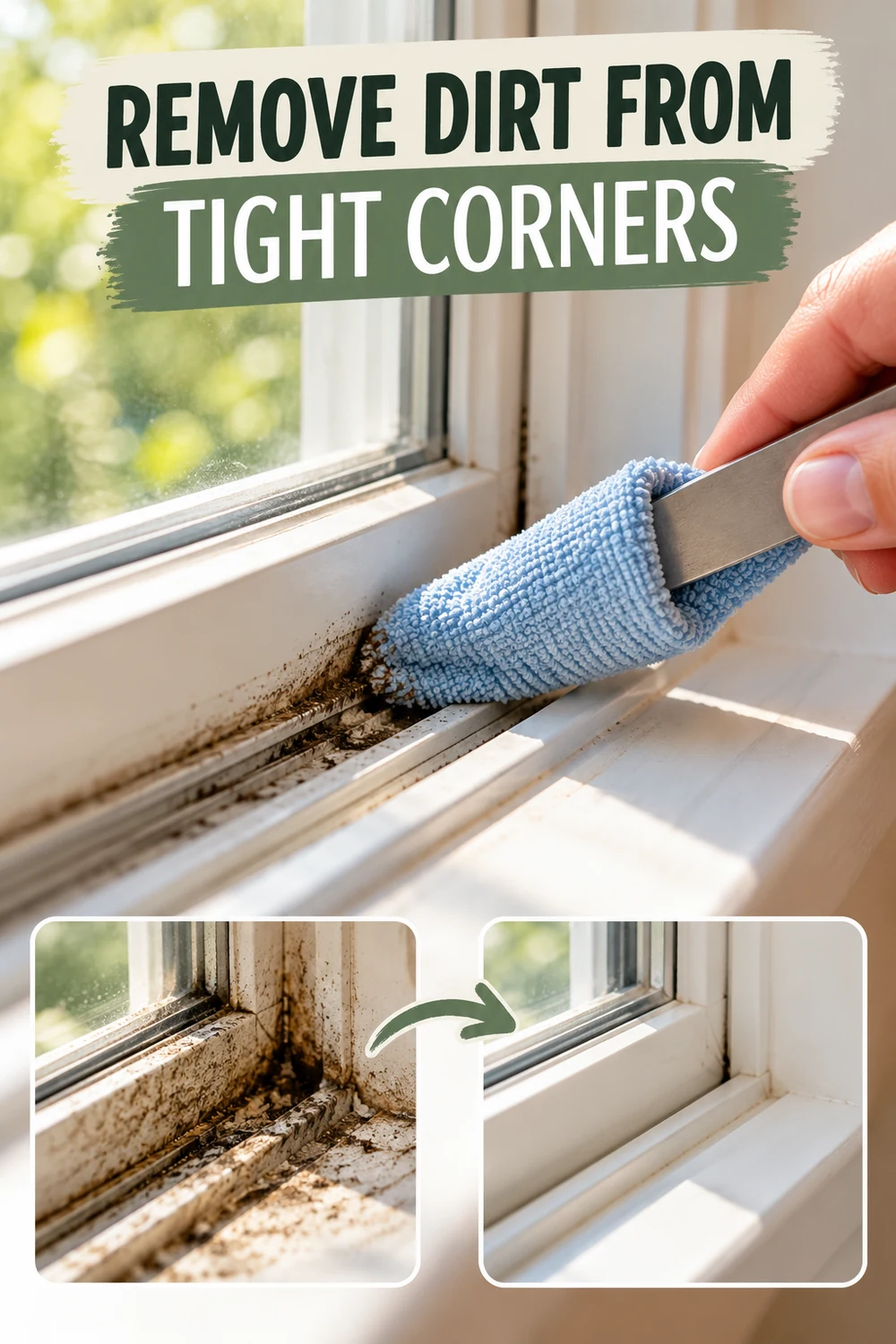
Place a clean microfiber cloth over the rounded end of a dull butter knife. Fold enough fabric around the metal to create a soft padded tip. Secure the cloth with your fingers rather than a rubber band, which can make the tool too thick. If you do not have a butter knife, use a plastic putty knife, an old gift card, or a wooden craft stick.
Lift grime from tight corners
Push the wrapped tip into one corner and drag it toward the open center. Use light pressure and repeat until the cloth stops picking up dark residue. Refold the cloth to expose a clean section as it gets dirty. Keep the metal fully covered so it cannot scratch the track finish or damage the soft weather seal.
Mix a mild cleaning solution
Combine 2 cups of warm water with 1 teaspoon of mild dish soap in a small bowl or spray bottle. Stir or shake for a few seconds. More soap does not clean better; it leaves a film that attracts new dust. Avoid mixing bleach, ammonia, or other cleaners. If your window maker lists a specific cleaner, follow that advice instead.
Dampen the cleaning brush
Dip only the toothbrush bristles into the solution, then tap the brush against the bowl to remove extra water. If using a spray bottle, spray the brush rather than the track. The bristles should feel damp, not dripping. This gives you enough moisture to soften grime without sending water into the wall, wood frame, or hidden window hardware.
Scrub each narrow channel
Work on one channel at a time with short back-and-forth strokes. Spend about 30 seconds on each dirty section, then pause to see whether the grime has softened. Angle the bristles into the corners and around the raised rail. Rewet the brush only when it starts to drag. A second light pass is safer than flooding a stubborn spot.
Wipe away the loosened grime
Press a clean section of microfiber cloth into the wet channel and pull it toward you. Turn the cloth after every pass so dirty water does not spread. Use the cloth-wrapped knife again where your finger cannot fit. Continue until the cloth comes away nearly clean. If soap remains, make one final pass with a cloth dampened in plain water.
Clear the drainage holes
Find the small weep holes near the outer edge of the track. They let rainwater drain away. Roll a cotton swab gently inside each opening to lift surface dirt. Do not force the swab deep into the frame or push debris inward. If the opening is blocked beyond reach, check the window maker’s care guide before using any thin tool.
Dry the entire track
Use the second microfiber cloth to dry the base, corners, raised rails, and the area around the weep holes. Leave the window open for another 10 to 15 minutes so hidden moisture can evaporate. This matters most on wooden frames, where standing water can stain the finish or swell the wood.
Test the window movement
Slide or lower the window through its full range two or three times. It should move without catching on loose grit. Listen for scraping and look for dirt pushed out by the sash. Wipe away any new residue. If the window still sticks after the track is clean and dry, the issue may be worn rollers, bent hardware, or swollen wood rather than dirt.
Window Track Troubleshooting
| If This Happens | Try This |
|---|---|
| Dirt turns muddy | Blot it dry, vacuum again, then use less solution. |
| Sticky soap film remains | Wipe once with a cloth dampened in plain warm water. |
| Corner stays dark | Repeat the wrapped-tool pass with a clean cloth section. |
| Window still sticks | Check rollers, locks, and frame alignment after the track dries. |
Frequently Asked Questions
Can I use vinegar on a window track?
Some finishes tolerate diluted vinegar, but others can dull or discolor. Mild dish soap and warm water are the safer first choice. Check the maker’s care guide before using an acidic cleaner.
How often should I clean window tracks?
Vacuum them every one to two months and do a damp clean about twice a year. Homes near busy roads, trees, or dusty yards may need more frequent care.
Can I pour water into the track?
No. Extra water can move into the wall, damage wood, or carry dirt into hidden parts. Put solution on the brush or cloth instead.
Should I lubricate the track after cleaning?
Only if the window maker recommends it. The wrong oil can collect dust and make the track dirtier. Many vinyl tracks work best when they are clean and dry.
Quick Reference Card
Use: Vacuum, toothbrush, microfiber cloths, wrapped dull knife, cotton swabs, 2 cups warm water, and 1 teaspoon dish soap.
- Protect the sill.
- Vacuum dry debris.
- Brush packed dirt.
- Lift corner grime.
- Mix mild soap solution.
- Scrub damp, not wet.
- Wipe each channel.
- Clear weep holes.
- Dry for 10–15 minutes.
- Test the window.
Keep the track clean
You now know how to clean a window track without flooding the frame or scratching the corners. A quick vacuum every month keeps most grit from becoming packed grime. Keep an old toothbrush with your cleaning supplies so the next touch-up takes only a few minutes.
Save this guide to your home-cleaning Pinterest board, then use it when the next dusty track needs attention.