
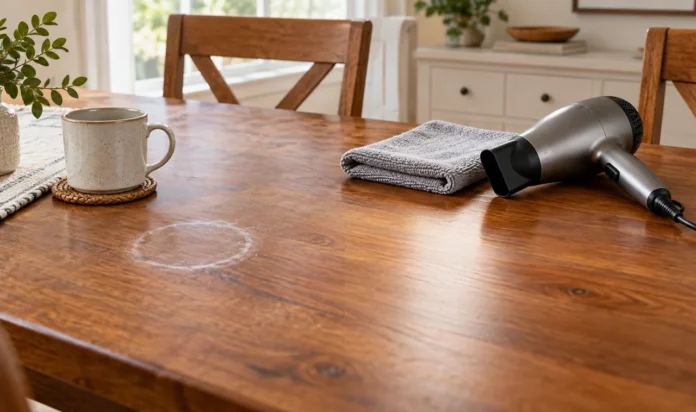


Water rings have a way of showing up on the table you care about most. A cold glass sits unnoticed for an hour, and suddenly there is a pale circle trapped beneath the shine. If you are wondering how to remove a watermark on wood, the safest approach is to start with the mildest treatment and increase the strength only when the mark refuses to move.
This guide focuses on white or cloudy watermarks. Those marks usually mean moisture is caught inside the clear finish rather than deep in the wood. Gentle warmth can release that moisture without stripping the surface. Petroleum jelly can help with haze that remains afterward.
Plan for 30–45 minutes of active work. A stubborn mark may need to sit overnight. You will not need a sander or strong cleaner. By the end, you will know how to test the finish, treat the mark in the right order, and stop before causing permanent damage. If the ring is dark brown or black, do not use the same method. That color often means water has passed through the finish and reached the wood itself.
- Identify whether the mark is white or dark.
- Check the finish in a hidden spot.
- Clean the marked area.
- Dry the surface fully.
- Warm a white watermark with low heat.
- Apply petroleum jelly if haze remains.
- Leave the treatment in place.
- Wipe away all residue.
- Buff along the wood grain.
- Stop before treating a dark watermark.
Identify Whether the Watermark Is White or Dark
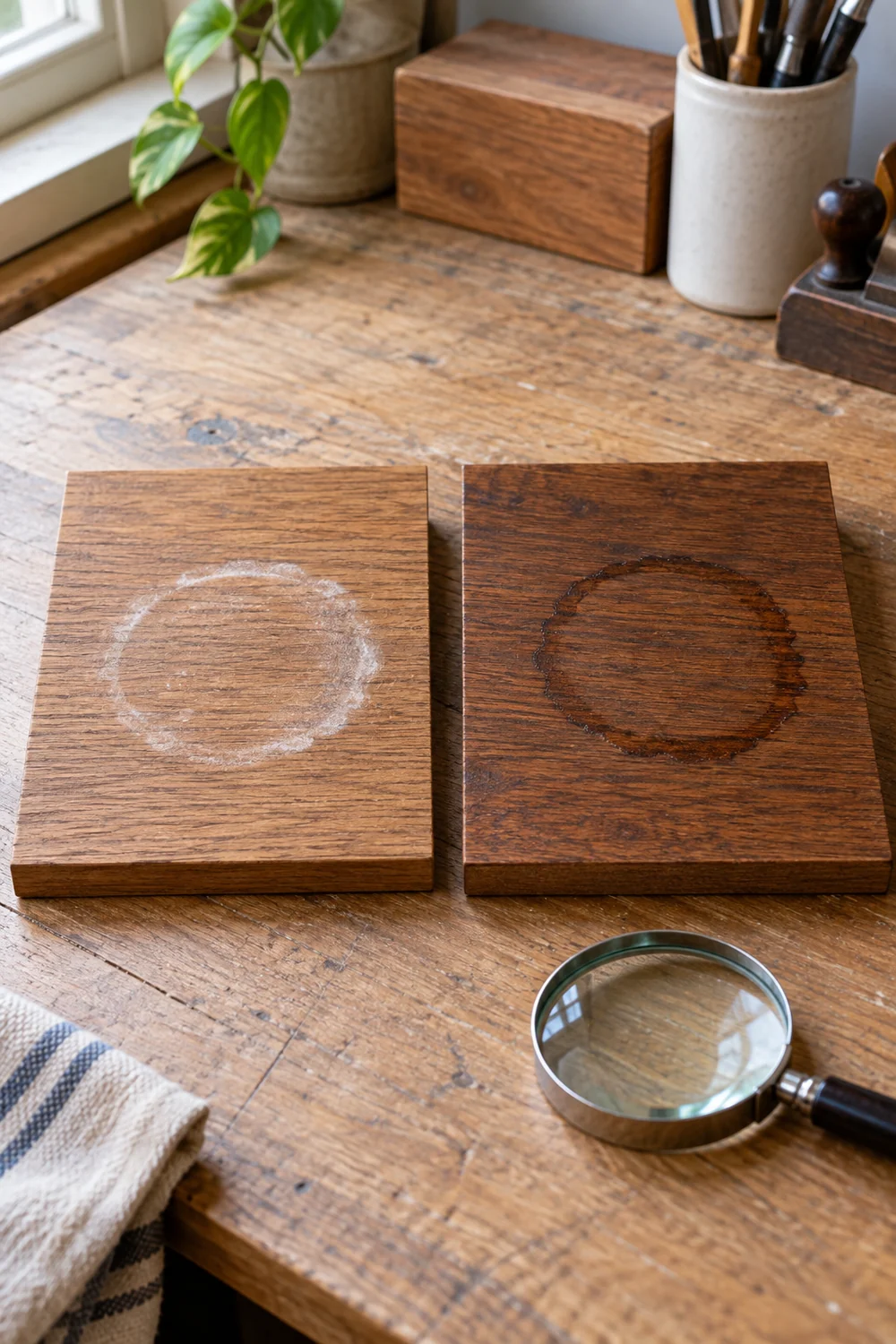
Look at the ring in bright, indirect light. A white, pale gray, or cloudy mark usually sits inside the clear finish and is the right candidate for this method. A brown or black ring often reaches the wood beneath it.
Run one dry fingertip over the area without pressing. Stop if the finish feels cracked, sticky, raised, or flaky. Those signs call for finish repair rather than moisture removal.
Check the Wood Finish in a Hidden Spot
Choose an area underneath the tabletop or along the back edge. Dab it once with a cotton swab lightly moistened with warm water, then wait 5 minutes.
Check for dullness, softness, color transfer, or a sticky feel. If none appears, continue. If the finish changes, stop and consult a furniture restorer. Antique, shellac, lacquered, waxed, and hand-painted surfaces can react differently even when they look similar.
Clean the Mark With a Damp Microfiber Cloth
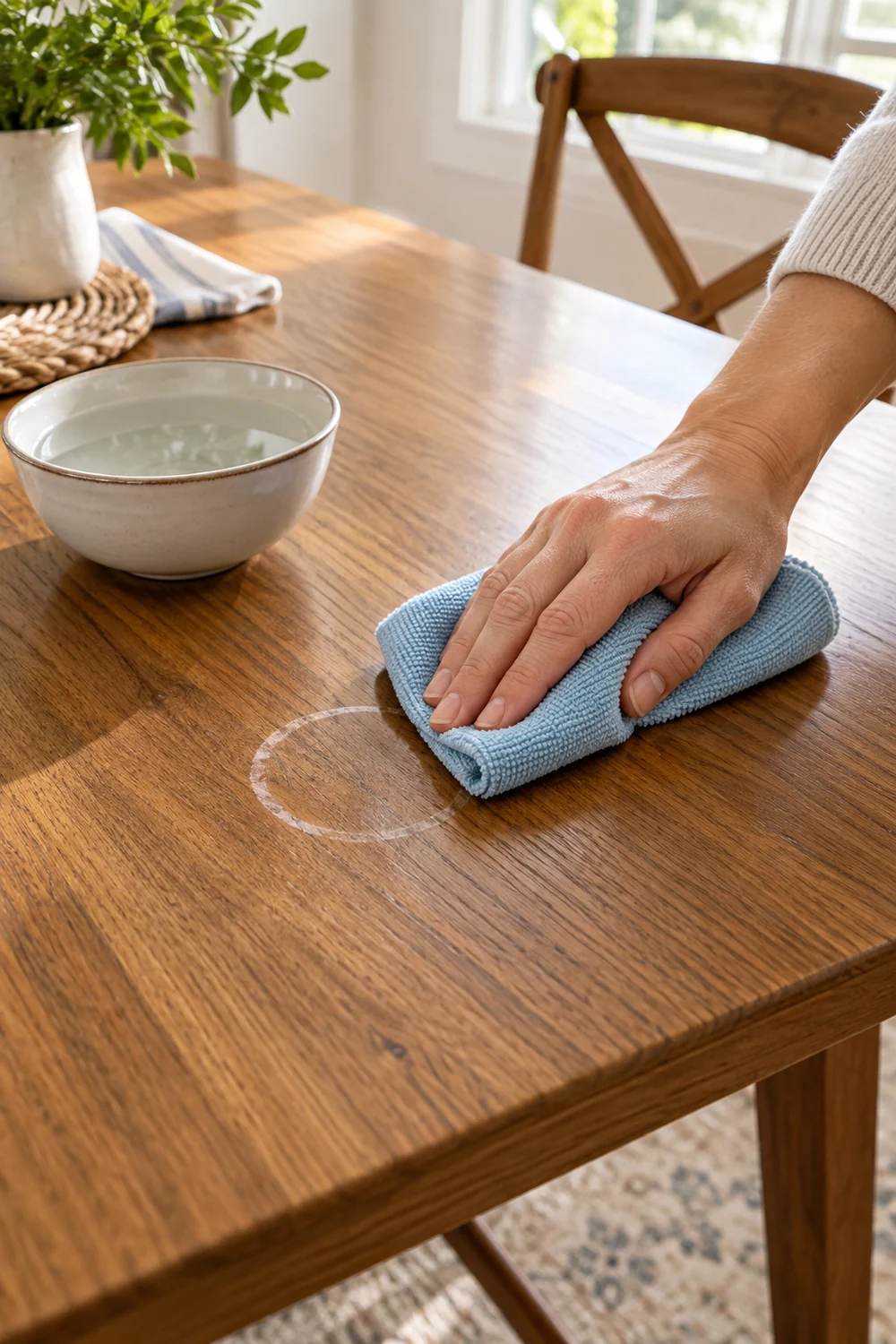
Mix 2 cups of warm water with 1 drop of mild dish soap. Dip one corner of a microfiber cloth into the water and wring it until it feels barely damp. Wipe across the mark once, following the direction of the grain.
Use a dry section of the cloth to collect loosened dirt. The goal is to remove grease and polish residue, not soak the surface. Water left along an edge can create a second mark.
Dry the Surface Completely
Leave the cleaned area uncovered for 20 minutes. Keep drinks, cloths, and decorations away from the surface while it dries.
Do not begin heating while the wood still feels cool or damp. Remaining surface water can spread the cloudy patch instead of clearing it. Under bright light, the finish should look clean and evenly dry before you continue.
Warm the White Watermark With a Hair Dryer
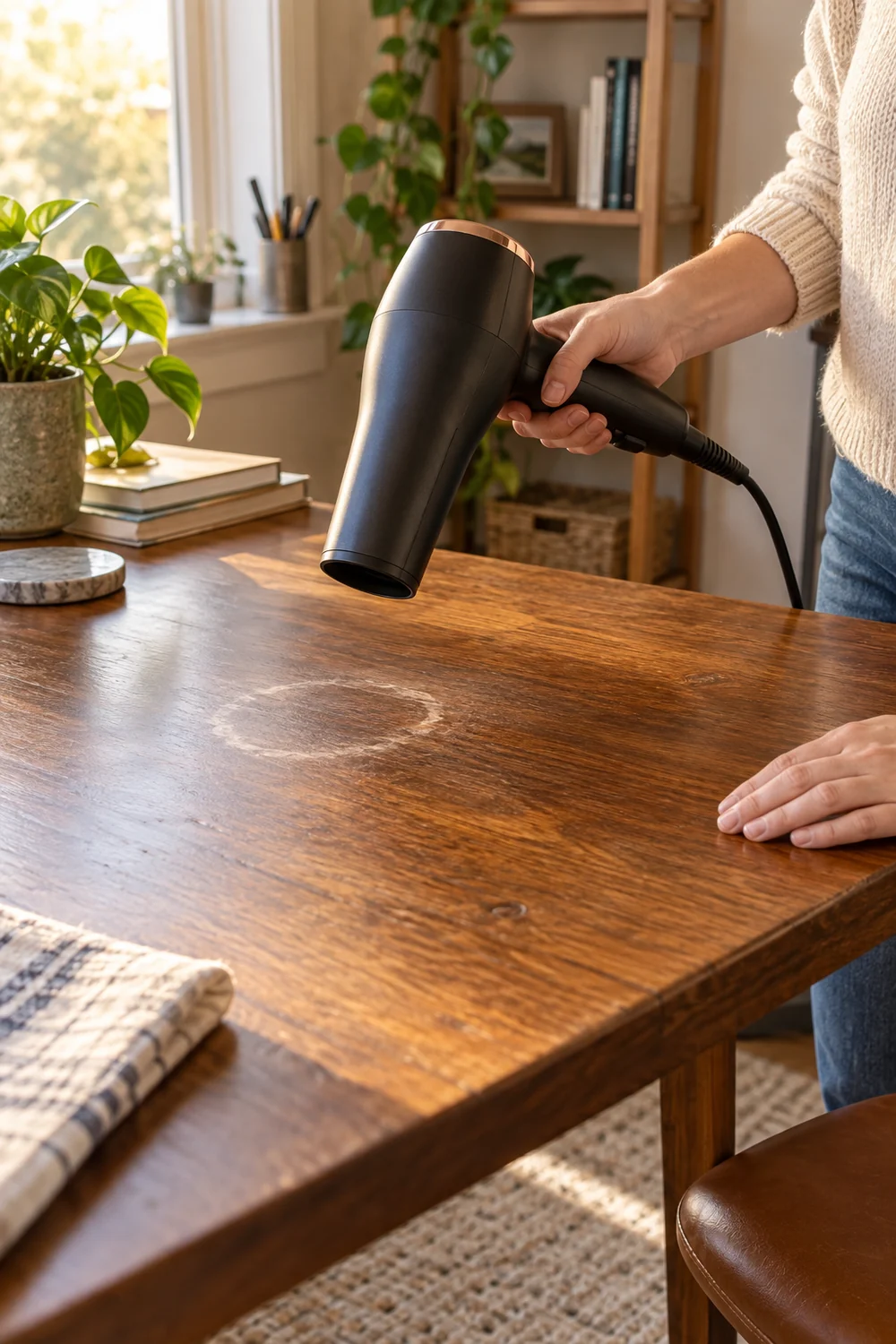
Set the hair dryer to low heat and hold it 6 inches above the mark. Move it continuously from side to side for 15 seconds, then stop for 30 seconds and check the ring. Repeat for no more than 3 minutes in total.
The moving warm air helps trapped moisture escape from the finish. Stop immediately if the surface becomes hot, sticky, unusually shiny, or dull.
Apply Petroleum Jelly to Any Remaining Haze
Use a cotton swab or the corner of a clean cloth to spread a pea-sized amount of plain petroleum jelly over the remaining white area. Keep the layer thin and contained within the mark.
The oil can replace moisture trapped in tiny gaps within the finish, making the cloudy patch less visible. Avoid scented, tinted, or medicated products because their added ingredients may leave residue or alter the sheen.
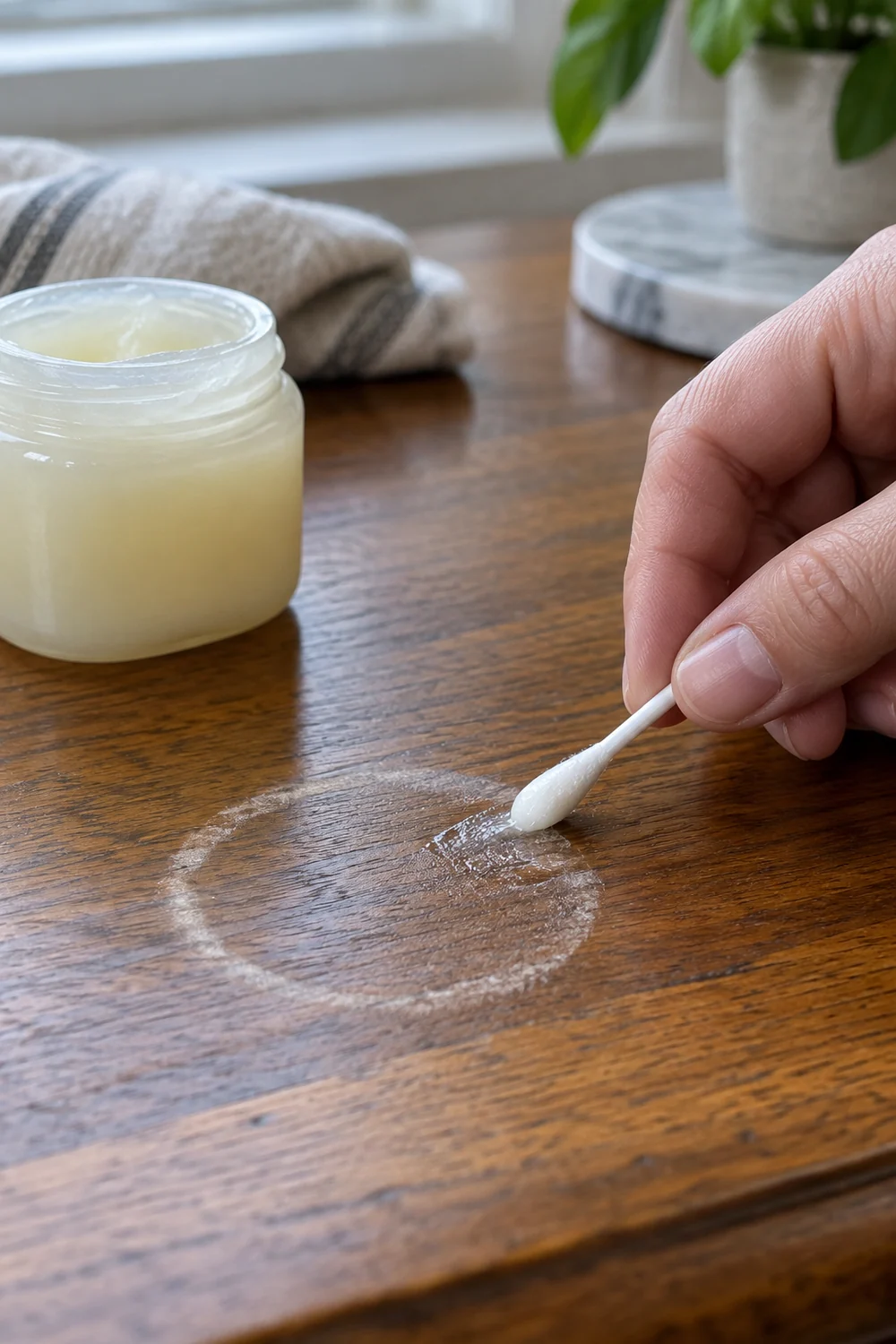
Leave the Treatment on the Mark
Allow the petroleum jelly to remain in place for at least 4 hours. A stubborn cloudy ring can stay covered for up to 8 hours or overnight.
Keep the surface uncovered and place a note nearby so nobody sets a cup or plate on it. Do not rub the treatment during this period. The oil needs uninterrupted contact with the finish to reduce the pale haze.
Wipe Away the Treatment
Fold a clean microfiber cloth into a small pad and lift the petroleum jelly with short strokes. Turn the cloth to a fresh section after each pass so you do not spread oily residue across the table.
Continue until the surface no longer feels slick. Avoid adding water or cleaner at this stage. If a faint ring remains, wait 24 hours before repeating the treatment once.
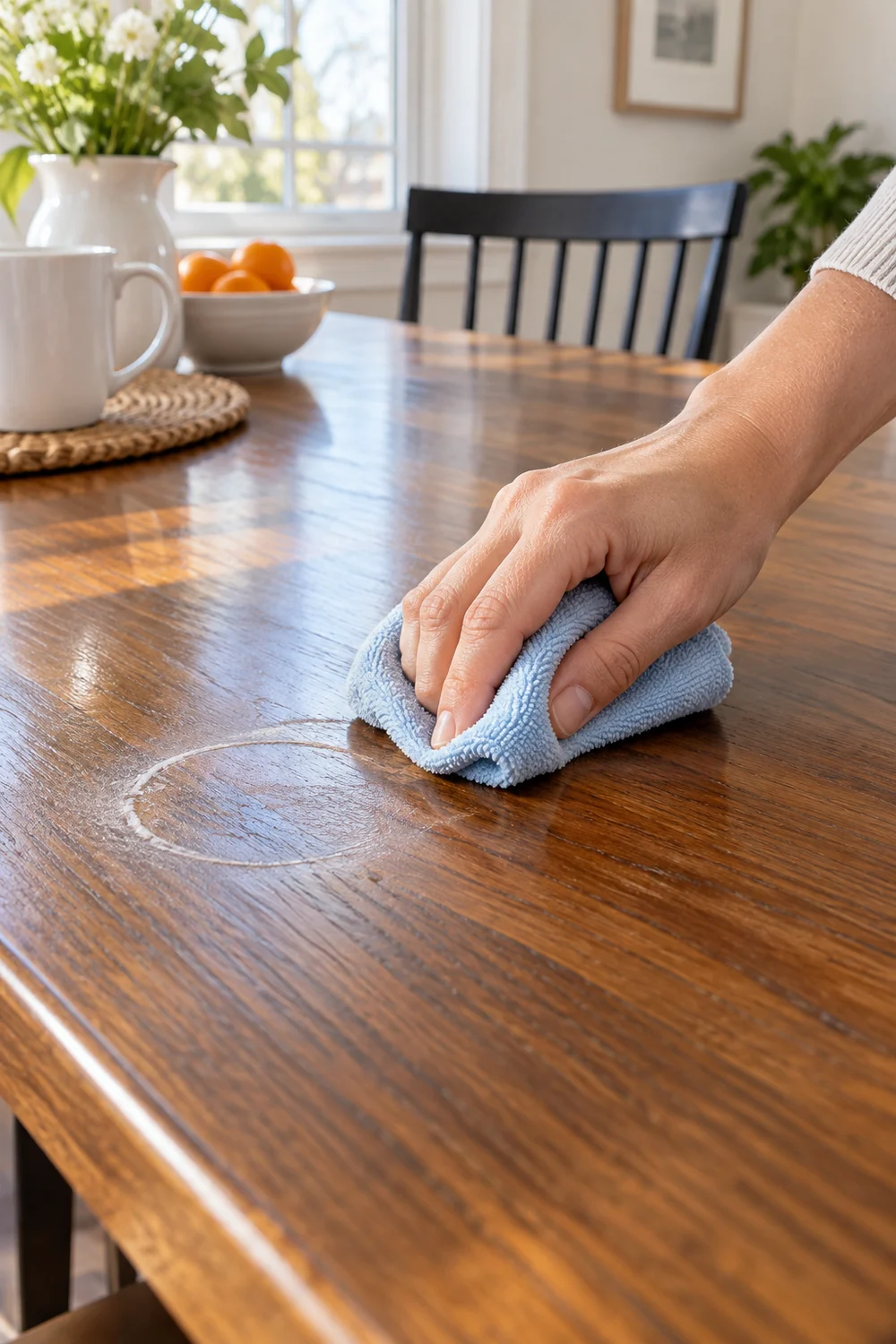
Buff the Wood Along the Grain
Use a dry microfiber cloth and make long, light strokes in the direction of the wood grain for 1–2 minutes. Keep the pressure even across the treated area and the surrounding finish.
Buffing removes the final oily film and helps blend the sheen. If you normally use a polish approved for this furniture, apply it only after the surface has rested for 24 hours. Stop if the finish becomes sticky or develops uneven glossy patches.
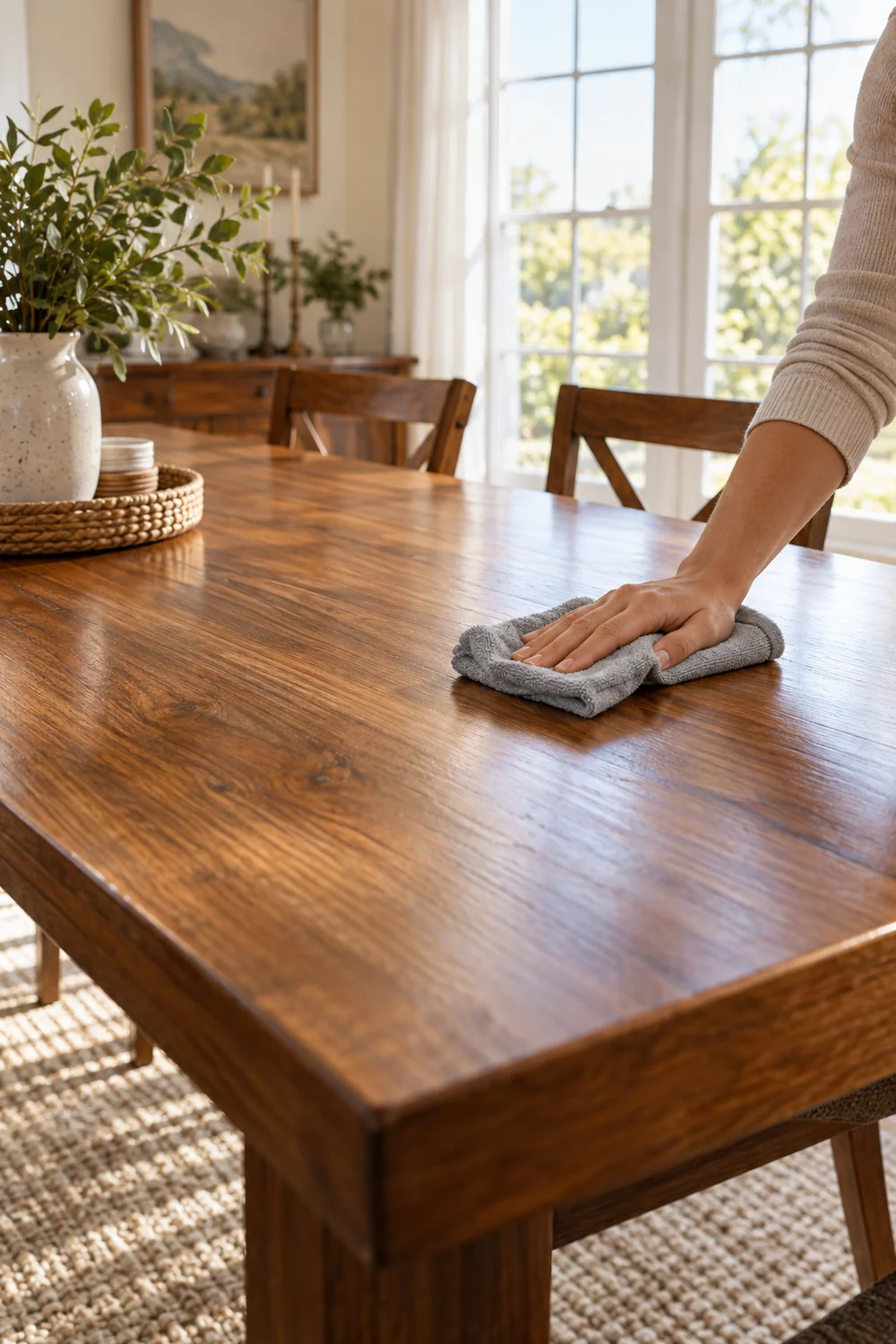
Stop Before Treating a Dark Watermark
Do not apply heat, petroleum jelly, toothpaste, baking soda, or household oil to a brown or black stain. Dark color usually means moisture has passed through the protective finish and entered the wood fibers.
Removing that damage may require stripping the finish, treating the bare wood, matching the stain color, and resealing the area. Contact a furniture restorer if the piece is antique, valuable, veneered, hand-painted, or difficult to color-match.
| If This Happens | Try This |
|---|---|
| The white ring becomes smaller but does not disappear. | Let the surface rest for 24 hours, then repeat the petroleum jelly treatment once. |
| The finish feels warm or sticky. | Stop using heat and allow the surface to cool untouched for at least 30 minutes. |
| An oily patch remains after wiping. | Buff with a fresh dry microfiber cloth. Do not add water, soap, or more petroleum jelly. |
| The treated area looks shinier than the rest. | Leave it alone for 24 hours. Buff the full tabletop lightly if the sheen still looks uneven. |
| The watermark is brown or black. | Stop surface treatments. Ask a furniture restorer to inspect the finish and the stained wood underneath. |
- Two microfiber cloths
- Warm water
- One drop of mild dish soap
- Hair dryer with low heat
- Plain petroleum jelly
- Cotton swab
- Timer
- Identify the mark color.
- Test a hidden area.
- Clean the ring.
- Dry for 20 minutes.
- Warm with low heat.
- Apply petroleum jelly.
- Wait 4–8 hours.
- Wipe away the residue.
- Buff along the grain.
- Stop if the stain is dark.
Bring Back the Wood’s Clear Finish
You now know how to remove a watermark on wood without reaching for harsh cleaners or sanding through a healthy finish.
Give the treated area 24 hours to settle before judging the final sheen. Add a coaster or protective pad once the surface is ready for use again.
Save this guide to your Pinterest wood-care board so the steps are close at hand the next time a glass leaves a cloudy ring.