
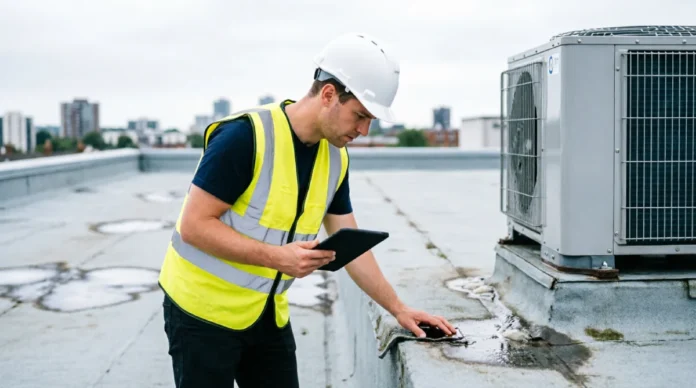

Roof leaks in commercial buildings are one of the most costly and disruptive maintenance issues property owners face. A small leak can quickly turn into insulation damage, mold growth, electrical risks, and operational downtime. The biggest challenge is that leaks often start silently beneath the roofing surface long before they become visible inside the building.
Understanding what causes these leaks, and how to fix and prevent them can significantly reduce repair costs and extend the life of a commercial roofing system.
Why Commercial Roof Leaks Are So Common
Commercial roofs are built for durability, but they operate under constant environmental and structural stress. Unlike residential roofs, they are typically flat or low-slope and cover large surface areas. This design makes them more vulnerable to water pooling, drainage issues, and hidden damage.
Seasonal weather changes, foot traffic from maintenance crews, and rooftop mechanical systems all increase the chances of wear and tear. Over time, even small weaknesses can turn into active leaks.
Main Causes of Roof Leaks in Commercial Buildings
1. Ponding Water on Flat Roofs
Flat commercial roofs often struggle with drainage. When water collects in low areas and remains there for more than 48 hours, it becomes a serious risk.
Standing water leads to:
- Breakdown of roofing membranes
- Added structural stress
- Weakening of seams and joints
If not addressed, ponding water slowly accelerates roof failure.
2. Aging Roofing Materials
All roofing systems degrade over time. Materials like TPO, EPDM, and PVC are designed for long-term performance, but constant exposure to UV rays, heat, cold, and moisture eventually causes deterioration.
Common aging issues include:
- Cracks and surface brittleness
- Shrinking membranes
- Loose or separated seams
- Loss of waterproofing strength
As the roof ages, even minor rainfall can find its way inside.
3. Poor Installation Quality
Installation errors are one of the leading causes of early roof failure. Even high-quality materials will fail if not installed correctly.
Typical installation problems include:
- Improper seam welding
- Weak flashing details
- Incorrect slope design
- Poor sealing around roof penetrations
These issues often remain hidden until the roof is exposed to heavy rain or storm stress.
4. Flashing Failures Around Penetrations
Commercial roofs contain multiple penetrations such as HVAC units, vents, and pipes. Each penetration is a potential leak point if not properly sealed.
Flashing problems may include:
- Cracked or dried sealant
- Loose metal edges
- Gaps around equipment bases
- Corrosion over time
These small failures are often responsible for major interior leaks.
5. Blocked Drains and Gutters
Drainage systems are critical for moving water off the roof. When drains become clogged with debris, leaves, or ice, water begins to pool.
This causes:
- Overflow into weak roof areas
- Increased membrane pressure
- Faster deterioration of roofing materials
Routine cleaning is essential to prevent this avoidable issue.
6. Storm and Weather Damage
Severe weather can cause both visible and hidden roof damage. High winds can lift membranes, hail can puncture surfaces, and heavy rain can expose weak points.
Even when damage is not immediately visible, storms often weaken the roof structure enough for leaks to develop later.
Warning Signs of a Commercial Roof Leak
Most leaks begin long before water appears indoors. Early detection is key to preventing major damage.
Common warning signs include:
- Water stains on ceilings or walls
- Bubbling or peeling paint
- Musty odors inside the building
- Mold growth in hidden areas
- Damp insulation or ceiling tiles
- Increased indoor humidity
If any of these appear, the leak is already active.
Solutions for Commercial Roof Leaks
1. Professional Roof Inspection
The first step in any repair process is a full inspection. Water rarely enters where it appears inside the building, so identifying the true source is critical.
A professional inspection checks:
- Membrane condition
- Seam integrity
- Drainage performance
- Flashing and penetration points
2. Targeted Repairs
Once the source is found, repairs may include:
- Resealing or replacing seams
- Repairing flashing around penetrations
- Patching damaged membrane sections
- Clearing drainage systems
Effective repairs focus on fixing the root cause, not just visible symptoms.
3. Roof Replacement or System Upgrade
If damage is widespread or the roof is near the end of its lifespan, replacement may be the most cost-effective solution.
Modern systems like Commercial Roofing Systems provide improved durability, energy efficiency, and long-term protection.
Upgrading a roofing system can significantly reduce future repair costs and improve long-term performance.
4. Preventive Maintenance
Preventive maintenance is the most effective way to avoid unexpected leaks. A regular maintenance plan should include:
- Bi-annual inspections
- Drain cleaning and debris removal
- Sealant checks and minor repairs
- Post-storm evaluations
Consistent maintenance can extend roof lifespan and reduce emergency repairs.
How to Prevent Future Roof Leaks
Preventing leaks requires ongoing attention rather than reactive fixes. Property owners should prioritize:
- Regular professional inspections
- Immediate repair of small issues
- Proper drainage maintenance
- Monitoring rooftop equipment conditions
A proactive approach ensures small problems never escalate into major damage.
Conclusion
Roof leaks in commercial buildings are usually the result of predictable issues such as aging materials, poor drainage, installation errors, or lack of maintenance. The key to avoiding costly damage is early detection and consistent upkeep.
A strong commercial roofing system protects not just the building, but the business inside it.

