



Building a skincare routine does not have to mean filling your bathroom shelf with ten different products.
For most men, a good routine starts with a few basics: cleanse the skin, keep it moisturized, protect it from the sun, and add targeted products only when there is a specific concern you want to address.
That is where skin care kits for men can make things easier.
Instead of choosing every product separately, a well-designed kit can give you the essentials needed for a simple morning and evening routine. The key, however, is choosing products based on your skin type and needs, rather than buying a kit simply because it says “for men” on the packaging.
Whether you are completely new to skincare or want to simplify an existing routine, this guide explains what a men’s skincare kit should include, how to choose one for your skin type, and how to use each product in the right order.
What Is a Skin Care Kit for Men?
A men’s skin care kit is simply a collection of products designed to cover several steps of a skincare routine.
A basic kit may contain:
- Facial cleanser
- Moisturizer
- Sunscreen
More complete kits may also include:
- Exfoliating products
- Serums
- Acne treatments
- Eye creams
- Toners
- Shaving or post-shave products
But more products do not automatically mean a better routine.
If you are a beginner, starting with three reliable essentials is often much easier than trying to follow a complicated multi-step routine from day one.
What Should Be in a Good Skin Care Kit for Men?

If you are comparing skin care kits for men, look beyond attractive packaging and check whether the kit actually contains products you will use consistently.
Here are the core products worth considering.
1. A Gentle Facial Cleanser
Cleansing helps remove sweat, excess oil, dirt, sunscreen, and other buildup from the surface of your skin.
You do not need your face to feel extremely tight or “squeaky clean” afterward. In fact, an overly harsh cleanser may leave the skin feeling dry or irritated.
Look for a cleanser suited to your skin type.
If you have oily or acne-prone skin, a lightweight or foaming cleanser may feel comfortable. If your skin is dry or sensitive, a mild cream or hydrating cleanser may be a better fit.
And remember: a cleanser does not need to be unusually strong simply because it is marketed toward men.
2. A Moisturizer
Moisturizer is useful even if your skin is naturally oily.
Its job is to help maintain hydration and support the skin barrier.
The texture you choose can vary.
For oily skin:
Try a lightweight lotion or gel moisturizer.
For dry skin:
A richer cream may feel more comfortable.
For sensitive skin:
Look for simple, fragrance-free formulas whenever possible.
A good moisturizer should leave your skin comfortable rather than extremely greasy, sticky, or tight.
3. Broad-Spectrum Sunscreen
Sunscreen is one of the most important products in a daytime skincare routine.
Look for a broad-spectrum sunscreen with SPF 30 or higher for exposed skin when you are outdoors.
Using sunscreen regularly helps protect skin from UV damage, including sunburn and premature visible aging.
Choose a texture you are comfortable wearing because the sunscreen sitting unused in your cabinet cannot help you.
You can find:
- Lightweight fluid sunscreens
- Gel formulas
- Cream sunscreens
- Matte-finish products
- Moisturizers containing SPF
The best option is generally one that works with your skin and that you are willing to apply consistently.
4. Optional Treatment or Serum
This is where many skincare routines become unnecessarily complicated.
You do not automatically need a serum.
Add a targeted product only when there is a reason for it.
For example, someone dealing with clogged pores may choose a product containing salicylic acid, while someone focused mainly on hydration may prefer a hydrating serum.
Think of treatment products as optional additions, not the foundation of your routine.
The Simple 3-Step Skincare Routine for Men
If you have never followed a skincare routine before, start here.
| Step | Product | When to Use |
|---|---|---|
| 1 | Gentle Cleanser | Morning and/or evening |
| 2 | Moisturizer | Morning and evening |
| 3 | SPF 30+ Sunscreen | Morning/daytime |
That is enough to build a practical foundation.
Once you are comfortable doing these steps consistently, you can decide whether your skin actually needs anything else.
Morning Skincare Routine for Men
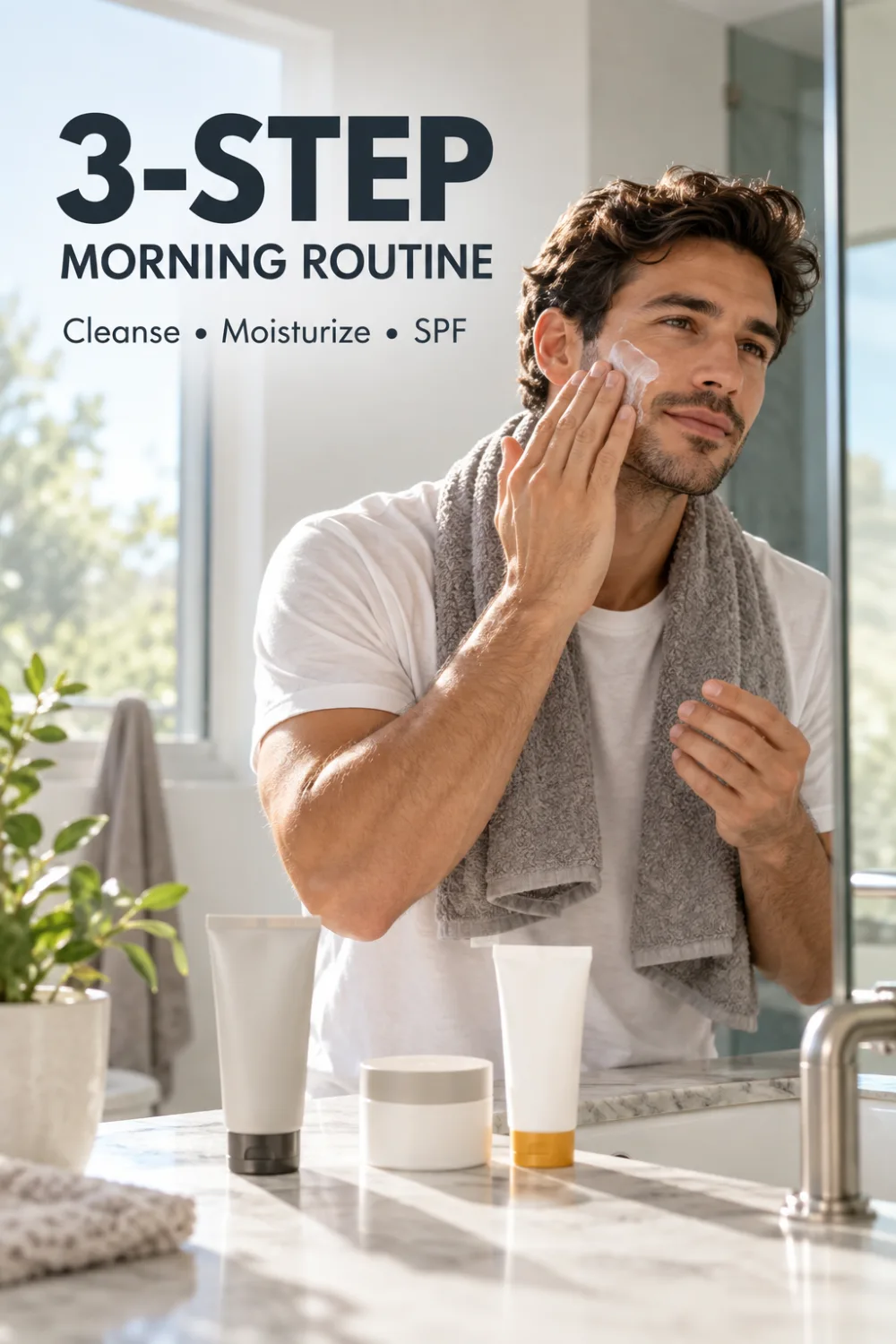
Your morning routine should be quick enough that you can realistically follow it every day.
Step 1: Cleanse
Wash your face gently with a facial cleanser and lukewarm water.
If you have very dry or sensitive skin, you may find that a full cleanse every morning is not always necessary. Pay attention to how your skin responds.
Avoid aggressively scrubbing your face.
Step 2: Moisturize
Apply a suitable moisturizer while the skin is comfortable and slightly hydrated.
You do not need a heavy layer. Use enough to cover your face evenly.
Step 3: Apply Sunscreen
Finish your daytime routine with broad-spectrum SPF 30 or higher when you will be exposed to daylight outdoors.
Do not forget commonly missed areas such as the ears and neck.
If you are outdoors for an extended period, sweating, or swimming, follow the sunscreen label’s directions for reapplication.
Your Morning Routine at a Glance
Cleanse → Moisturize → Sunscreen
Simple routines are much easier to maintain than complicated routines you stop using after a week.
Night Skincare Routine for Men

Your evening routine is the time to remove the day’s buildup and give your skin basic hydration.
Step 1: Cleanse
Wash away sweat, dirt, oil, and sunscreen.
This step is especially important if you have been exercising, working outdoors, or wearing water-resistant sunscreen.
Step 2: Apply a Targeted Treatment if Needed
If you use an acne treatment or another targeted skincare product, this is often where it fits into the routine.
Follow the instructions for your specific product rather than assuming every active ingredient should be used every night.
Introducing too many strong products at the same time can increase the chance of irritation.
Step 3: Moisturize
Finish with your moisturizer.
Your Night Routine at a Glance
Cleanse → Optional Treatment → Moisturize
That is all many men need.
How to Choose a Skin Care Kit for Your Skin Type
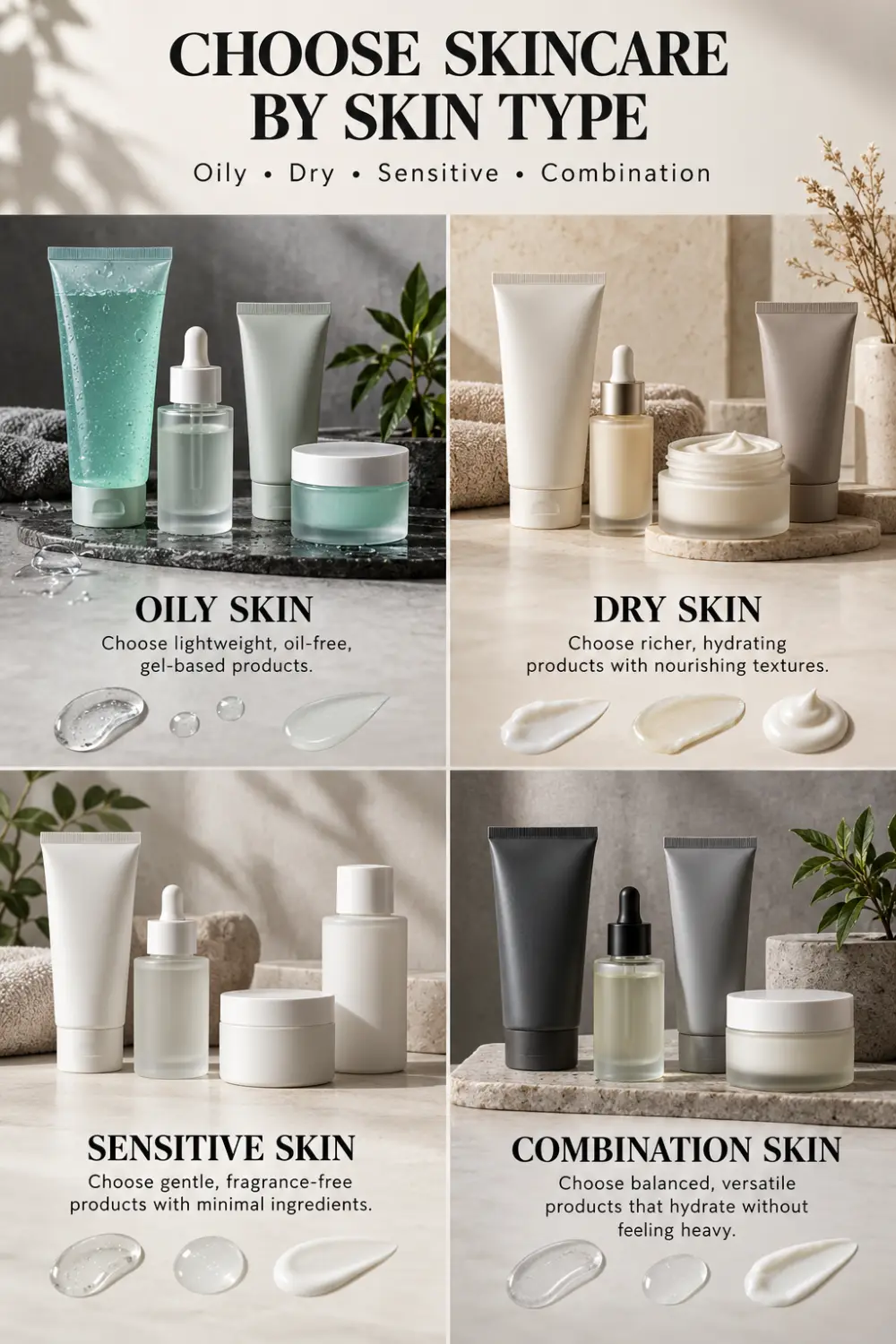
There is no single skincare kit that works perfectly for everyone.
Skin type should be one of the first things you consider when shopping.
Skin Care Kit for Oily Skin
Oily skin tends to look shiny and may produce noticeable excess sebum during the day.
Look for:
- Gentle facial cleanser
- Lightweight moisturizer
- Non-comedogenic products
- Lightweight sunscreen
- Salicylic acid product if clogged pores are a concern
One common mistake is trying to strip every trace of oil from the skin with harsh cleansers.
Oily skin still needs gentle care and hydration.
Skin Care Kit for Dry Skin
Dry skin may feel rough, tight, flaky, or uncomfortable.
Look for:
- Gentle hydrating cleanser
- Richer moisturizer
- Fragrance-free options if you are easily irritated
- Creamier skincare textures
- Broad-spectrum sunscreen that does not leave skin feeling excessively dry
Ingredients commonly found in hydrating products include ceramides and hyaluronic acid.
Avoid assuming that frequent exfoliation is the answer to flaky skin. Sometimes the skin simply needs a gentler routine and better moisturization.
Skin Care Kit for Combination Skin
Combination skin can feel oily in areas such as the forehead, nose, and chin while remaining normal or dry elsewhere.
A balanced routine may include:
- Mild cleanser
- Lightweight moisturizer
- Non-comedogenic sunscreen
You may not need completely different products for every area of your face.
Start simple and adjust only if necessary.
Skin Care Kit for Sensitive Skin
Sensitive skin may sting, burn, become red, or feel uncomfortable after using certain products.
Keep the routine minimal.
Look for:
- Mild cleanser
- Fragrance-free moisturizer
- Sunscreen you can tolerate comfortably
- Simple formulas with fewer unnecessary extras
Introduce new products gradually rather than changing your entire routine overnight.
Skin Care Kit for Acne-Prone Skin
If clogged pores and breakouts are a frequent problem, choose products labeled non-comedogenic or oil-free where appropriate.
A simple kit might include:
- Gentle cleanser
- Lightweight moisturizer
- Non-comedogenic sunscreen
- A targeted acne product
Salicylic acid is one ingredient commonly used for clogged pores and blackheads.
However, persistent, painful, widespread, or scarring acne deserves professional medical advice rather than endlessly adding new skincare products.
Useful Skincare Ingredients for Men to Know
You do not need to memorize an entire cosmetic chemistry textbook before buying skincare.
A few commonly seen ingredients are worth recognizing.
Salicylic Acid
Salicylic acid is commonly used in products designed for clogged pores, blackheads, and acne-prone skin.
Because it may be drying or irritating for some people, start carefully and follow the product directions.
Ceramides
Ceramides are lipids that are naturally part of the skin barrier.
They are commonly included in moisturizers designed to support hydration and barrier function.
They can be particularly useful to look for if your skin tends to feel dry.
Hyaluronic Acid
Hyaluronic acid is commonly included in hydrating skincare products.
You may find it in:
- Serums
- Moisturizers
- Lotions
- Gel creams
It does not need to be a separate step if your moisturizer already provides enough hydration.
Niacinamide
Niacinamide appears in many modern moisturizers and serums.
It can be a convenient ingredient in an otherwise simple formulation, but you do not need to purchase a separate niacinamide serum simply because it is trending.
Retinoids
Retinoids are used for several skin concerns, including acne and signs of photoaging.
They can also cause dryness or irritation, particularly when someone is new to them.
If you decide to use a retinoid, introduce it carefully, follow the product instructions, and avoid combining multiple irritating treatments without a clear reason.
Do Men Need Different Skincare Products Than Women?
Not necessarily.
There are biological differences in skin characteristics between men and women, and shaving creates some concerns that are particularly common among men.
But the basic principles of good skincare remain similar:
- Cleanse gently
- Moisturize appropriately
- Protect your skin from the sun
- Treat specific concerns when necessary
A moisturizer does not suddenly stop working because the packaging is not labeled “for men.”
Instead of focusing only on gendered packaging, pay attention to:
- Your skin type
- Ingredients
- Texture
- Fragrance
- Your specific skin concerns
- How your skin responds
Shaving Should Be Part of Your Skin Care Routine
For men who shave regularly, shaving technique can make a noticeable difference in how the skin feels afterward.
If you frequently deal with razor burn, ingrown hairs, or irritation, pay attention to both your razor and your technique.
Helpful habits include:
- Wetting the skin and facial hair before shaving
- Using shaving cream or another suitable shaving lubricant
- Shaving in the direction the hair grows when possible
- Avoiding repeated aggressive passes over the same area
- Rinsing the razor regularly
- Replacing dull blades
- Moisturizing afterward
If shaving repeatedly causes painful bumps or significant irritation, consider discussing it with a dermatologist.
Common Skincare Mistakes Men Make

Sometimes improving a routine is less about buying another product and more about stopping habits that are irritating your skin.
Using Regular Bar Soap on the Face
Some traditional soaps can leave facial skin feeling dry or tight.
A mild facial cleanser is usually a better starting point.
Washing With Very Hot Water
Hot water may feel relaxing, but extremely hot water can leave dry or sensitive skin feeling worse.
Use lukewarm water instead.
Scrubbing the Face Aggressively
Your face does not need to be scrubbed hard to become clean.
Aggressive scrubbing can irritate the skin.
Gentle cleansing is usually enough.
Skipping Moisturizer Because Your Skin Is Oily
Oil and hydration are not exactly the same thing.
People with oily skin can still use moisturizer—just choose an appropriate lightweight formula.
Ignoring Sunscreen
A complete daytime skincare routine should include sun protection.
Expensive serums cannot replace basic UV protection.
Starting Too Many Products at Once
Buying a new eight-product routine and beginning everything on the same night can make it difficult to know which product causes irritation.
Build your routine gradually.
Exfoliating Too Often
More exfoliation does not automatically produce clearer or smoother skin.
Too much can leave your skin irritated and uncomfortable.
Choosing Products Only Because They Are Marketed to Men
Black packaging, woody fragrances, and words such as “maximum strength” do not tell you whether a product suits your skin.
Read the label and choose based on your needs.
Are Skin Care Kits Better Than Buying Products Separately?
They can be, but not always.
A kit is convenient when:
- You are a beginner
- The products suit your skin type
- You want a simple routine
- You prefer buying everything together
- The kit contains products you will genuinely use
Buying products separately may make more sense when:
- You already have a cleanser you like
- You need a very specific sunscreen
- You are sensitive to one product in the kit
- The kit contains several unnecessary extras
- You have a condition requiring targeted treatment
Do not judge a skincare kit by the number of bottles inside.
A three-product kit that you use consistently can be more useful than a luxurious seven-product set gathering dust on the shelf.
How to Build Your Own Men’s Skin Care Kit
You do not have to buy a pre-packaged set.
Creating your own kit can be just as easy.
Start with:
Essential #1: Cleanser
Pick a mild cleanser suitable for your skin type.
Essential #2: Moisturizer
Choose the texture based on how dry or oily your skin feels.
Essential #3: Sunscreen
Choose broad-spectrum SPF 30 or higher for daytime sun protection.
Then stop.
Use those products consistently for a while before deciding whether you need another step.
If you eventually identify a specific concern, add one targeted product at a time.
This approach makes skincare easier to understand and easier to maintain.
Do You Need a 7-Step or 10-Step Skincare Routine?
No rule says healthy-looking skin requires a 10-step routine.
For many people, a small number of well-chosen products used consistently is much more practical.
A long routine can also increase:
- Cost
- Time
- Product waste
- Difficulty identifying irritating products
Start with the basics.
Morning:
Cleanser → Moisturizer → Sunscreen
Night:
Cleanser → Moisturizer
Then add treatment products only when needed.
How Long Does It Take to See Results From a Skincare Routine?
Skincare is rarely an overnight transformation.
How quickly you notice changes depends on what you are trying to improve, the products you are using, your skin, and how consistently you follow the routine.
Some people may quickly notice that their skin feels less dry or more comfortable after changing cleansers or moisturizers.
Concerns such as acne, uneven texture, or visible signs of sun damage can take longer and may require targeted treatment.
Avoid switching products every few days simply because you have not seen dramatic results.
At the same time, stop using a product if it causes significant irritation, swelling, persistent burning, or another concerning reaction.
How to Make Your Skincare Routine Easier to Follow
The best routine is one that fits naturally into your day.
Try keeping your products somewhere you will actually see them.
For example:
Morning
Keep cleanser and moisturizer near your sink and sunscreen near the products you use before leaving home.
Night
Place your cleanser and moisturizer where you brush your teeth so the routine becomes part of an existing habit.
You can also avoid buying several similar products at once.
One cleanser you enjoy using is more useful than four half-finished bottles.
Final Thoughts
The best skin care kits for men are not necessarily the biggest, most expensive, or most complicated.
A good kit gives your skin what it actually needs without turning your bathroom routine into a 30-minute project.
For most beginners, start with three essentials:
Cleanser. Moisturizer. Sunscreen.
Choose each product according to your skin type, use them consistently, and give your skin time to adjust.
If you later need help with acne, dryness, uneven texture, shaving irritation, or another specific concern, add targeted products gradually rather than replacing your entire routine.
Good skincare does not have to be complicated.
It just needs to be consistent.