
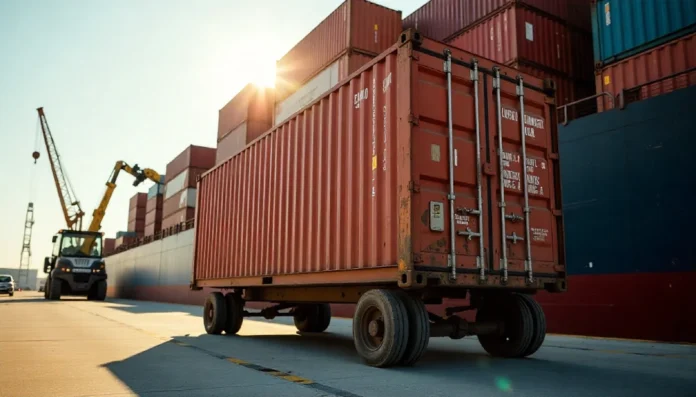


Shipping containers are an essential part of modern logistics, offering a robust and secure way to transport goods over long distances. While most containers remain stationary during transit, there are situations where mobility is highly desirable. This is where shipping container wheels come in. These wheels allow containers to be moved quickly and efficiently, providing significant advantages across different industries.
What Are Shipping Container Wheels?
Shipping container wheels are specially designed caster wheels that can be securely attached to the underside of a container. Their primary purpose is to provide mobility to an otherwise stationary unit. By equipping a container with these wheels, users gain the ability to move it across short distances without the reliance on heavy machinery such as cranes, forklifts, or specialized transport vehicles. This makes day-to-day handling far more convenient, especially in environments where containers need to be repositioned frequently.
Most shipping container wheels are engineered with durability and practicality in mind. A common feature is the twist-lock mechanism, which allows the wheels to be firmly fastened to the corner castings of a container. This system ensures that the wheels stay securely in place while the container is being moved, minimizing the risk of accidents. The design not only provides stability but also gives peace of mind to operators who require safety and efficiency in equal measure.
Benefits of Mobility
Equipping containers with shipping container wheels offers multiple advantages, especially in industries that depend heavily on logistics and flexibility. One of the most obvious benefits is the ability to relocate containers quickly and without the use of large lifting equipment. This can save both time and money, as smaller teams can handle tasks that would otherwise require external machinery or contractors.
Mobility also adds a new level of adaptability to worksites. For instance, containers can be moved closer to work zones during one phase of a project and then shifted to another area as operations progress. This level of flexibility streamlines workflows, eliminates unnecessary downtime, and reduces congestion at busy sites.
Applications Across Industries
The versatility of shipping container wheels makes them suitable for a wide range of applications.
- Construction Industry: On building sites, containers often double as storage facilities, workshops, or mobile offices. When equipped with wheels, these units can follow the progress of a project, ensuring that tools and resources remain close at hand. This reduces inefficiencies and supports better project management.
- Events and Entertainment: In the events sector, where time and logistics are critical, containers are often used for storing and transporting equipment such as staging, lighting, and sound systems. Shipping container wheels make it possible to move these units swiftly between venues, or even reposition them on-site to accommodate layout changes.
- Maritime and Port Operations: Ports are fast-moving environments where space is at a premium. Shipping container wheels provide a practical way to maneuver containers into position quickly, especially when cranes or forklifts are not immediately available. Their use can ease congestion, enhance workflow, and improve overall efficiency in these high-pressure settings.
- Agriculture and Remote Sites: Farmers and operators in remote areas also benefit from mobility. Containers on wheels can be used as movable storage for tools, crops, or machinery parts, helping adapt operations to changing seasonal needs.
Why Choose Heavy-Duty Wheels?
While there are many types of caster wheels available, not all are suited for the immense weight and demanding conditions associated with shipping containers. Choosing heavy duty wheels is essential to ensure both safety and performance.
Heavy-duty wheels are manufactured from robust materials such as reinforced steel and industrial-grade rubber or polyurethane. They are capable of supporting the full weight of a fully loaded container, often tens of thousands of kilograms, without bending or breaking. These wheels are also designed to handle rough, uneven terrain, making them suitable for construction sites, ports, and outdoor event spaces.
Maintenance and Safety
Even though shipping container wheels are built to be strong and reliable, regular upkeep is vital to extend their service life and ensure safe use. Maintenance involves routine inspections of the wheels themselves, as well as the twist-lock mechanism. Lubricating the moving components prevents stiffness and wear, while checking for cracks or damage helps identify potential hazards before they become serious issues.
Safety is closely tied to correct installation and operation. Wheels should always be fitted according to the manufacturer’s guidelines, and staff must be trained in proper handling techniques. Overloading or misusing the wheels can lead to instability, which poses risks to both people and property. By treating shipping container wheels as an integral part of logistical operations, businesses can maximize their efficiency without compromising safety standards.