
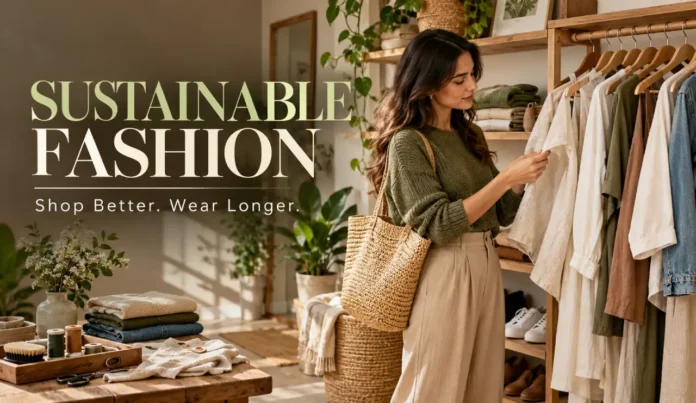


Fashion lets us express our personality, but the way clothes are produced, purchased, and discarded can have a significant environmental and social impact. Sustainable fashion offers a more thoughtful approach: choosing clothes that are made responsibly, designed to last, and kept in use for as long as possible.
The idea is not about replacing your entire wardrobe with expensive “eco” clothing. In many cases, the most sustainable choice is simply to wear what you already own for longer, repair damaged pieces, shop secondhand, and buy new items more carefully.
Here is what sustainable fashion actually means and how you can make your wardrobe more environmentally responsible without sacrificing personal style.
What Is Sustainable Fashion?
Sustainable fashion refers to clothing and accessories designed, produced, used, and eventually disposed of in ways that reduce unnecessary environmental and social harm.
Rather than focusing only on the material used in a garment, sustainable fashion considers its entire lifecycle — from fibres and manufacturing to transportation, working conditions, how often the garment is worn, and what happens when its useful life ends.
Important principles include:
- durable clothing that can be worn repeatedly
- responsible use of materials and natural resources
- safer production processes
- fairer treatment of workers
- reducing unnecessary production and waste
- repairing, reselling, reusing, and recycling clothing
- greater transparency throughout the supply chain
Increasingly, sustainability in fashion is also connected with circular fashion, where clothes and materials stay in use rather than quickly becoming waste.
Why Does Sustainable Fashion Matter?
Clothing may look harmless hanging in a wardrobe, but creating it can involve raw-material production, dyeing, finishing, manufacturing, packaging, transportation, washing, and disposal.
UNEP reports that the textile industry accounts for an estimated 2–8% of global greenhouse gas emissions and also has substantial water, chemical, pollution, and waste impacts.
The traditional fashion system has also largely followed a linear model:
produce → buy → wear → discard
Fast-changing trends can encourage consumers to purchase more clothing while wearing individual items fewer times.
A more sustainable approach tries to replace this system with one where garments are designed to last and are repaired, reused, resold, remade, or recycled whenever practical.
Sustainable Fashion vs Fast Fashion
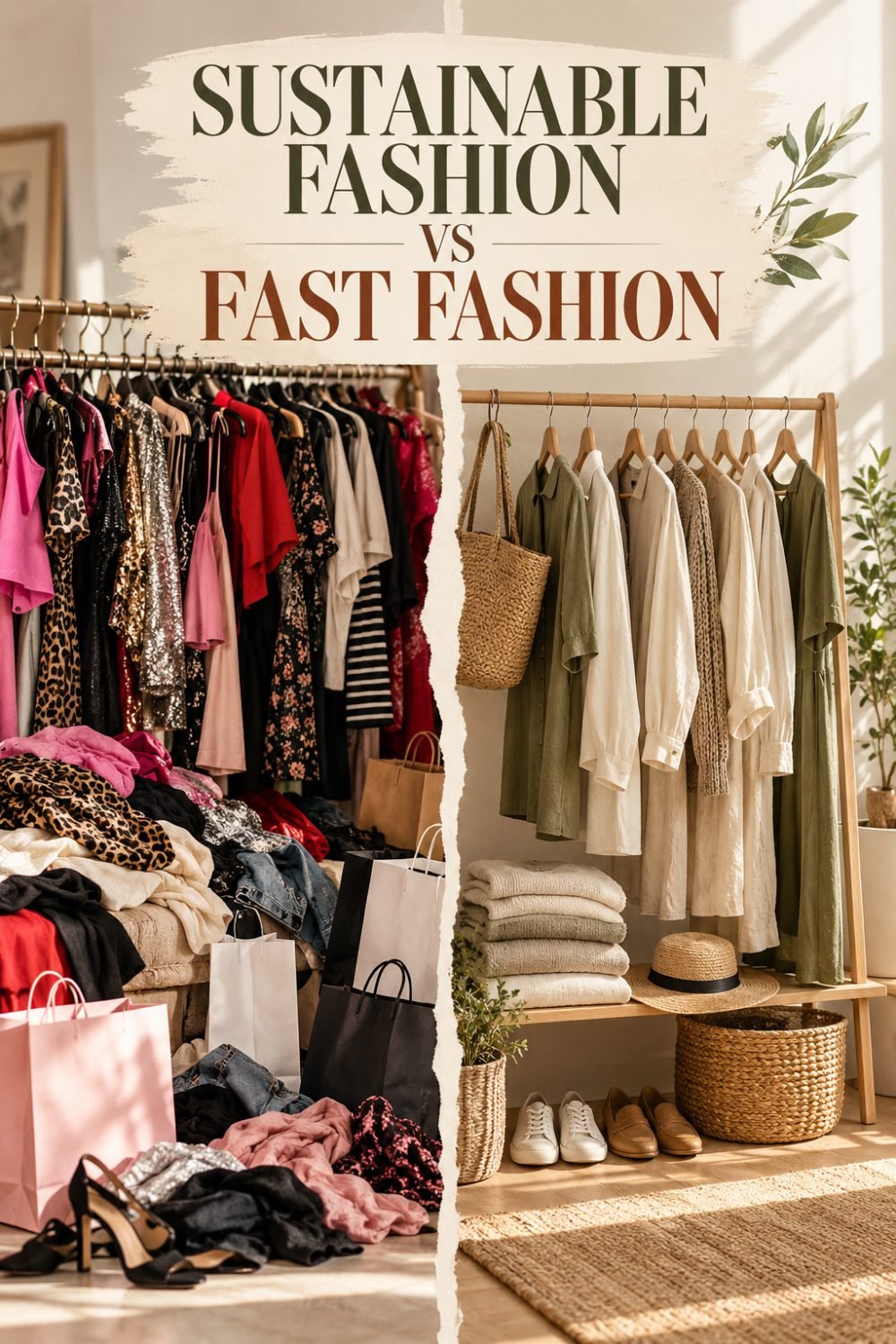
Fast fashion generally relies on frequently changing collections, inexpensive production, and rapid consumption.
Sustainable or slow fashion takes a different approach.
Instead of asking:
“What should I buy next?”
It encourages consumers to ask:
“Will I actually wear this regularly?”
A sustainable wardrobe may contain fewer items, but those items should ideally be versatile, durable, comfortable, and suitable for repeated wear.
This is why buying fewer clothes can sometimes make a bigger difference than constantly replacing conventional garments with products marketed as sustainable.
What Materials Are More Sustainable?
There is no single fabric that is automatically sustainable in every situation. Environmental impact depends on how fibres are sourced, processed, dyed, manufactured, transported, used, and eventually disposed of.
However, shoppers can consider materials such as:
- organic or responsibly sourced cotton
- linen
- hemp
- recycled fibres
- responsibly produced wool
- high-quality materials designed for long-term use
Recycled materials can reduce demand for virgin resources, while durable natural fibres may perform well when garments are properly cared for.
Material choice should not be viewed in isolation. A well-made garment worn 100 times can be a better purchase than an “eco” garment that is worn only twice.
How to Shop for Sustainable Clothing
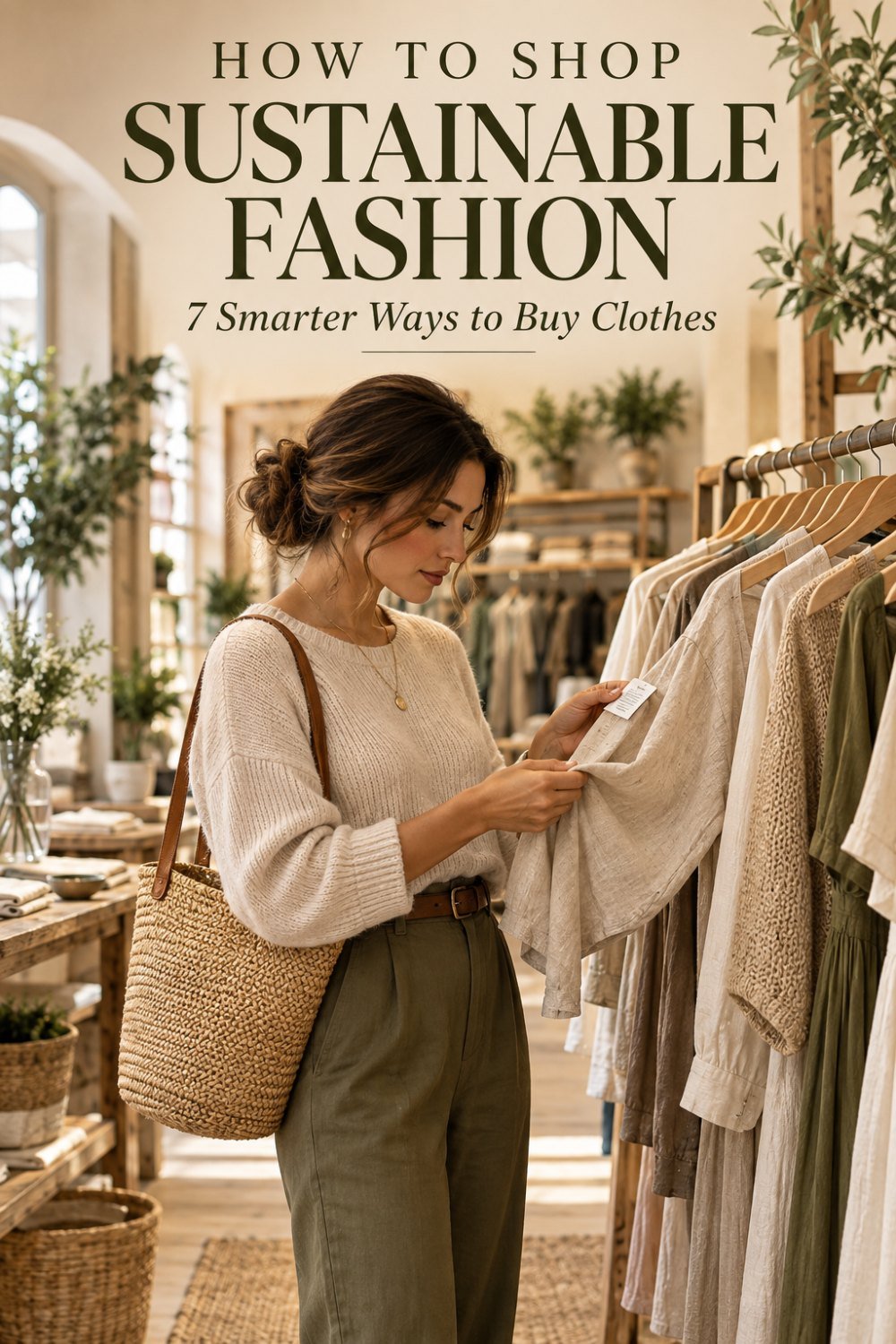
You do not need to become a textile expert before buying clothes. A few simple questions can make shopping much easier.
1. Ask Whether You Really Need It
Before purchasing something new, consider whether it fills a genuine gap in your wardrobe.
Think about how many outfits you can create with it and whether you can realistically see yourself wearing it regularly.
2. Check the Quality
Look closely at seams, stitching, fabric thickness, buttons, zippers, and finishing.
A slightly more expensive garment that lasts several years may offer better value than several low-quality replacements.
3. Read the Material Label
Check the fibre composition rather than relying only on marketing phrases such as “conscious,” “green,” or “eco.”
4. Look for Transparency
Brands making meaningful sustainability efforts should ideally provide clear information about where and how products are made.
Certifications can also provide additional context. Depending on the product, shoppers may encounter standards or certifications relating to organic textiles, fair trade, responsible materials, or environmental performance.
No single certification proves that an entire brand or product is perfect, so consider it one piece of the overall picture.
Watch Out for Greenwashing
As sustainability becomes more popular, environmental language has also become increasingly common in advertising.
This can make greenwashing difficult to spot.
Be cautious when a product uses vague claims such as:
- eco-friendly
- planet friendly
- conscious
- green
- sustainable collection
without explaining what those claims actually mean.
Look instead for specific information about materials, manufacturing, durability, supply-chain practices, certifications, repair programmes, or recycling initiatives.
Transparency is usually more useful than impressive-looking green labels.
Secondhand, Repair and Rewear Matter
One of the easiest ways to participate sustainably is to keep existing clothing in circulation.
Consider:
- shopping at thrift or vintage stores
- buying pre-owned clothing online
- repairing loose seams and missing buttons
- tailoring clothes that no longer fit properly
- swapping clothing with friends or family
- renting outfits for occasional events
- reselling good-quality garments you no longer wear
Circular fashion models such as resale, rental, repair, and remaking can help extend garment life and reduce reliance on constantly producing new clothing.
Take Better Care of Your Clothes
What happens after you buy clothing also matters.
Simple habits can help garments last longer:
- follow care-label instructions
- wash clothing only when necessary
- use cooler washes when appropriate
- avoid excessive tumble drying
- treat stains quickly
- store clothing correctly
- repair small problems before they become larger ones
Extending the useful life of clothing reduces the need to replace items as frequently.
How to Build a More Sustainable Wardrobe
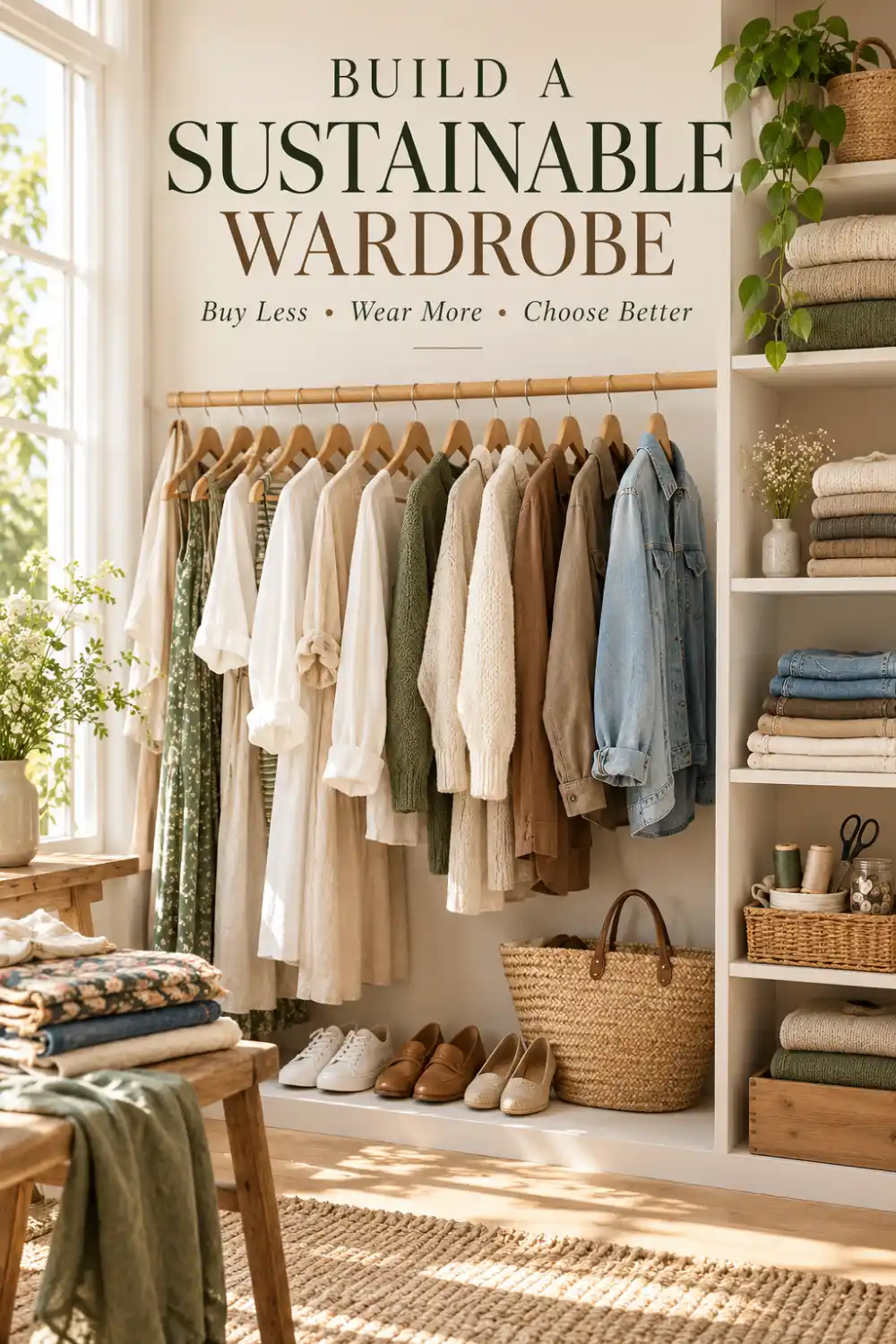
You do not need to transform your wardrobe overnight.
Start by taking inventory of what you already own.
Keep the pieces you regularly wear, identify neglected items that can be restyled or altered, and only add new clothing when it provides genuine value.
A useful rule is to prioritise:
fewer pieces + better quality + more wears
Choose versatile clothes that work across different outfits rather than buying an item for a single trend or occasion.
Most importantly, avoid treating sustainable fashion as another reason to shop more.
Final Thoughts
Sustainable fashion is not about achieving a perfectly “green” wardrobe. It is about reducing unnecessary consumption and making more thoughtful choices throughout the life of your clothes.
Buying less, choosing quality, wearing garments longer, shopping secondhand, repairing clothing, researching brands, and avoiding vague sustainability claims can all contribute to a more responsible wardrobe.
The simplest place to begin may already be inside your closet: wear what you own, take care of it, and make your next purchase count.