
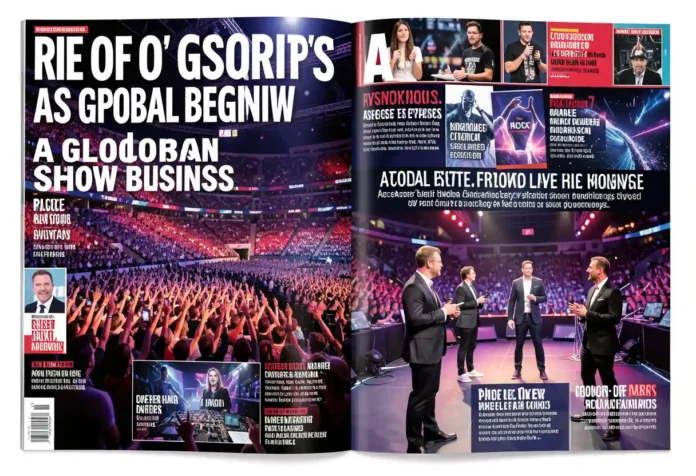

Esports has long outgrown the stage of local tournaments in computer clubs, transforming into a massive entertainment industry with billions in revenue. Now, the boundaries between professional gaming and traditional show business are blurring at an incredible speed. I see tournaments beginning to compete with Champions League finals or global pop star concerts in terms of organizational scale and media reach. It is no longer just a competition for a prize pool, but a full-fledged spectacle with drama, special effects, and an audience of millions. The industry is adapting to the rules of the stage, placing entertainment and content creation at the forefront.
Dramaturgy and Media Presence
Tournament organizers have long realized that dry statistics are interesting only to a narrow circle of analysts, while the mass viewer craves stories and personalities. Team confrontations are now presented as epic battles where everyone has a role: the daring rookie, the dominant champion, or the “dark horse.” In my view, it is precisely this approach that allows for retaining millions of people at their screens, turning esports into something like a captivating TV series.
The main tool for creating intrigue remains the teams’ position in the world top. If you carefully look at the current CS2 team standings and analyze the dynamics of changes, it becomes clear that behind the ranking figures lie real tragedies and triumphs. For example, when giants like FaZe Clan suddenly lose positions, it causes a storm of discussion, creating tension that cannot be artificially created by any advertising campaign.
These story arcs are actively supported beyond the game server through high-quality documentaries. I believe that films like True Sight by Valve turn esports into a reality show where we see player emotions in close-up. Such content creates a deep attachment: the viewer starts rooting not just for a flag, but for a specific person and their journey, which is the gold standard of modern show business.
Merging with the Music Industry
Collaborations with famous artists have become commonplace, and this is perhaps one of the main markers of entering big show business. A vivid example is Riot Games, which effectively created its own music label within the game universe. Their virtual pop group K/DA, consisting of League of Legends champions, releases music videos that rival the production quality of top K-pop idols, and their tracks storm real Billboard charts alongside live artists. In my view, this blurs the line between the fictional and the real, forcing us to empathize with digital avatars just as we do with real stars.
No less impressive a phenomenon are in-game concerts. Performances by Travis Scott or Ariana Grande in Fortnite showed that virtual venues can be places for world premieres, gathering tens of millions of viewers simultaneously — a figure unattainable for any physical stadium in the world. I believe this is a revolution in the format of music consumption: you don’t just listen to a song, you are inside a visual show, flying around a giant avatar of the performer and interacting with the environment.
This creates a unique mutually beneficial exchange of audiences, where gamers discover new music, and fans of artists download the game to see their idol. A unified cultural space is being formed, where the release of a new track and a game season update become events of the same scale. I am confident that in the future we will see even more such crossovers, to the point where albums will be presented exclusively in metaverses.
Stars and Investments
Increasingly, celebrities from the worlds of traditional sports and cinema are not just acknowledging esports but are actively investing their time and money into it. I see a clear signal here: the industry has become too big to ignore. David Beckham, who became a co-owner of Guild Esports, set an example of how a legendary footballer’s personal brand can be successfully monetized in the digital space. This is no longer charity or a simple hobby, but a serious business calculation aimed at Generation Z, an audience that consumes content differently than fans of classical football.
But even more important, it seems to me, is the direct participation of stars in the community’s life. Snoop Dogg doesn’t just wear merch; he streams and sits on the board of directors of FaZe Clan, while footballer Neymar regularly demonstrates his skills in Counter-Strike and participates in show matches alongside professionals. When a star of this magnitude reacts emotionally to a clutch or discusses rare skins, it legitimizes the industry in the eyes of the general public faster than any marketing reports. Gaming ceases to be perceived as a “waste of time” and transforms into a fashionable lifestyle attribute accessible to the elite.
The presence of such figures at tournaments automatically attracts the lenses of lifestyle media, making the event an important part of pop culture. I believe that when a Hollywood actor or rapper sits in the VIP stand of a Major, it places the tournament final on par with the Super Bowl or the Oscars. Esports is moving out of closed gaming halls onto red carpets, and celebrity investment is the fuel accelerating this process, turning a niche entertainment into a global phenomenon.
Next-Level Visual Spectacle
The technical equipment of esports arenas today often surpasses traditional sports stadiums thanks to the massive use of augmented reality (AR) and advanced graphics technologies. I believe we have reached a point where the image on the screen and the reality in the stadium merge into one. Organizers use complex camera tracking systems to integrate virtual objects into the live broadcast as if they were physically present in the hall. This creates a magic unavailable to classical football or hockey, where everything is limited by the physical capabilities of the pitch and turf.
At tournaments like The International for Dota 2 or Worlds for League of Legends, we have already seen a massive holographic Elder Dragon “land” right in the center of the “Bird’s Nest” stadium in Beijing, casting a shadow on the real crowd. These special effects, synchronized with music and stage lighting, turn an esports match into a technological marvel. In my view, it is precisely such moments, when virtual champions and monsters come to life alongside real players, that make one believe the future of entertainment has already arrived.
The broadcasts themselves are transforming into high-budget blockbusters, where direction, lighting, and camera work create a fully immersive effect. It is no longer just a display of gameplay; it is a complex narrative structure with cinematic camera flyovers, instant analytics, and AR statistics projected right onto the arena floor. I am confident that this is exactly the level of visual quality demanded by the modern sophisticated viewer, accustomed to the standards of streaming services and Hollywood movies.
Conclusion
Esports has firmly established itself as an integral part of global show business, and there is no turning back. It is a unique hybrid of sports, high technology, and entertainment that is beginning to dictate new trends for the entire media sphere. I believe that in the near future, we will see even closer integration with cinema and fashion, where game worlds will become the foundation for metaverses. Games have ceased to be just games — now they are a universal language of entertainment, understandable to everyone.