
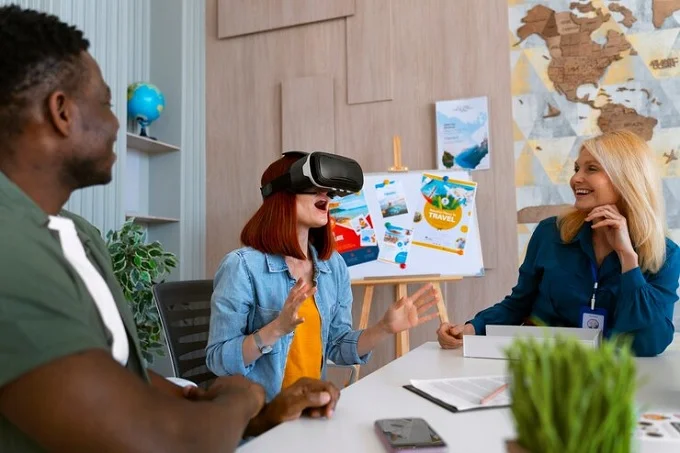


Virtual reality (VR) is rapidly changing the way we plan our travels, offering immersive experiences that bring destinations to life before we even leave home. This technology is revolutionizing the travel industry, providing new ways to explore, plan, and book trips. In this article, we’ll dive into the exciting world of VR travel planning and discover how it’s shaping the future of tourism.
Understanding Virtual Reality
Before we explore how VR is transforming travel planning, let’s take a moment to understand what virtual reality is and how it has evolved over time.
What is Virtual Reality?
Virtual reality is a computer-generated simulation of a three-dimensional environment that can be interacted with in a seemingly real way. Using special electronic equipment, such as a VR headset, users can immerse themselves in this virtual world.
It’s important to note the difference between VR and related technologies:
- Virtual Reality (VR): Fully immerses users in a digital environment.
- Augmented Reality (AR): Overlays digital information on the real world.
- Mixed Reality (MR): Combines elements of both VR and AR.
The Evolution of VR Technology
VR has come a long way since its inception. Here’s a quick look at its history:
- 1960s: The first VR headset, called the “Sword of Damocles,” was created.
- 1990s: VR gained popularity in arcade games and early home systems.
- 2010s: Modern VR headsets like Oculus Rift and HTC Vive were introduced.
- 2020s: VR technology continues to advance, becoming more accessible and affordable.
The Intersection of VR and Travel
Virtual reality is making waves in the travel industry, offering new ways to experience destinations and plan trips.
Early Uses of VR in Travel
Initially, VR in travel was limited to simple 360-degree videos and photos of popular landmarks. These early applications gave travelers a taste of what they might see at a destination, but lacked interactivity.
Current State of VR in Travel Planning
Today, VR has become an integral part of the travel planning process for many. According to a recent study, 13% of travelers have used VR to help plan their trips, and this number is expected to grow rapidly in the coming years.
Travel companies and tourism boards are increasingly using VR to showcase destinations, hotels, and attractions. This technology allows potential travelers to:
- Take virtual tours of hotels and resorts
- Explore city streets and landmarks
- Experience natural wonders like the Great Barrier Reef
- Preview activities and excursions
Benefits of VR in Travel Planning
Virtual reality offers numerous advantages for travelers and the travel industry alike. Let’s explore some of the key benefits.
Enhanced Travel Research
VR provides an immersive way to research travel destinations. Instead of relying solely on photos and written descriptions, travelers can now:
- Take virtual tours: Walk through hotel rooms, explore attractions, and get a feel for the layout of a destination.
- Experience local culture: Attend virtual events or festivals to get a taste of local life.
- Preview activities: Try out experiences like scuba diving or mountain climbing in a safe, virtual environment.
This level of detail helps travelers make more informed decisions about their trips.
Increased Confidence in Decision Making
One of the biggest advantages of VR in travel planning is the ability to “try before you buy.” This can:
- Reduce travel anxiety: By familiarizing yourself with a destination in advance, you can feel more comfortable and prepared for your trip.
- Confirm choices: Ensure that a hotel or destination meets your expectations before booking.
- Avoid disappointment: Minimize the risk of being let down by misleading photos or descriptions.
Cost and Time Efficiency
VR can save travelers both time and money in the planning process:
- Save on preliminary visits: Instead of visiting multiple destinations to choose one, you can explore them virtually.
- Efficiently narrow down choices: Quickly eliminate options that don’t meet your criteria.
- Optimize itineraries: Plan your route and activities more effectively by previewing locations.
VR Tools and Platforms for Travel Planning
There are numerous VR tools and platforms available for travel planning. Here’s an overview of some popular options:
Popular VR Travel Apps and Platforms
- Google Earth VR: Explore the world in stunning detail, from street-level views to satellite imagery.
- Ascape VR: Offers a wide range of 360-degree travel videos and virtual tours.
- YouVisit: Provides virtual campus tours for students considering colleges.
- Oculus Travel: A collection of travel-related VR experiences for Oculus headsets.
Emerging Technologies and Innovations
The world of VR travel is constantly evolving. Some exciting new developments include:
- VR travel agencies: Companies that specialize in creating custom virtual travel experiences.
- Virtual booking assistants: AI-powered tools that use VR to help you plan and book your trip.
- Haptic feedback: Technology that adds a sense of touch to virtual experiences, making them even more immersive.
Case Studies and Real-World Applications
To better understand the impact of VR on travel planning, let’s look at some real-world examples.
Case Study 1: Marriott’s VR Travel Experience
Marriott Hotels partnered with Oculus to create “VRoom Service,” allowing guests to order VR headsets to their rooms. This service offered virtual travel experiences to destinations around the world, enhancing guests’ stays and inspiring future travel plans.
Results:
- 51% increase in brand awareness
- 68% of users said they were more likely to book with Marriott in the future
Case Study 2: Thomas Cook’s “Try Before You Fly”
Travel agency Thomas Cook implemented VR experiences in their stores, allowing customers to virtually visit destinations before booking.
Results:
- 190% increase in New York excursion bookings
- 40% ROI on the VR implementation
Challenges and Limitations
While VR offers many benefits for travel planning, it’s not without its challenges.
Technological Barriers
- Cost: High-quality VR headsets can be expensive, limiting accessibility.
- Hardware requirements: Some VR experiences require powerful computers or specific devices.
- Internet connectivity: Streaming VR content requires a fast, stable internet connection.
User Experience Concerns
- Motion sickness: Some users experience nausea or disorientation in VR.
- Realism: Current VR technology can’t fully replicate all sensory experiences of travel.
- Learning curve: Some users may find VR technology challenging to navigate.
The Future of VR in Travel Planning
As technology continues to advance, the role of VR in travel planning is likely to grow and evolve.
Predicted Trends and Developments
- Increased realism: Improvements in graphics and sensory feedback will make virtual experiences even more lifelike.
- Social VR travel: The ability to explore virtual destinations with friends and family.
- Personalized experiences: AI-powered VR that tailors travel suggestions to individual preferences.
Integration with Other Technologies
The future of VR travel planning will likely involve integration with other cutting-edge technologies:
- Artificial Intelligence: AI could create personalized virtual itineraries based on your preferences.
- Blockchain: Secure, decentralized booking systems for virtual and physical travel experiences.
- Internet of Things (IoT): Connected devices could enhance virtual experiences with real-world data.
Conclusion
Virtual reality is transforming the way we plan and experience travel. From immersive destination previews to virtual hotel tours, VR technology is making travel planning more engaging, efficient, and confident than ever before.
As VR continues to evolve, we can expect even more innovative applications in the travel industry. While it may never fully replace the joy of physical travel, VR is becoming an invaluable tool for travelers and travel companies alike.
Whether you’re a tech enthusiast or a cautious adopter, now is the time to explore how VR can enhance your travel planning process. Who knows? Your next great adventure might begin with putting on a VR headset.