
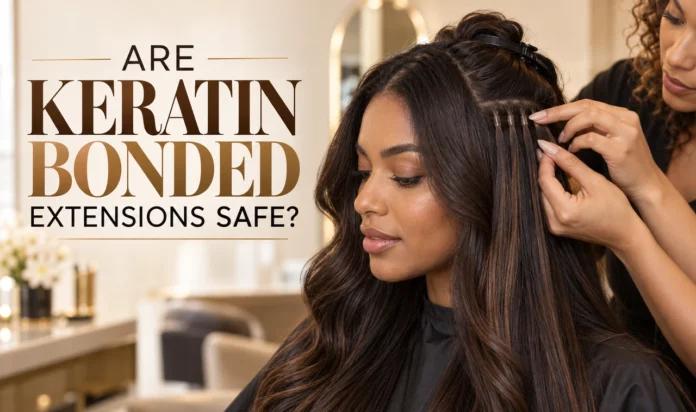

Are keratin bonded hair extensions safe for natural hair? They can be, but only when your natural hair is healthy enough, the bonds are correctly sized and installed without tension, and removal is handled by a trained professional. The biggest danger is not the word “keratin” itself—it is repeated pulling, excessive weight, poor placement, matting and rough removal.
The short answer
Keratin bonds are safest on strong, healthy hair when they feel comfortable from day one. Pain, a tight scalp, headaches, redness or constant pulling are warning signs—not a normal “adjustment period.” Fine, fragile, shedding, recently bleached or irritated hair may need a lighter method or a break from extensions.
What are keratin bonded hair extensions?
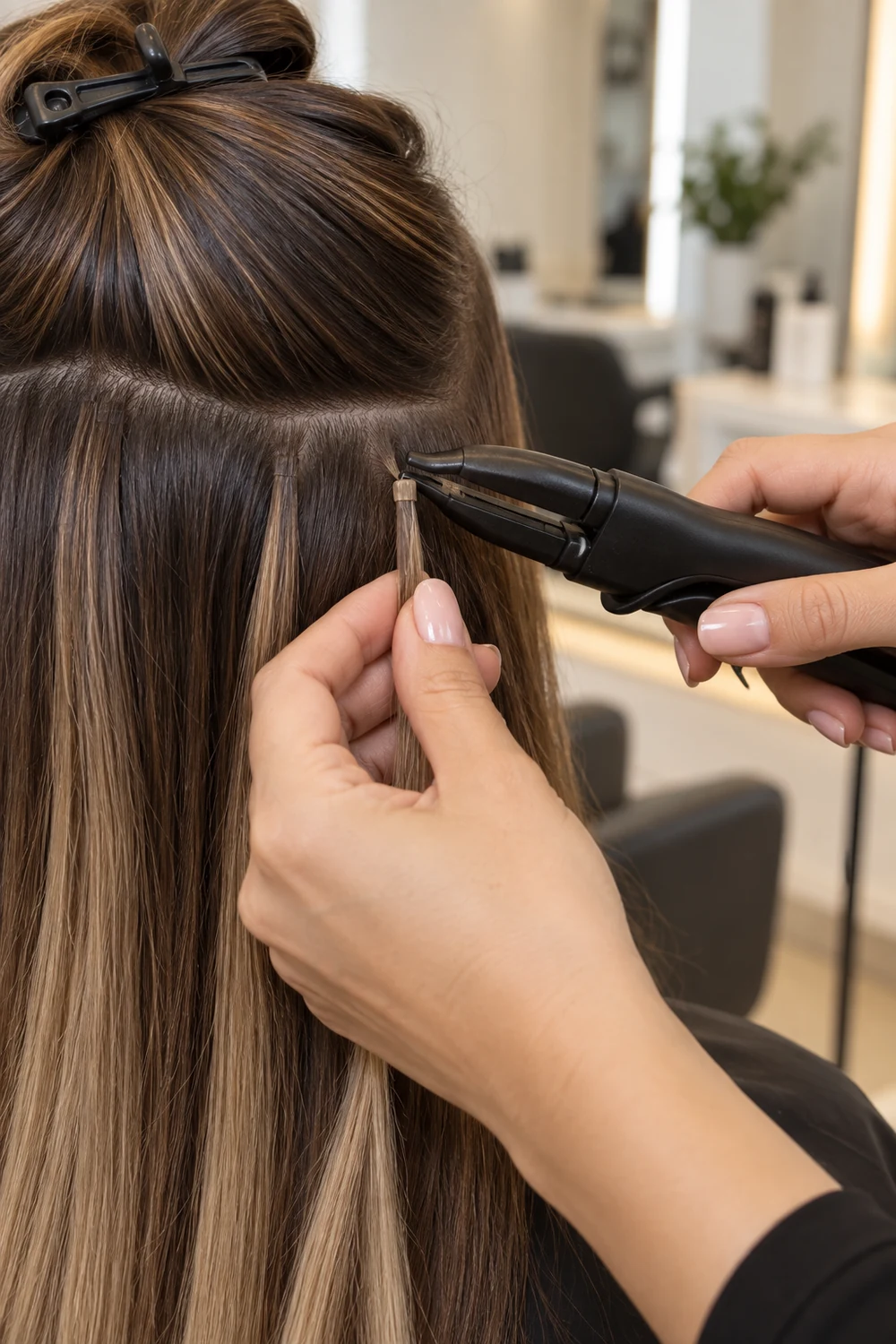
Keratin bonded extensions—also called fusion, pre-bonded or keratin-tip extensions—are individual extension strands attached to small sections of natural hair. A stylist softens the bond with a heated tool and shapes it around the section. Because the bonds are small and move independently, the finished result can look natural and allow flexible styling.
The name can be misleading. A “keratin bond” is an attachment material; it does not automatically make the service gentle or suitable for everyone. Safety depends far more on the weight of each strand, placement, tension, wear time, daily care and removal technique.
When are keratin bonds generally safe?
They are more likely to be a reasonable option when your scalp is calm, your strands are not breaking excessively, and a qualified stylist matches the extension weight to your hair density. A good installation leaves enough space from the scalp for natural movement and never relies on a few weak hairs to hold a heavy strand.
- Your natural hair is healthy enough to support added weight.
- The stylist performs a consultation and checks density, elasticity and scalp condition.
- Each bond is proportional to the natural section holding it.
- The installation feels secure but not tight, sore or itchy.
- You can commit to daily detangling and scheduled maintenance.
- You agree to professional removal instead of pulling the bonds out at home.
Who should be extra cautious?
Keratin bonds may not be the best first choice if your hair is actively shedding, breaking near the roots, severely over-processed, very sparse in the proposed attachment areas, or if your scalp is inflamed. People with a history of traction alopecia should speak with a dermatologist before choosing any long-wear extension method.
Extensions can also be challenging if you swim frequently, cannot dry the roots thoroughly, use heavy oils on the scalp, or do not have time for careful separation of the bonds. The most flattering method is the one your hair can comfortably support—not necessarily the one that lasts the longest.
The main risks to natural hair
1. Tension and traction alopecia
Added weight and constant pulling can stress follicles. The American Academy of Dermatology explains that repeated tension from extensions and other tight styles can cause traction alopecia. Early signs may include soreness, broken hairs, thinning edges or small bumps. Long-lasting traction can lead to permanent hair loss.
2. Breakage from oversized bonds
A heavy extension attached to a tiny natural section creates an uneven load. Breakage may happen gradually as the hair grows and the bond moves farther from the scalp. Fine hair usually needs smaller, lighter bonds and fewer total strands.
3. Matting near the roots
Naturally shed hairs remain trapped inside each bond until removal. Without daily separation, thorough drying and timely maintenance, these hairs can tangle together. Matting makes removal slower and increases the temptation to pull or over-comb.
4. Heat and removal damage
The application tool should contact the bond—not be repeatedly clamped onto loose natural hair. During removal, the bond needs the correct remover and controlled pressure. Peeling, twisting or sliding out stubborn bonds can take natural strands with them.
Your pre-appointment safety checklist
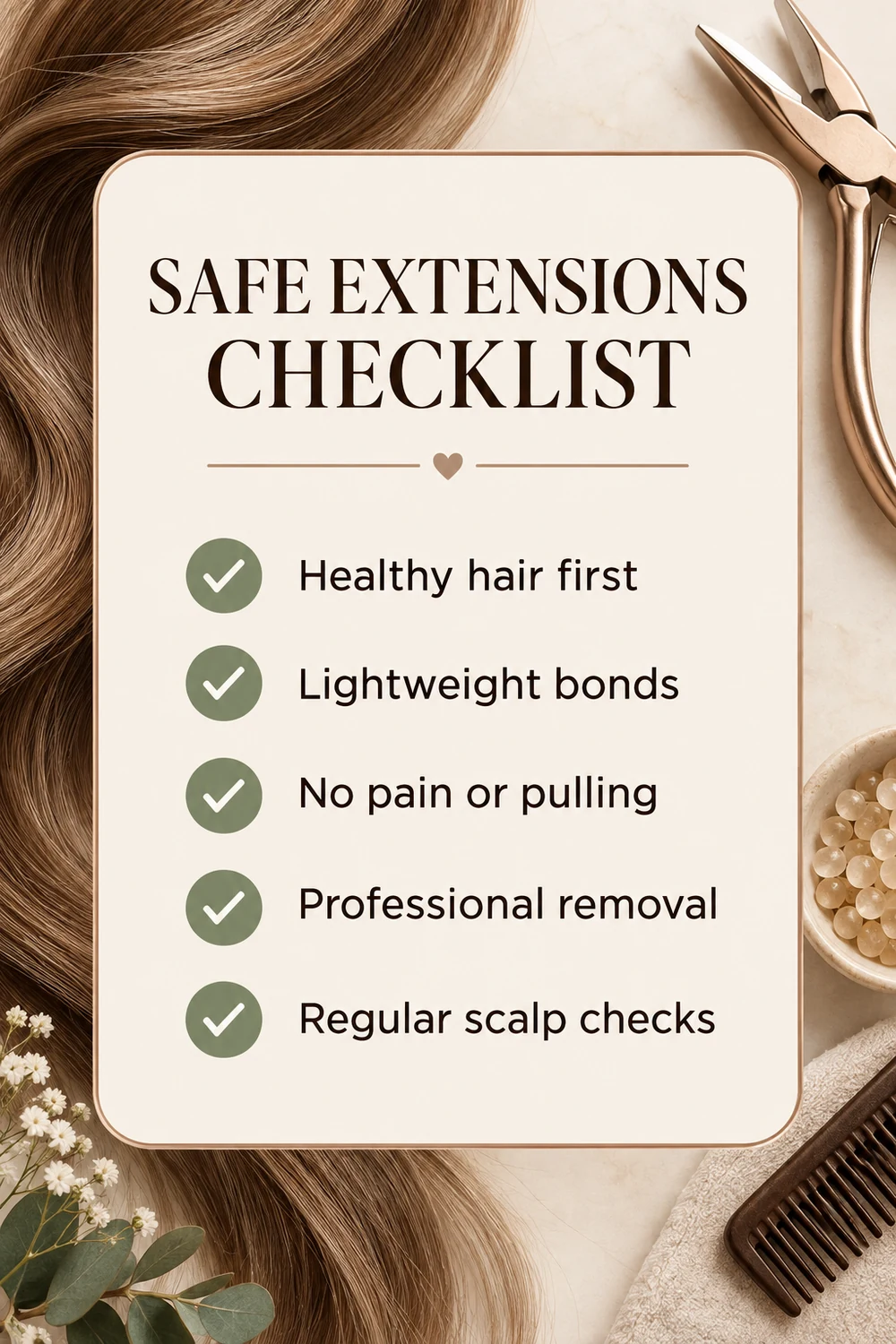
- Ask for a hair and scalp assessment. The stylist should look at density, breakage, chemical history and sensitive areas.
- Request realistic weight and length. Very long extensions are heavier; fine hair may need a shorter, lower-density result.
- Discuss placement. Fragile edges, temples and the nape should not carry unnecessary weight.
- Check training and removal experience. Safe removal matters just as much as a beautiful installation.
- Get the aftercare plan in writing. You should know how to wash, brush, dry, sleep and schedule maintenance.
- Speak up immediately. A bond that hurts or pulls should be adjusted before you leave the salon.
How to care for keratin bonded extensions
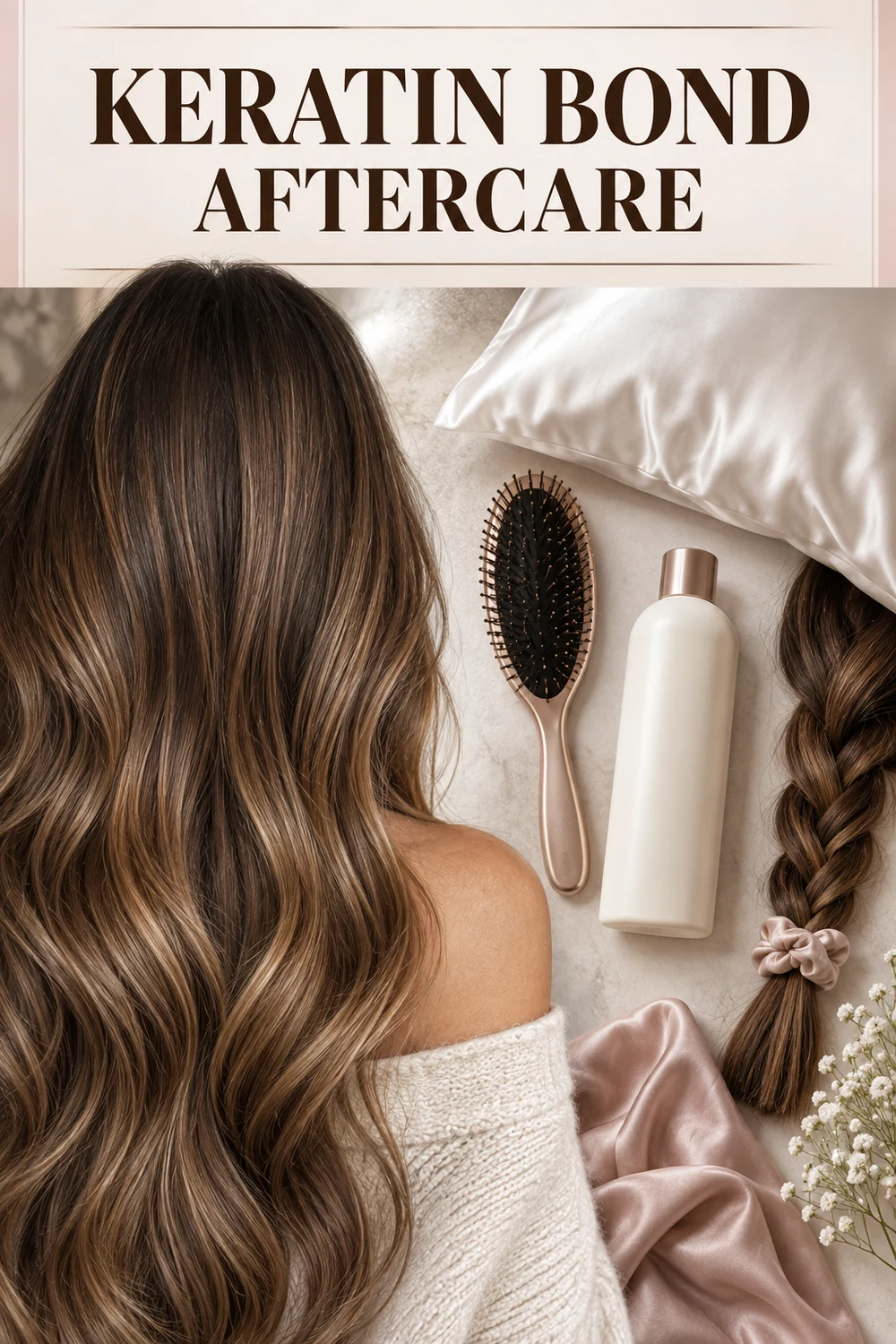
- Brush in sections. Hold the roots for support and detangle from the ends upward with an extension-safe brush.
- Keep conditioner and oils off the bonds. Apply them through the mid-lengths and ends unless your stylist advises otherwise.
- Dry the attachment area completely. Sleeping with damp roots encourages tangling and matting.
- Separate the bonds gently. Use clean fingers once a day so neighbouring bonds do not knot together.
- Protect hair at night. A loose braid and silk or satin pillowcase reduce friction.
- Keep hot tools away from the bonds. Direct heat may soften or weaken the attachment.
- Attend maintenance on schedule. Do not stretch the wear time simply because the extensions still look acceptable.
If dryness is already a concern, review our guide to choosing and using conditioner for dry hair. For another protective-style option and its maintenance needs, see our guide to crochet hair for Afro kinky styles.
Warning signs you should not ignore
Contact your stylist promptly if you notice persistent pain, a tight or lifted scalp, redness, sores, clusters of broken hair, bonds hanging from only a few strands, severe tangling or unusual shedding. The AAD advises removing extensions if they cause pain or scalp irritation and recommends seeing a board-certified dermatologist when hair loss is a concern.
Remember this rule
If your extensions hurt, they are not “settling in.” Pain is a signal to have the placement and tension checked.
Keratin bonds compared with other extension methods
| Method | Best feature | Main caution |
|---|---|---|
| Keratin bonds | Discreet, flexible movement | Long wear and professional removal required |
| Tape-ins | Faster application and removal | Wide adhesive panels may not suit every routine |
| Clip-ins | Temporary and removable at home | Repeated clips in the same spots can cause stress |
| Wefts or sew-ins | Good coverage and volume | Tight foundations can create traction |
No extension system is completely damage-proof. The safest choice depends on your hair, scalp, lifestyle, desired result and the experience of the person installing it.
Frequently asked questions
Do keratin bonds damage natural hair?
Not automatically. Damage is more likely when bonds are too heavy, installed with tension, worn too long, poorly maintained or removed roughly. Healthy starting hair and careful professional work reduce—but cannot eliminate—the risk.
Are keratin bonds suitable for fine hair?
Sometimes, but the installation must be customised. Fine hair generally needs smaller bonds, less added density and careful placement. Very fragile or visibly thinning hair may not be suitable.
Can I remove keratin extensions myself?
Professional removal is the safer choice. Pulling, twisting or using an unsuitable product can break natural hair and leave residue or matting behind.
How long should I give my hair a break?
There is no universal schedule. After removal, have your stylist assess shedding, breakage and scalp comfort before reinstalling. If hair feels weaker or the scalp is irritated, wait and seek professional advice.
The bottom line
Keratin bonded hair extensions can be safe for natural hair, but the result depends on suitability, light and balanced application, pain-free wear, consistent aftercare and patient professional removal. Choose a stylist who is willing to protect your natural hair even if that means using fewer bonds, choosing a shorter length or recommending a different method.
This article offers general hair-care information and is not a medical diagnosis. If you notice persistent scalp pain, sores, thinning or hair loss, consult a dermatologist.

