
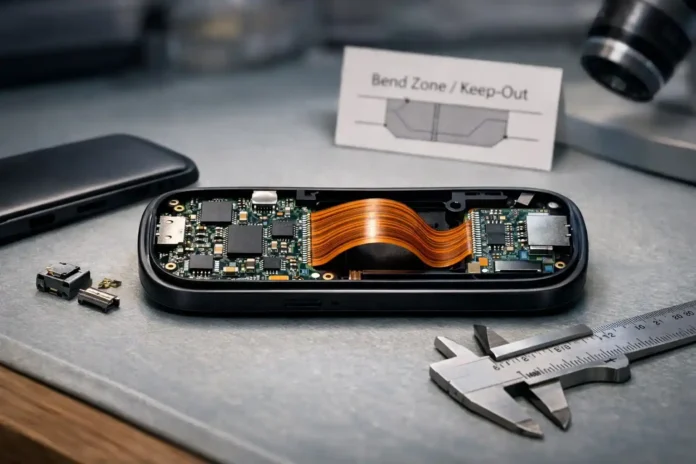


Smaller PCBs are required by compact devices. They demand more intelligent packaging, reduced interconnects, and a layout that can withstand real-world conditions such as bending, shock, and heat. This is where rigid-flex circuits excel. When done correctly, rigid flex PCB design combines rigid and flexible sections of a PCB by allowing stable rigid areas for components alongside flexible sections with folds, hinges, and narrow routing paths, significantly reducing connectors and overall space requirements.
When you are developing wearables, medical sensors, drones, handheld devices or any other electronics that require space-constrained components, it is important that you combine solid engineering with a rapid prototype partner. When it comes to time constraints, many teams prefer FastTurn PCB due to the opportunity to avoid costly re-spins, as quick-turn fabrication and responsive DFM feedback can provide. With this guide, you will learn how to go about designing rigid-flex boards to fit tight products without feeling intimidated, including the stackup options and reliability of the bending.
Why is Rigid-Flex the Best of Compact Products?
Rigid-flex boards are multitechnology boards made up of rigid FR-4 material in densely populated component areas and polyimide flex material, which is used to fold or move. This mixed system enables thinner enclosures and more stable assemblies since you are able to frequently take out individual cables and board-to-board connections.
In the case of compact devices, the smallest wins are in the number of mechanical components, the number of failure modes, and clean signal paths. By not using connectors, you are also losing less by way of insertion losses, fretting corrosion, and assembly complexity. It can be converted into enhanced reliability and overall cost reduction, despite rigid-flex fabrication being more expensive than plain rigid board.
Rigid Flex PCB Design Versus Traditional Alternatives
Rigid PCB + Connectors
A board made of rigid material with connectors is simple, yet it takes valuable space. Connectors are an addition to BOM cost and may be the most vulnerable mechanical connection in portables. Connectors reliability should be an issue once the device is vibrated, dropped or moved repeatedly.
Flex Cable + Two Rigid Boards
It may be effective where modularity is required, but introduces assembly steps and tolerance stack up risk. The flex may be misaligned during the assembly and this may end up straining the product life.
Flex-Only PCB
Pure flex designs are good where the electronics are very thin and may limit the density of components and they may need to have stiffeners in case the fine-pitch parts. Rigid-flex becomes the compromise of the two worlds in many cases of small devices.
The predictable result of rigid flex PCB design is often the most desirable when you require dense placement, predictable solder joints and controlled folding.
Begin With the Mechanical Story
Before tracing a route, rigid-flex success starts. Use the board as a constituent of the mechanical organization. Determine the location of the folds, angles, and the shape that is to be assembled at an early stage. Determine which ones are also known as a static bend (bent once during assembly and left there), and which are dynamic bends (moved many times with use). This one difference will influence the choice of materials, bend radius, and how to shield copper in the flex area.
In case of compact devices, design have keep-out areas of fasteners, ribs and batteries, antennas and display modules as well. Numerous rigid-flex failures occur when a design appears ideal on CAD but is mandatory into a casing that pinches the flex space or forms sharp folds.
Stackup Options That Would Avoid Re-Spins
A dependable rigid-flex stackup compromises electrical requirements, flexibility, and manufacturing. In the rigid parts, you will probably desire a typical FR-4 with copper weights that can sustain your existing and impedance ambitions. Polyimide is used in flex regions and thin copper aids in the life of bends.
Flex cores that are adhesiveless are more preferable in high reliability and consistency, particularly in narrower bends. Copper type matters too. Copper that has been rolled annealed usually flexes better than electrodeposited copper which may crack earlier when used in dynamic bends.
When you need prototypes quickly, make the stackup realistic. Uncommon materials and excessive figures of layers may delay timelines. A fast turn fabricator such as FastTurn PCB can be best utilized in cases where the stackup is clear, manufacturable and compatible with standard procedure.
Bend Radius, Copper Routing, and Flex Reliability
Small devices are enticing designers to fold at right angles, and rigid-flex does not take to knife-edge folds. Increased bend radius normally enhances reliability particularly in dynamic bends. When you need a tight bend, either make flex copper thinner or minimize copper coverage over the bend.
Trace direction matters. Traces that are perpendicular to the bend line are strained more than the ones running parallel with the line of the bend. In critical bend areas, see curved routing, gradual transitions and a problem with abrupt neck-downs. Do not also put vias or pads or component terminations in the bend area. These form stress concentrators and usual points of crack initiation.
The other reliability gimmick is to make the flex region out of hatched copper pours instead of solid pours. It maintains reference behavior but enables the flex to have less strain.
Vias, Transitions, and Controlled Impedance in Tight Spaces
Small devices can have fast signals, RF or delicate analog circuits. With rigid-flex, the geometry of rigid and flex regions is different and thus making impedance control a little harder. Discuss with your manufacturer early trace widths, dielectric thickness and copper weights to maintain the same impedance.
Jumps between inflexible and flexible are to be considered more. Signal integrity problems and stress can be minimized by staggering layer transitions and not creating large copper discontinuities. In case your design maintains blind or buried vias, ensure that it is feasible to meet your lead time and budget. Schedules Fast-turn schedules may narrow rapidly as via structures are complicated, thus match your via strategy with the production reality.
Overlay, Stiffeners, and Assembly Finer Details Which Count
Flex region is normally covered with coverlay (polyimide + adhesive) rather than solder mask. Create openings properly on pads and stiffener regions. Connectors or fine-pitch components often have stiffeners added beneath them to give rigidity to the assembly.
In the case of small equipment, also consider assembly handling. Special tooling, temporary stiffeners (or support rails) might be required to enable rigid-flex panels to endure pick-and-place and reflow without deformation. To reduce unforeseen events, tell your assembly plan in advance to the FastTurn PCB to allow the feedback of DFM to reveal potentially risky information, such as heavy components near flex edges.
Designing to Turn Fast Without Cutting Corners
Rapid prototypes can only be useful when they act as the finished product. The most effective solution is to retain the initial development as lean and production-capable. Name the layers clearly, establish bend areas in the fabrication notes, provide material specifications, and a simple drawing indicating fold lines and direction of bending.
Also, plan test access. Small equipment may add up to painful debugging, so set aside small yet significant test pads in the non-flexible parts. The difference between a successful first prototype and a failed one can be often just little decisions that will enhance the clarity of the build and minimize the interpretation of the fabricator.
FastTurn PCB is a viable choice when timing is critical, particularly when combined with a rigid flex type pcb design, FastTurn PCB: design choices are made to adhere to fabrication limitations and a partner capable of executing on a timely basis is selected.
Summary: Miniature Devices Payoff to Intelligent Rigid-Flex Design
Rigid-flex can be the difference between a big product and a classy product. Yet small devices exaggerate all the errors: a sharp bend, an inadequate transition, or just incoherent fab notes may cause failures, which will not become evident until the assembly. Design with a mechanical story in mind, select a realistic stackup, guard the bend region and design to be manufactured initially.
When you need prototypes delivered quickly and assembled on the first try, plan your design to follow established rigid-flex guidelines and cooperate with a quick-turn company to specify your first designs like FastTurn PCB. Done well, rigid-flex provides slimmer products, less connectors and reliability that you can rely on.
FAQs
What is rigid flex PCB design and what will it help me to do?
Rigid flex PCB design is a composition of rigid board section where the components are designed and the flexible sections of the board where the board can be folded or vibrate. Apply it in the situation where tight packaging and limited connectors and enhanced reliability are required in miniature devices.
What do I do to select the proper bend radius of a rigid-flex board?
The higher the radius of a bend, the more dependable they tend to be particularly in the dynamic bends. In the case of tight objects, such as those needed in the device, minimize copper in the flex area and no vias or pads in the bend area.
Is it possible to manage impedance in the flex region as it is in rigid FR-4?
Yes, it needs to be coordinated with some trace geometry, dielectric thickness, and copper weight. Since the flex materials are not the same as the FR-4, verify the impedance model with your manufacturer early.
What is the distinction between solder mask and coverlay of rigid-flex?
Coverlay is a pliable protective film applied to the flex area which is usually based on polyimide but on rigid areas, a solder mask is applied. It is necessary to define openings of pads and stiffener areas with precision.
What can FastTurn PCB do to decrease the risk of rigid-flex prototyping?
A quick-turn partner is able to give DFM feedback in a short time, verify the feasibility of the stackup, and warn of risky bend-zone features ahead of fabrication. That minimizes the possibility of re-spins and will allow you to achieve a stable design faster.