
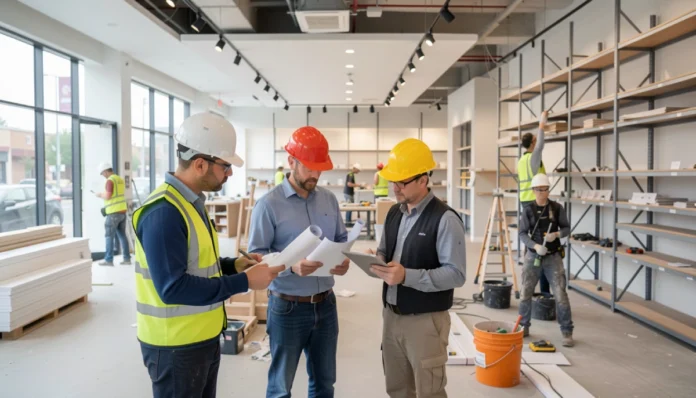


Retail construction projects often move at a demanding pace. Deadlines may be linked to trading periods, lease commitments, brand launches, or wider rollout plans. At the same time, the project still has to manage design coordination, contractor performance, budgets, and site delivery in a controlled way. That combination of speed and complexity creates pressure from the outset. This is why many clients appoint construction consultants for retail projects. Their involvement helps support efficient delivery by managing schedules, budgets, and contractor coordination, keeping the scheme organised and better aligned with commercial goals.
Retail Projects Have Unique Pressures
A retail development is not simply another fit-out or building job. The finished space has to work operationally, reflect the brand, and often open on a fixed date. Delays can affect revenue, staffing plans, marketing activity, and customer experience.
These projects may also involve live environments such as shopping centres, high streets, or mixed-use sites where access, logistics, and working hours are tightly controlled. That creates additional complexity during delivery.
Construction consultants help by understanding that retail projects must respond to both construction needs and trading objectives. Their support often bridges the gap between technical delivery and commercial timing.
Budget Control Supports Commercial Priorities
Clear financial targets usually drive retail projects. Whether the scheme involves a new store, refurbishment, rollout, or expansion, cost control matters because it affects overall return on investment. Small overspends across multiple sites can have a significant impact.
Consultants help maintain cost awareness throughout the project. They can review budgets, assess changes, and ensure financial decisions align with the client’s priorities. This is especially important in retail, where design ambition and operational requirements can sometimes push costs higher if not carefully monitored.
Good budget management does not mean stripping out value. It means ensuring that spending supports the intended result and remains proportionate to the business case behind the project.
Programme Management Keeps Openings Realistic
Timing is often a major concern in retail construction. A store may need to open before a key season, a lease may have strict obligations, or a phased programme may depend on one site finishing before another starts. If the schedule slips, the impact can spread quickly.
Consultants help keep the programme realistic and actively managed. They can coordinate milestones, track progress, and identify where risks are building. Because they are involved across the project, they can often see how decisions in design, procurement, or site access may affect the wider timetable.
This support helps clients avoid the situation where an opening date remains fixed on paper while the practical route to achieving it becomes less realistic.
Contractor Coordination Reduces Disruption
Retail projects usually involve several parties working within tight windows. Main contractors, specialist trades, suppliers, designers, landlord teams, and client representatives may all need to align closely for delivery to succeed. Where that coordination is weak, delay and confusion can follow.
Construction consultants help organise this process by keeping responsibilities clear and communication structured. They can support meetings, manage action items, and ensure key issues are followed through. This is particularly useful in retail environments, where additional constraints, such as access rules, delivery restrictions, or shared site conditions, apply.
Stronger contractor coordination often means fewer avoidable clashes and a more efficient site operation.
Design And Delivery Need To Stay Connected
Retail design is often closely linked to customer experience and brand identity. Layout, finishes, lighting, signage, and circulation all contribute to how the space performs once it opens. At the same time, the design must still be buildable within the budget and programme.
Consultants help keep design intent connected to delivery reality. They can support reviews that test whether proposals are practical, whether procurement is aligned, and whether the site team has the information needed at the right time. This reduces the risk of late changes resulting from poor coordination between concept and construction. In retail, where detail often matters greatly, this connection can be especially important.
Risk Management Supports Smoother Delivery
Every construction project carries risk, but retail schemes can be particularly sensitive to disruption because of their commercial deadlines and operational constraints. Late material decisions, approval delays, and access issues can have a greater impact when the programme is tight.
Consultants support risk management by helping the client identify pressure points early. They can review dependencies, flag emerging issues, and keep contingency planning visible rather than leaving it until a problem becomes urgent. This makes the project more manageable and allows better-informed decisions.
Reducing risk is not only about avoiding major failure. It is also about limiting the smaller issues that collectively slow delivery and weaken outcomes.
Better Oversight Helps Projects Stay On Track
Retail projects often require quick decision-making, but speed works best when it is supported by proper oversight. Consultants can provide that structure through reporting, coordination, and ongoing review of progress against budget and programme.
This helps clients maintain a clearer picture of what is happening across the scheme. Instead of reacting to problems late, they have a stronger basis for timely decisions. That visibility can be especially valuable in multi-site retail programmes where consistency and repeatable delivery matter. Good oversight helps the whole project stay more stable, even when the pace is demanding.
Stronger Delivery Supports Stronger Retail Outcomes
Construction consultants help retail projects stay on track by supporting the areas that matter most to successful delivery. They bring coordination, budget control, programme oversight, and practical management to schemes that often operate under commercial pressure and fixed deadlines. When those elements are handled well, retail projects are more likely to open on time, meet financial expectations, and deliver the intended experience for clients and customers. In a sector where timing and presentation matter greatly, that support can make a significant difference.