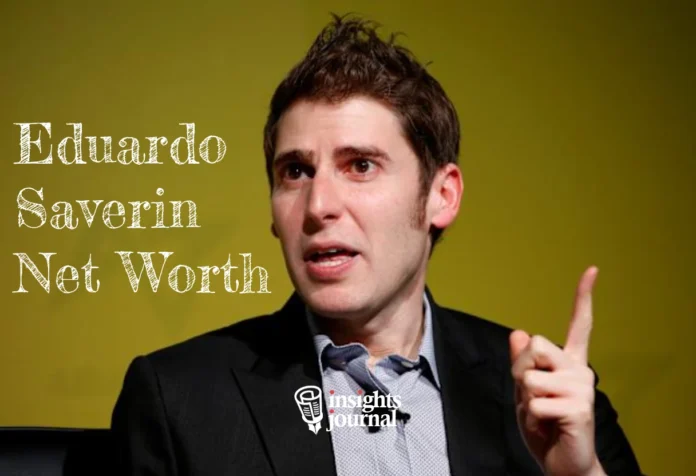

The Facebook co-founder who walked away from Mark Zuckerberg’s company now sits on a fortune worth tens of billions. Eduardo Saverin net worth stands at an estimated $66.6 billion as of October 2025, making him Singapore’s richest person and Brazil’s wealthiest citizen. His journey from a Harvard dorm room to becoming one of the world’s top 50 billionaires is marked by legal battles, smart investments, and a controversial citizenship decision.
While most people remember Saverin from the dramatic scenes in “The Social Network,” his story extends far beyond his Facebook days. Today, he runs a venture capital empire that shapes technology investments across Asia and beyond.
This article covers Saverin’s current wealth, how he built his fortune after Facebook, his investment strategies through B Capital, and what separates him from other tech billionaires. You’ll learn about his early Facebook stake, the legal settlement that secured his billions, and how he continues to grow his wealth through strategic investments.
How Much Is Eduardo Saverin Worth Today?
Eduardo Saverin’s net worth reached $66.6 billion as of October 2025, according to recent estimates. This figure places him among the world’s 50 wealthiest individuals. However, different financial tracking sources report varying amounts, with estimates ranging from $30 billion to $66 billion.
The wide range exists because Saverin’s wealth primarily comes from his approximately 2% stake in Meta Platforms, formerly Facebook. As Meta’s stock price changes daily, so does his net worth. His holdings have surged dramatically since Meta’s stock rebounded from its 2022 lows.
Beyond his Meta shares, Saverin owns investments through his venture capital firm B Capital, private equity stakes, and real estate holdings. In 2023, he purchased two chalets in Courchevel, France for $95 million.
Wealth Comparison Table
| Billionaire | Net Worth (2025) | Primary Source | Company Founded |
|---|---|---|---|
| Eduardo Saverin | $66.6B | Meta stake + VC | Facebook, B Capital |
| Mark Zuckerberg | $200B+ | Meta ownership | |
| Dustin Moskovitz | $15-20B | Meta stake + Asana | Facebook, Asana |
| Chris Hughes | $400M-500M | Meta stake (sold most) |
The Facebook Foundation: Where It All Began
Saverin met Mark Zuckerberg at Harvard University in 2003 during his junior year. Zuckerberg, a sophomore, had an idea for a campus social network but needed funding and business expertise.
They each initially invested $1,000 in the site, then later added another $18,000 each. This initial $19,000 investment from Saverin provided the seed money to purchase servers and launch TheFacebook.com in February 2004.
As Facebook’s first CFO and business manager, Saverin handled finances, advertising sales, and business development. He created the company’s first business plan and secured its first major advertiser. His work during those early months proved critical to Facebook’s survival.
The Falling Out
The relationship between Saverin and Zuckerberg deteriorated in summer 2004. While Zuckerberg and Dustin Moskovitz moved to Palo Alto to grow the company, Saverin remained in New York for an internship at Lehman Brothers.
Distance created problems. Communication broke down. Tensions escalated over company direction and Saverin’s commitment level. Zuckerberg privately stated that Saverin was refusing to cooperate and lagging on signing paperwork for investments.
In 2005, Facebook restructured. The move reduced Saverin’s ownership stake through dilution. When he discovered what happened, Saverin filed a lawsuit. Facebook counter-sued.
The Settlement That Made Billions
Both parties settled out of court in 2009. Terms remain confidential under a non-disclosure agreement. However, the settlement gave Saverin several crucial outcomes:
- Official recognition as Facebook co-founder
- A significant equity stake in the company
- His name permanently listed on Facebook’s website
- Rights to future stock value appreciation
When Facebook went public in 2012, Saverin held 53,133,360 shares worth $2.18 billion. That represented just under 2% of outstanding shares. He had sold more than half his original stake before the IPO but retained enough to become extraordinarily wealthy.
B Capital: Building Beyond Facebook
Saverin didn’t rest on his Facebook fortune. In 2015, he co-founded B Capital Group with Raj Ganguly, a former Bain Capital executive. The venture capital firm focuses on technology, healthcare, and sustainable investing.
Under Saverin’s leadership, B Capital has grown to manage over $7 billion in assets with more than 100 employees across 8 global offices. The firm maintains a strategic partnership with Boston Consulting Group, giving portfolio companies access to management consulting expertise.
Investment Strategy
B Capital targets companies at various stages, from early seed rounds to late-stage growth investments. The firm concentrates on three main sectors:
Technology & AI: Investments in artificial intelligence, enterprise software, and digital infrastructure
Healthcare: Medical technology, biotechnology, and health IT platforms
Energy & Resilience: Climate technology and sustainable energy solutions
Notable B Capital investments include Ninja Van (Southeast Asian logistics), AImotive (autonomous vehicle technology), and Labviva (AI-powered life sciences procurement). In 2024, the firm raised $750 million for an opportunities fund.
The Citizenship Controversy
In September 2011, Saverin made headlines by renouncing his United States citizenship. He became a Singapore citizen instead. The timing, just months before Facebook’s IPO, sparked accusations that he was dodging taxes.
By renouncing his citizenship, Saverin avoided an estimated $700 million in capital gains taxes. Americans who give up citizenship must pay an exit tax on unrealized capital gains at the time of renunciation.
Saverin maintains he moved to Singapore for business opportunities in Southeast Asia, not tax avoidance. Singapore has no capital gains tax and lower income tax rates than the United States. The city-state also serves as a strategic hub for Asian investments.
His decision made him a polarizing figure. Critics called it unpatriotic. Supporters said he made a smart business decision. Two senators even proposed the “Ex-PATRIOT Act” to prevent perceived tax dodging through expatriation, though the bill never passed.
Current Business Activities
Beyond B Capital, Saverin remains active in the startup ecosystem. In 2020, he invested in Antler, an early-stage venture capital fund and startup accelerator founded by his Harvard classmate Magnus Grimeland.
His investment philosophy emphasizes supporting entrepreneurs in emerging markets, particularly Southeast Asia and India. He serves as a mentor to portfolio company founders, drawing from his Facebook experience.
Saverin also co-founded Aporta in 2010, an online charitable giving platform. Though less prominent than his investment work, it reflects his philanthropic interests.
Living In Singapore
Saverin married Elaine Andriejanssen in 2015, an Indonesian woman from a wealthy business family who works in finance. The couple has one child and maintains a private lifestyle in Singapore.
He keeps a low public profile compared to other tech billionaires. Saverin rarely gives interviews and avoids social media. When he does speak publicly, he focuses on entrepreneurship and investment trends rather than personal matters.
What Makes His Wealth Different
Three factors distinguish Saverin’s financial position from typical tech billionaires:
Passive Wealth Growth: Unlike Zuckerberg or Musk, Saverin doesn’t run the company generating most of his wealth. His Meta stake appreciates without active involvement.
Geographic Diversification: His Singapore base and focus on Asian investments provide exposure to high-growth emerging markets.
Lower Public Profile: Limited publicity means less scrutiny and pressure compared to peers who regularly make headlines.
His wealth trajectory also differs because he exited Facebook’s daily operations early. While this cost him influence, it freed him to pursue other ventures without the regulatory and public relations challenges facing Meta’s leadership.
Lessons From Saverin’s Journey
Saverin’s path offers insights for entrepreneurs and investors:
Hold equity when you can. His retained Facebook stake, despite conflicts, generated enormous wealth over time.
Diversify strategically. B Capital investments reduce dependence on a single company’s performance.
Think globally. Focusing on Asian markets positioned him ahead of competitors who overlooked emerging economies.
Maintain optionality. Renouncing citizenship was controversial but gave him flexibility other billionaires lack.
His story also illustrates partnership risks. The Facebook conflict shows how founder relationships can fracture under pressure. Legal agreements and clear communication matter enormously in early-stage companies.
Frequently Asked Questions
How did Eduardo Saverin make his money? Saverin made his fortune primarily through his Facebook co-founder stake and subsequent investments through B Capital Group, his venture capital firm.
Is Eduardo Saverin still friends with Mark Zuckerberg? They are not friends. After a bitter legal dispute in the mid-2000s, they settled but have no ongoing relationship or communication.
Why did Eduardo Saverin give up his citizenship? He renounced US citizenship in 2011, reportedly to facilitate business in Singapore and benefit from favorable tax treatment on his assets.
Does Eduardo Saverin still own Facebook stock? Yes, he owns approximately 2% of Meta Platforms, though he sold more than half his original stake before the 2012 IPO.
Where does Eduardo Saverin live now? He lives in Singapore with his wife Elaine Andriejanssen and their child, where he also runs B Capital’s Singapore office.
The Future Of His Fortune
Saverin’s wealth will likely continue growing for several reasons. Meta remains profitable and dominant in social media. The company’s investments in AI and virtual reality could drive future stock appreciation. His 2% stake benefits from any upside without requiring his involvement.
B Capital continues raising larger funds and expanding its portfolio. As portfolio companies mature and exit through IPOs or acquisitions, Saverin stands to realize substantial gains. The firm’s focus on AI and healthcare positions it well for industries expected to grow significantly.
However, risks exist. A Meta stock collapse would devastate his net worth since it represents the majority of his wealth. Regulatory challenges facing big tech could limit Meta’s growth. Competition in venture capital could reduce B Capital’s returns.
His story remains incomplete. At 42 years old, Saverin has decades ahead to grow his fortune, launch new ventures, or pivot to philanthropy. Whether he ultimately surpasses or falls behind other Facebook co-founders depends on Meta’s trajectory and his investment choices.
Featured Snippet
What is Eduardo Saverin’s net worth? Eduardo Saverin’s net worth is estimated at $66.6 billion as of October 2025, making him Singapore’s richest person. He earned his wealth as a Facebook co-founder and through investments made via B Capital Group, his venture capital firm managing over $7 billion in assets.