
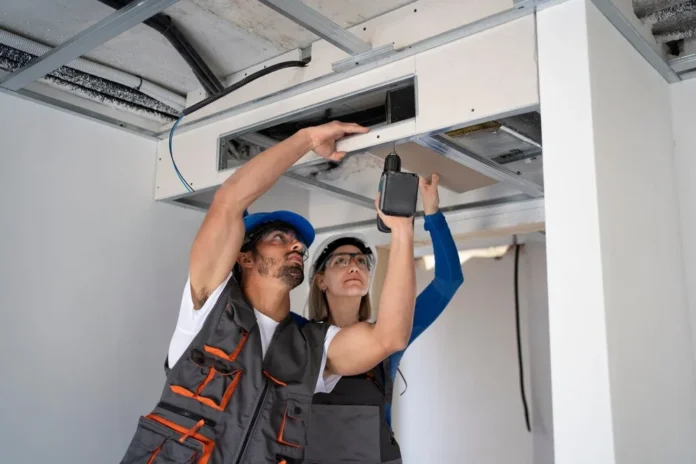


Wouldn’t it be great if your home’s AC didn’t have to work overtime to keep you cool? Proper insulation could reduce your AC’s workload, lower energy bills, and improve overall home comfort.
For those living in a hot climate, such as Phoenix, ensuring your home has quality insulation isn’t only ideal but also necessary. If you’re considering upgrades, this company for attic insulation in Phoenix can help maximize your home’s energy efficiency.
Read on to learn how insulation can make your HVAC system’s job easier, the science behind it, and why it’s a cost-effective solution.
The science behind insulation and AC efficiency
Your home’s insulation serves as a barrier that slows the transfer of heat into and out of your living spaces. Heat naturally flows from the hot outdoors into your cooler home during the summer. Conversely, warm air inside your home tries to escape to the cooler outdoors during winter.
Without sufficient insulation, your home loses or gains heat more rapidly, forcing your AC or heater to overwork to maintain a consistent indoor temperature. Proper insulation minimizes this heat transfer, reducing the strain on your HVAC system and allowing it to operate more efficiently.
Insulation and R-value
Insulation performance is measured by its R-value, which represents its resistance to heat flow. Higher R-values provide better insulation. For Phoenix, an attic insulation R-value between R38 (14 inches) and R60 (22 inches) is recommended for maximum efficiency in the hot desert climate.
Five ways insulation helps your AC work less
1. Reduces heat gain
Insulation acts like sunscreen for your home. It limits the heat entering through the roof, walls, and attic during summer. By reducing indoor heat gain, your AC won’t have to work as hard to cool your home, resulting in lower energy consumption and longer equipment life.
2. Maintains consistent indoor temperatures
Have you ever noticed some rooms in your home are cooler than others? Poor insulation is often the culprit. Insulation helps maintain consistent temperatures across all house areas, so your AC doesn’t have to overcompensate to balance the air distribution.
3. Improves HVAC efficiency
When your HVAC system isn’t overburdened, it operates more efficiently. This not only reduces wear and tear but also extends the lifespan of your AC unit. Proper insulation helps your HVAC focus on cooling your home rather than battling external heat intrusion.
4. Saves energy and cuts costs
One of the biggest advantages of sturdy insulation is its energy-saving potential. With your AC working less, you’ll use less electricity to maintain your desired indoor temperature. This translates to noticeable reductions in your monthly utility bills.
5. Prevents air leaks
Air leaks in attics are common culprits in heat transfer. High-quality insulation, especially with air sealing, keeps your cool air inside where it belongs, preventing it from leaking through cracks or gaps.
Types of insulation for maximum efficiency
Not all insulation materials are the same. Here are the top two types that work best in hot climates like Phoenix’s desert heat:
1. Spray foam insulation
Spray foam forms an airtight seal and provides unbeatable insulation. It’s excellent for filling small gaps and creating a barrier against heat transfer. This option is perfect for homes looking to achieve maximum efficiency and comfort.
2. Blown-in insulation
Blown-in insulation offers a cost-effective and efficient solution to upgrade your attic. It fills gaps and hard-to-reach areas, creating a consistent layer of insulation that minimizes heat transfer. This option is ideal for those seeking a cost-effective but efficient solution.
Complement with air sealing
For optimal results, pair insulation with expert air sealing. Sealing cracks, gaps, and leaks prevents conditioned air from escaping and unconditioned air from entering, enhancing overall efficiency.
When should you upgrade your attic insulation?
You may wonder if your current insulation is sufficient. Here are some signs it may be time to upgrade or replace it:
- Rising energy bills without an increase in usage
- Uneven temperatures in different rooms of your home
- Dust, allergens, or pest infestations in your attic
- Insulation that’s more than 15 years old
- Visible signs of moisture, mold, or structural damage
Addressing these signs promptly can prevent further inefficiency and discomfort.
Why insulation pays for itself
While installing new or upgraded insulation comes with upfront costs, it’s one of the most cost-effective home improvements you can make. On average, homeowners can save up to 15% on their annual heating and cooling costs with proper insulation. Add to that the potential increase in your home’s resale value, and you’ll find that insulation is an investment that pays off repeatedly over the years.
Conclusion
Proper insulation is the backbone of an energy-efficient and comfortable home. It works quietly behind the scenes, helping your AC do its job without breaking a sweat.
If you’re ready to reduce energy costs, enhance your comfort, and help your AC work less, consider working with a reputable company for attic insulation. Professional insulation services ensure you receive the right materials, proper installation, and optimal results.