
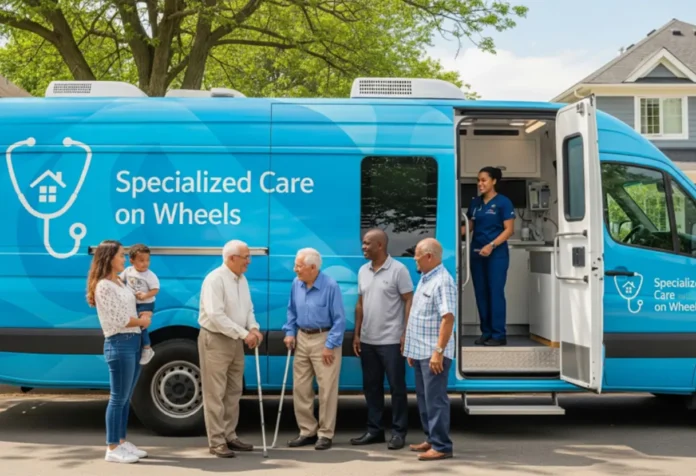

Everybody has had that experience: sitting in a waiting room, flipping through a magazine that is three years old, watching the clock and wondering why a 2:00 PM appointment really means 3:15 PM. Healthcare was traditionally a destination experience. You visit the physician; the physician does not visit you very often. However, as the past years have shown, being flexible and accessible is not a luxury anymore, but a necessity.
This change of attitude has led to a silent revolution in the medical profession: mobile clinics. These are not just the blood donation buses you might find parked outside a shopping mall. We are discussing completely equipped medical units on wheels, which provide specialized services, starting with dental work and ending with advanced diagnostics, directly to neighborhoods, workplaces, and rural areas. It represents a radical reconsideration of the way we access healthcare, placing convenience alongside quality.
Revolutionizing Patient Experience via Mobile Medical Accessibility
The model of healthcare has been inflexible for decades. If you were in a city, you fought traffic and parking charges. If you lived in the countryside, you might need to drive hours to meet a specialist. Mobile clinics are breaking these barriers by flipping the script. Rather than asking, “How does the patient get to us?” providers are asking, “How do we reach the patient?”
This is a magic formula in terms of alleviating the anxiety linked with medical visits. It is somehow less threatening to enter a clean, modern van parked outside your house than to work through the maze of a huge hospital facility. It feels personal. It feels local. Patients have a better chance of maintaining their appointments and keeping up with their health since they no longer have to endure the logistical nightmare of traveling and waiting rooms.
Comprehensive Capabilities and Services of Modern Mobile Clinics
You might be skeptical. Is a brick-and-mortar office something that can be substituted by a van? Although they cannot replace large surgical facilities or emergency departments, the potential of contemporary mobile units is immense.
The miniaturization of medical equipment has been achieved through technological advances to an amazing extent. Mobile providers can now offer services that previously required a hospital visit, using portable X-ray machines, compact ultrasound devices, and point-of-care blood testing kits.
Primary Care and Prevention
Preventive health is the bread and butter of mobile clinics. It consists of vaccinations, blood pressure checks, and annual check-ups. By parking in community centers or corporate lots, these clinics are able to attract individuals who otherwise would not attend their annual check-up simply because they did not have the time.
Specialized Services
This is the area of actual growth. We are witnessing mobile dental vans with full chairs and X-ray facilities. Mobile eye clinics carry out vision tests and give out glasses immediately. Mental health facilities offer individual counseling rooms in underserved locations. Even more sophisticated disciplines, such as mammography and cardiac screening, are going on the road.
Chronic Disease Management
Consistency is important to patients dealing with conditions like diabetes or hypertension. Regular monitoring of elderly or less mobile patients is made much easier through mobile clinics. These units fit seamlessly into a larger scheme of home care, ensuring the elderly or less mobile do not fall through the cracks just because it is difficult to get them to a medical facility.
Advanced Technology and Connectivity Powering Mobile Health Units
To operate a clinic on wheels, a driver and a doctor are not enough. It demands an advanced infrastructure so that patient information is safe, the appointment schedule is well-organized, and the quality of services is the same as in a building.
These operations depend on connectivity. Mobile units rely on 5G and satellite networks powerful enough to retrieve medical records in real time. Once a nurse measures your vitals in a mobile unit, the data must be immediately available to your primary care doctor or a specialist in the main hospital.
It is here that organization is important. The administrative aspect can become disorganized quickly due to the constant movement and serving of various groups. In order to maintain smooth functioning, providers use a powerful patient management system that handles scheduling, e-records, and reminders. This ensures that despite the relocation of the clinic, the continuity of care is not affected. When you come to a mobile unit on Tuesday, the doctor you meet in a hospital on Friday understands everything that happened.
Addressing Healthcare Disparities in Rural and Underserved Communities
Whereas convenience is a significant selling feature to urban residents, to rural people, the mobile clinic is a lifeline. Medical deserts are found in many areas of the country where the closest hospital is more than an hour away. To a person who does not have a reliable car or cannot take a full day off work, this distance is impassable.
Mobile clinics fill this gap. They work on rotating shifts, visiting different towns on specific days. This consistency creates confidence. When a community is aware that the health bus arrives every second Thursday, they make plans. It is a democratization of healthcare that means your zip code no longer dictates as much about your life expectancy as it did before.
Moreover, such clinics play a key role in times of crisis. This was evident during the pandemic and is evident after natural disasters. In case of infrastructure damage or hospital overcrowding, mobile units may be deployed quickly to triage patients, administer first aid, and offer vaccinations. They are the medical version of rapid response teams.
The Economic Benefits and Cost-Effectiveness of Mobile Clinics
It is not merely about warm fuzzy feelings; there is also sense in the economics of it. The construction of a new hospital or even a satellite clinic is a very costly and long-term process that requires land, construction, and huge overhead. In comparison, a mobile clinic costs a fraction of that to start.
For healthcare systems, mobile clinics serve as a pressure valve. They decrease the workload in emergency rooms by treating minor problems and conducting screenings within the community. Visiting an ER for a minor infection is not cost-effective. It is cheaper and quicker to treat the same infection in a mobile clinic.
Employers are also following suit. Most big corporations are contracting mobile clinics to visit their offices. It is a win-win situation: employees receive their flu shots or screenings without leaving the workplace, and employers receive a healthier workforce and reduced absenteeism.
Future Trends in Mobile Healthcare Innovation and Accessibility
Mobile healthcare is not a declining trend. With improvements in technology, there will be an increase in what can be accomplished in a mobile unit. Mobile units with some of the best imaging technologies, such as CT scanners, may become more widespread soon, alongside units fully focused on high-tech diagnostics using AI.
Nevertheless, the main mission will stay the same: accessibility. Healthcare is finally catching up with the on-demand world we live in, where we can stream movies instantly and have groceries delivered to our front door.
Mobile clinics are a shift towards a more patient-centric model. It appreciates the fact that life is hectic, travel is tough, and health does not have to be a burden. It could be a dental van parked outside a school, a mammography bus parked outside a church, or a primary care unit parked in a rural town square, but these mobile clinics are demonstrating that, in some cases, the future of healthcare may literally be driving you.