


You have heard it in gym locker rooms, coach speeches, and motivational posts. No gain without pain sounds like a simple rule for success. Push hard, feel the burn, and results follow. But is that actually how the body and the mind work, or is this one of those sayings that feels true because it rhymes?
The phrase has outlived aerobics leggings and cassette tapes for a reason. It captures something real about effort and reward. Yet modern research on training, recovery, and burnout tells a more detailed story than the slogan suggests. Some pain does mark progress. Other pain just marks damage. Knowing the difference changes how you train, work, and set goals.
This article breaks down where the phrase came from, what current science says about pain and progress, and how to use the idea safely. You will find a quick comparison table, a plain-English breakdown of muscle soreness, and answers to the most common questions people search. By the end, you will know when to push through and when to stop.
What Does No Gain Without Pain Mean
No gain without pain means that meaningful progress, whether in fitness, career, or personal goals, usually requires effort, discomfort, or sacrifice. It does not mean that all pain leads to reward. Sharp or lasting pain is a warning sign, not a badge of honor, and ignoring it often causes setbacks instead of gains.
Where The Phrase Actually Came From
Most people assume this is a modern gym slogan, but its roots go back centuries.
Robert Herrick’s Original Line
The earliest known version traces to 17th-century English poet Robert Herrick. In 1650, he wrote a two-line poem titled “No Pains, No Gains,” stating that small effort brings small reward and a person’s fortune matches their labor. The core idea, that reward tracks effort, has stuck around for over 350 years.
Jane Fonda And The 1980s Fitness Boom
The phrase took its current form, no pain, no gain, and its close relative, no gain without pain, when actress Jane Fonda used it as a catchphrase in her wildly popular 1982 aerobics videos. Alongside “feel the burn,” it became shorthand for pushing workouts past the point of muscle ache. That era cemented the phrase in gym culture worldwide, and it has stayed there since.
What Muscle Science Actually Shows
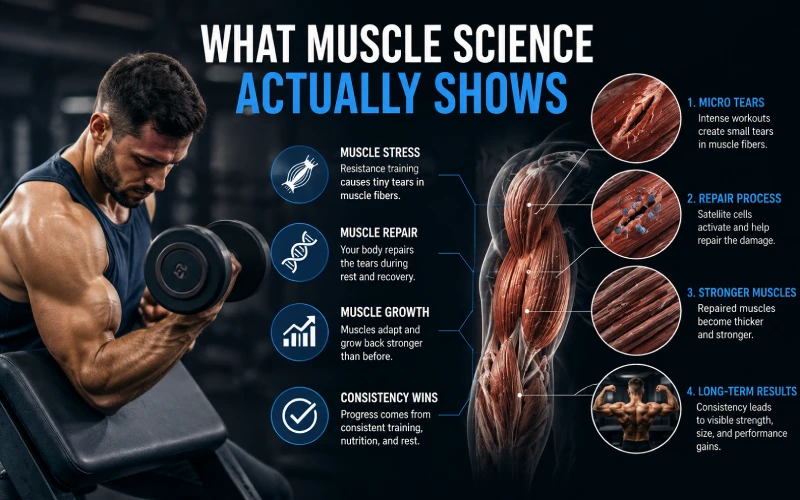
The fitness meaning of the phrase points to a real, well-studied condition called delayed onset muscle soreness, or DOMS.
DOMS shows up after unfamiliar or intense exercise, particularly movements that lengthen a muscle under load, like the downward phase of a squat. According to a 2025 review published in the Journal of Functional Morphology and Kinesiology, this soreness stems from micro-tears in muscle fibers combined with an inflammatory response. Symptoms typically start six to twelve hours after training, peak between 24 and 72 hours, and fade within five to seven days.
Here is the part the old slogan gets wrong: soreness is not a reliable measure of a good workout. A 2025 clinical review in the Journal of Pain Research notes that DOMS can reduce strength, limit joint range of motion, and disrupt training consistency for days. That is not a win. It is a temporary setback your body has to recover from before real progress continues.
Zack Cahill, a senior trainer at Evolve Fitness in London, put it simply in an interview with The Guardian: whether pain helps or hurts always depends on the goal of the specific workout. Long, steady cardio sessions benefit from a slower, easier pace rather than constant burning effort.
Good Pain Versus Bad Pain
Not all discomfort during exercise means the same thing. Learning to tell them apart protects you from injury while still allowing real progress.
| Signal | Likely Meaning | What To Do |
|---|---|---|
| Mild ache in the worked muscle, 1 to 2 days later | Normal DOMS from new or harder training | Rest, hydrate, keep moving gently |
| Burning sensation during the last few reps | Metabolic fatigue in the muscle | Normal, can push through with good form |
| Sharp, sudden pain during a movement | Possible strain or joint stress | Stop immediately, do not push through |
| Pain that worsens over several days | Overtraining or injury | See a medical professional |
| Pain in a joint rather than a muscle belly | Likely mechanical stress, not growth | Adjust form or reduce load |
Bold your progress by respecting this difference. Muscle fatigue and mild soreness are part of adaptation. Joint pain and sharp pain are not part of any healthy training plan.
How To Apply The Idea Without Getting Hurt
You can respect the spirit of no gain without pain while still training smart. Try these steps.
- Increase load gradually. Add small amounts of weight, distance, or intensity each week instead of jumping levels.
- Warm up properly. A short warm-up reduces injury risk and prepares muscles for harder effort.
- Track recovery, not just effort. Sleep, protein intake, and rest days matter as much as the workout itself.
- Separate discomfort from damage. Muscle fatigue during a set is normal. Joint pain or numbness is not.
- Plan deload weeks. Every four to six weeks, reduce training volume to let your body catch up.
- Ask a coach or physical therapist if pain lasts more than a week or worsens with rest.
Does The Saying Apply Beyond Fitness
The idea behind no gain without pain shows up outside the gym too. Students pushing through a difficult course, entrepreneurs working long hours to launch a business, and musicians practicing scales for years all face a version of the same trade-off. Growth in any skill usually asks for time, repetition, and some level of struggle.
The distinction still holds, though. Productive discomfort, like the mental strain of learning a new skill, tends to build ability over time. Unproductive pain, like chronic overwork or ignoring burnout warning signs, tends to break people down instead. A student who studies with focused, spaced practice sessions learns more than one who pulls repeated all-nighters and burns out before finals. Effort matters. So does knowing your limits.
Frequently Asked Questions
What does “no gain without pain” mean?
It means real progress usually requires effort, discomfort, or sacrifice. It does not mean all pain leads to reward. Sharp or lasting pain is a warning sign, not proof of progress.
Is “no pain, no gain” actually true?
Partly. Effort and consistency drive results, but experts agree the slogan oversimplifies things. Muscle soreness is not required for growth, and sharp pain usually signals injury risk instead.
Who said “no gain without pain” first?
The idea traces back to 17th-century poet Robert Herrick, who wrote a short poem on the theme in 1650. The modern gym phrase spread through Jane Fonda’s 1982 aerobics videos.
Can you build muscle without soreness?
Yes. Muscles adapt through progressive overload and consistency, not soreness alone. Experienced lifters often gain strength while feeling little to no soreness.
Does “no gain without pain” apply outside fitness?
Yes, in a general sense. Learning a skill or building a career usually takes sustained effort and discomfort, though chronic stress without recovery leads to burnout, not growth.
The Bottom Line
No gain without pain holds a grain of truth wrapped in an oversimplified package. Real progress, whether physical, academic, or professional, almost always requires effort, consistency, and some level of discomfort. That part of the saying has survived for over 350 years because it reflects something true about how humans grow.
But the modern gym version of the phrase misses an important detail. Sharp pain, joint pain, or soreness that keeps getting worse is not a sign you are winning. It is a sign to stop, rest, or ask for help. The smartest athletes, students, and professionals learn to tell productive struggle apart from damage, and they build their habits around that difference. Push when pushing helps. Rest when your body or mind asks you to. That balance, not blind suffering, is what actually produces lasting gains.