
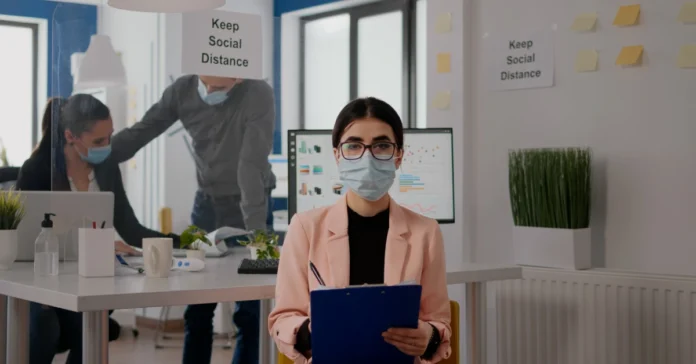


Many companies nowadays have adopted the idea that open office spaces, without walls and other partitions, are the most effective way to maximize employee productivity.
And while it’s true that open-plan working does often make colleagues more collaborative and creative, it’s easy to overlook the fact that workers still need time away from colleagues throughout the day.
That’s where the privacy screen comes in.
Screens are an ideal way to divide open-plan workspaces, affording employees much-needed privacy and a sense of personal space.
The personal space provided by privacy screens is known to promote worker productivity and, importantly, boost mental health.
In this post, we examine five key ways privacy screens can enhance the well-being, both physical and mental, of your employees.
1. Personal Space
Human beings are social creatures by nature, but that doesn’t mean they don’t need time away from others, as they need time to recharge and reflect.
A private space where employees can step away from colleagues gives them time to think deeply about their tasks, address complex problems systematically, and avoid mistakes that arise when workers are distracted.
This has a compounding effect from a mental health perspective, as employees who make fewer mistakes feel they are being more productive at work, boosting their self-confidence and morale.
2. Noise Reduction
Most employees thrive on the hubbub of a lively and collaborative work space, but being exposed to constant aural stimulation can be a bit much sometimes.
That’s because a noisy work environment draws on an individual’s mental energy to filter out unimportant and extraneous audio information.
Incessant noise means this filtering must be constant and invokes the body’s stress response, impeding focus and further ramping up stress levels.
A privacy screen, especially one manufactured with sound-dampening foam, can help to reduce noisy distractions and ensure employees don’t suffer acoustic overload.
3. Reduced Eye Strain
Privacy screens don’t just have a role to play in boosting mental wellbeing – they can improve physical wellbeing, too.
Ambient light from artificial light fittings and the natural light of the sun can cause glare on computer and display screens, damaging eyes and causing headaches in some users.
Using privacy screens, especially ones impregnated with a layer of light-capturing material, can help disperse the blue part of the light spectrum, acting to combat the harmful effects blue light can have on the eye and brain.
4. Improved Hygiene
In the post-COVID world, we are all acutely aware of how easily bacteria and germs can spread indoors.
With this in mind, privacy screens are a godsend when it comes to communal eating areas and in businesses with a medical focus, where the screen affords users a sense of privacy and also serves to keep cross-contamination of spaces to a minimum.
Furthermore, many privacy screens come with a wipe-clean acrylic finish, which means keeping them clean and germ-free is easy.
5. Psychological Boost
The simple fact of having some physical boundary between spaces is often an important psychological cue for employees.
Individuals like to feel they have their own territory, which privacy screens can help demarcate.
By giving employees this personal space, employers signal to their employees that they value their feelings and acknowledge they don’t always need to be ‘on’ at work.
This reassurance is important in lowering stress levels and helps reduce cortisol levels – the stress hormone released when employees feel pressured or when they believe they are being closely observed.
Conclusion
Privacy screens, like the ones made by Rap Office Screens, can improve the well-being of workers in more ways than one. From improved mental focus to blue light and glare reduction, screens bring benefits to both the mental and physical well-being of workers in open-plan spaces.