

Key Highlights
A reliable power system is essential for comfortable van life
Planning your setup helps avoid costly mistakes later
Different components work together to support off-grid living
Understanding campervan electrics makes it easier to build a system that suits your needs
Why Your Power Setup Matters More Than You Think
When you first start planning a campervan build, it’s easy to focus on layout, storage, and aesthetics. But one of the most important parts of your setup is what you don’t always see straight away, your power system.
Your electrical setup determines how you live on the road. It affects everything from charging your phone to running appliances, lighting your space, and staying comfortable during longer trips.
Without a well planned system, even short trips can become frustrating. Running out of power, dealing with unreliable components, or not having enough capacity can quickly limit your experience.
That’s why understanding the basics of campervan electrics early on can make a big difference. It helps you build a system that supports your lifestyle rather than holding it back.
A good setup doesn’t need to be overly complex. It just needs to be thought through properly.
Start With How You Plan to Travel
Before choosing any equipment, it’s important to think about how you’ll actually use your van.
Are you planning short weekend trips or extended off grid travel? Will you be working remotely, or just using your van for occasional getaways?
Your answers will shape your entire power setup.
For example, someone working remotely may need to power a laptop, charge multiple devices, and maintain a consistent internet connection. This requires a more robust system.
On the other hand, a simpler setup may be enough for basic lighting, charging phones, and occasional appliance use.
Understanding your usage helps prevent overbuilding or underbuilding your system.
The Core Components of a Campervan Power System
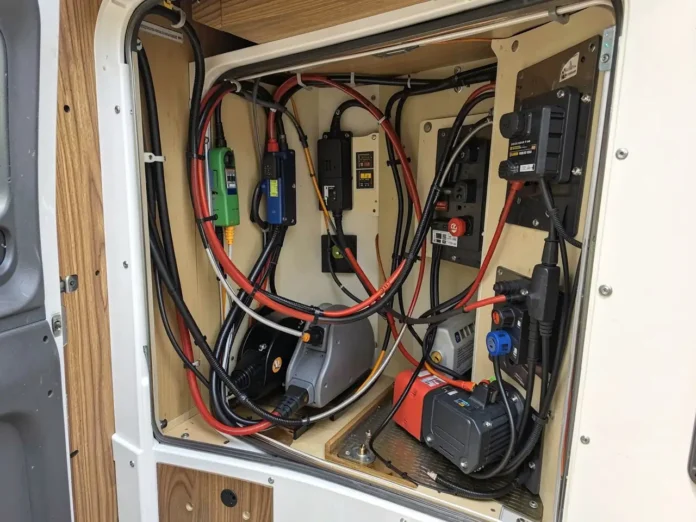
A campervan electrical system is made up of several key components that work together.
At its core, you have a battery that stores power. This is what allows you to use electricity when you’re not connected to an external source.
You then have ways to charge that battery. This might include solar panels, charging from your vehicle while driving, or plugging into external power when available.
From there, power is distributed to your appliances and devices through various connections and circuits.
Each component plays a role, and the system only works well when everything is properly matched.
Understanding how these parts interact helps you make better decisions when planning your setup.
Choosing the Right Battery
The battery is one of the most important parts of your system.
It determines how much power you can store and how long you can stay off grid.
There are different types of batteries available, each with its own advantages. Some are more affordable, while others offer better performance and longer lifespan.
The right choice depends on your budget, usage, and how often you plan to rely on your system.
It’s worth taking the time to understand the differences, as this decision will impact your overall setup.
Getting the Right Charging Setup
Charging your battery is just as important as the battery itself.
Solar panels are a popular option for van life, especially for those who spend a lot of time off grid. They provide a renewable source of power and can keep your battery topped up during the day.
Charging while driving is another useful method. This allows your battery to recharge as you move between locations.
Some setups also include the option to plug into external power sources when available.
Combining these methods creates a more reliable system, reducing the risk of running out of power.
Managing Your Power Usage
Even with a well designed system, managing your power usage is important.
Understanding how much energy your devices consume helps you avoid unexpected issues.
Some appliances use significantly more power than others. Being aware of this allows you to plan your usage more effectively.
Simple habits, like turning off lights when not needed or using energy efficient devices, can make a noticeable difference.
This doesn’t mean limiting your experience. It’s about using your system in a way that supports your lifestyle.
Avoiding Common Mistakes
One of the most common mistakes is underestimating power needs.
It’s easy to assume you’ll use less electricity than you actually do. This can lead to a system that doesn’t meet your requirements.
Another common issue is overcomplicating the setup.
While it’s important to have a reliable system, adding unnecessary components can increase costs and create more potential points of failure.
Keeping your setup simple and aligned with your needs often leads to better results.
Planning properly from the beginning helps avoid these issues.
Safety and Installation Considerations
Electrical systems need to be installed correctly to ensure safety.
Poor wiring, incorrect connections, or mismatched components can lead to problems.
If you’re not confident in your knowledge, it may be worth seeking professional advice or assistance.
Even if you plan to do most of the work yourself, understanding the basics of safety is essential.
This includes proper insulation, secure connections, and using the right components for your setup.
A safe system is a reliable system.
Building a Setup That Grows With You
Your needs may change over time.
You might start with a simple setup and later decide to travel more frequently or stay off grid for longer periods.
Designing a system that allows for future upgrades can be helpful.
This might include choosing components that can handle additional capacity or leaving space for extra features.
Planning for flexibility ensures your setup can adapt as your lifestyle evolves.
Keeping It Practical
It’s easy to get caught up in trying to build the perfect system.
In reality, the best setup is one that works consistently and supports how you travel.
It doesn’t need to be the most advanced or expensive. It just needs to be reliable and suited to your needs.
Focusing on practicality helps keep the process manageable.
It also ensures you spend more time enjoying your van rather than troubleshooting your setup.
Making the Most of Your Van Life Experience
A well planned power system allows you to travel with confidence.
You can charge your devices, run your essentials, and stay comfortable without constantly worrying about your power levels.
It gives you the freedom to explore more remote locations and stay off grid for longer.
That’s what makes it such an important part of any campervan build.
By understanding the basics and planning carefully, you can create a setup that enhances your experience rather than limiting it.
And once your system is in place, everything else about van life becomes that much easier.