
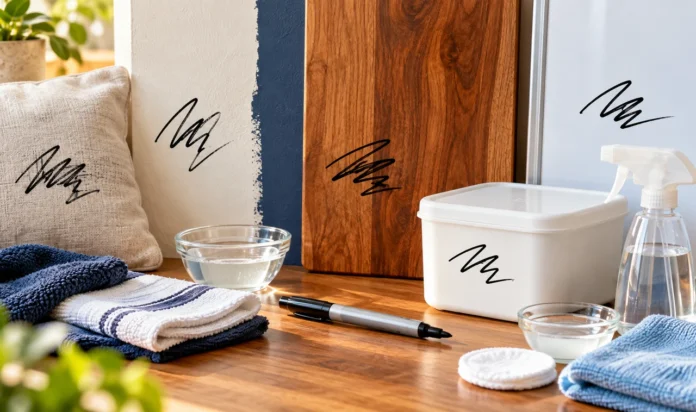


Permanent marker looks permanent because its ink is designed to grip a surface and resist water. That does not mean every mark has to stay. The safest way to remove it is to match the cleaner to the surface, use very little liquid, and lift the ink instead of pushing it outward.
This guide explains how to remove permanent marker from fabric, carpet, walls, finished wood, plastic, glass, metal, whiteboards, and skin. Start with the mildest suitable method, test it somewhere hidden, and stop if the surface color or finish begins to change.
Time and difficulty
Active time: 5–20 minutes for most stains
Drying time: 30 minutes to several hours, depending on the surface
Difficulty: Beginner-friendly, with extra care needed on paint, wood finishes, and delicate fabrics
What you need
- Clean white microfiber cloths or plain white paper towels
- Cotton swabs for small marks
- 70% isopropyl alcohol
- Mild dish soap and cool water
- Disposable gloves
- A thick white towel for backing fabric or carpet
- Baking soda or plain white non-gel toothpaste
- Dry-erase marker for whiteboards
- Mineral oil, baby oil, or cooking oil for skin
- A small bowl and a soft toothbrush
At a glance
- Identify the surface and read its care label.
- Protect the material beneath the stain.
- Test the cleaner in a hidden place.
- Blot from the outside edge toward the center.
- Use the surface-specific method below.
- Rinse away cleaner residue.
- Let the area dry before repeating treatment.
Identify the stained surface before choosing a cleaner
Check whether you are dealing with washable fabric, carpet, sealed plastic, bare metal, painted drywall, finished wood, or another material. The same solvent can be safe on glass but damaging on acrylic plastic or varnished furniture. Read the care label on clothing and look for the manufacturer’s cleaning guidance on valuable items.
When the surface is antique, porous, hand-painted, silk, suede, leather, or labeled dry-clean only, pause and use a professional cleaner. A small marker stain is easier to repair than a faded patch or stripped finish.
Protect the area beneath and around the stain
Put on gloves, open a window, and keep alcohol away from flames or heat. Slide a thick folded white towel beneath stained fabric so dissolved ink cannot transfer to the opposite side. For carpet, place dry towels around the mark to catch moisture.
Use white cloths because dye from a colored rag can transfer while you work. Fold the cloth into several clean sections and change sections as soon as one picks up ink. This small habit prevents the stain from returning to the surface.
Test the cleaner on a hidden spot
Dampen a cotton swab with the cleaner you plan to use. Touch it to an inconspicuous area for about 30 seconds, then blot with a clean cloth. Wait 5 minutes and check for fading, softness, haze, swelling, or loss of gloss.
If the finish changes, stop and move to a milder method. Never mix alcohol with bleach, ammonia, or other cleaning products. Use one cleaner at a time, rinse away its residue, and let the surface dry before trying a different method.
The no-spread rule
Use a small amount of cleaner and blot from the outside edge toward the center. Do not scrub back and forth. Scrubbing pushes dissolved ink into a wider ring and can roughen fibers or dull a finish.
Blot fabric stains with isopropyl alcohol
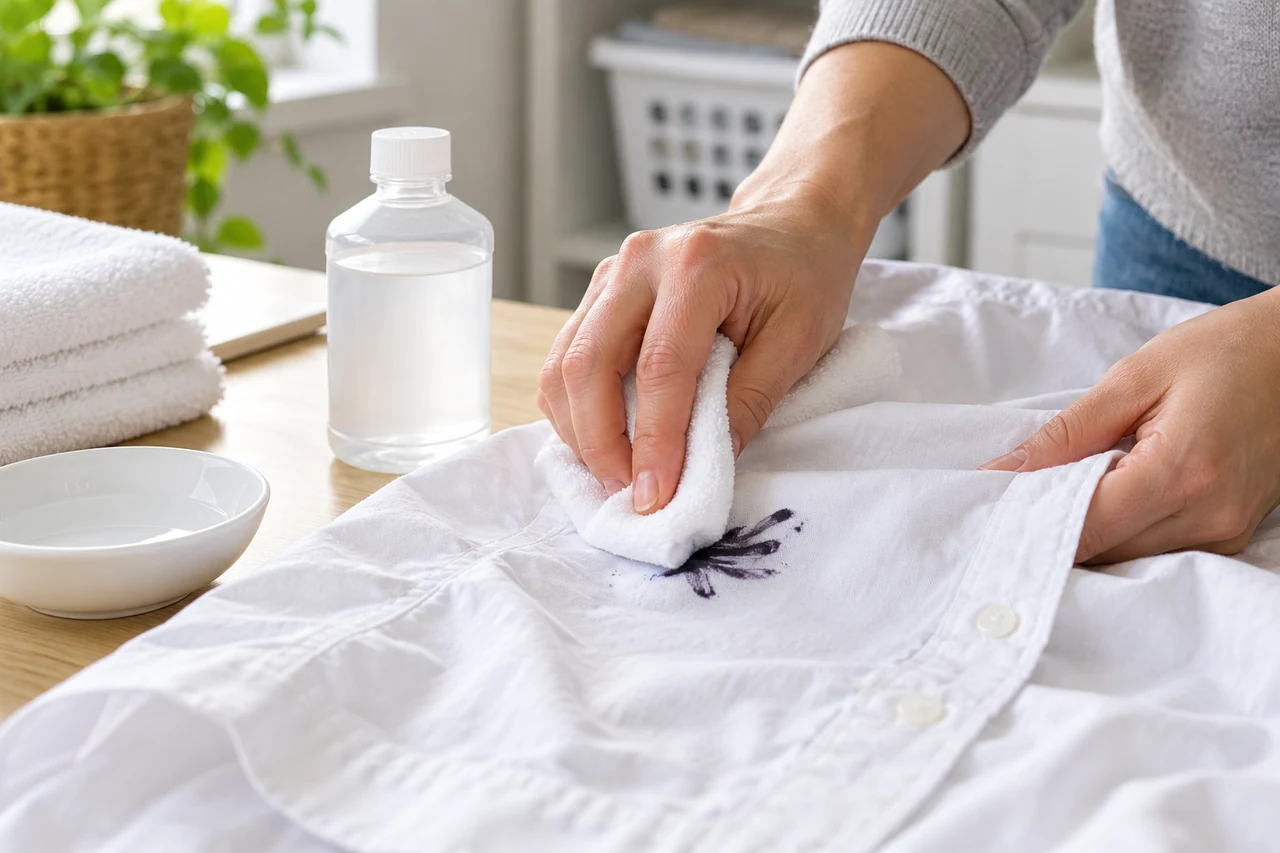
Lay washable fabric stain-side down on a clean white towel. Apply a few drops of 70% isopropyl alcohol to the back of the stain with a cotton swab. Blot from the back so the ink moves out of the fabric and into the towel rather than deeper into the fibers.
Move the garment to a clean section of towel whenever ink transfers. Continue in short rounds until little color appears on the towel. Rinse with cool water, work in a small amount of liquid laundry detergent, and wash according to the care label. Air-dry first because dryer heat can set any remaining shadow.
Lift marker from carpet without soaking the backing
Blot the mark with a dry white cloth to pick up any loose ink. Apply alcohol to the cloth rather than pouring it onto the carpet. Press the dampened cloth against the outer edge for 10–15 seconds, lift it straight up, and move to a clean section before the next press.
Work slowly toward the center. Once the ink stops transferring, blot with a cloth dampened in cool water and one drop of dish soap. Follow with a plain damp cloth, then press dry towels over the area. Too much liquid can spread dye into the carpet backing and leave a ring.
Wipe sealed hard surfaces with diluted alcohol
For glass, tile, sealed metal, and many sturdy plastics, mix equal amounts of isopropyl alcohol and water. Put the mixture on a microfiber cloth and make short passes over the mark. Wipe the loosened ink away with a clean section after each pass.
Rinse the surface with a cloth dampened in plain water and dry it. Avoid alcohol on acrylic, polycarbonate, painted plastic, or electronics unless the manufacturer approves it; it can create cloudiness or damage a coating. For an electronic case or screen, follow the device maker’s directions instead.
Remove marker from painted walls with a mild paste
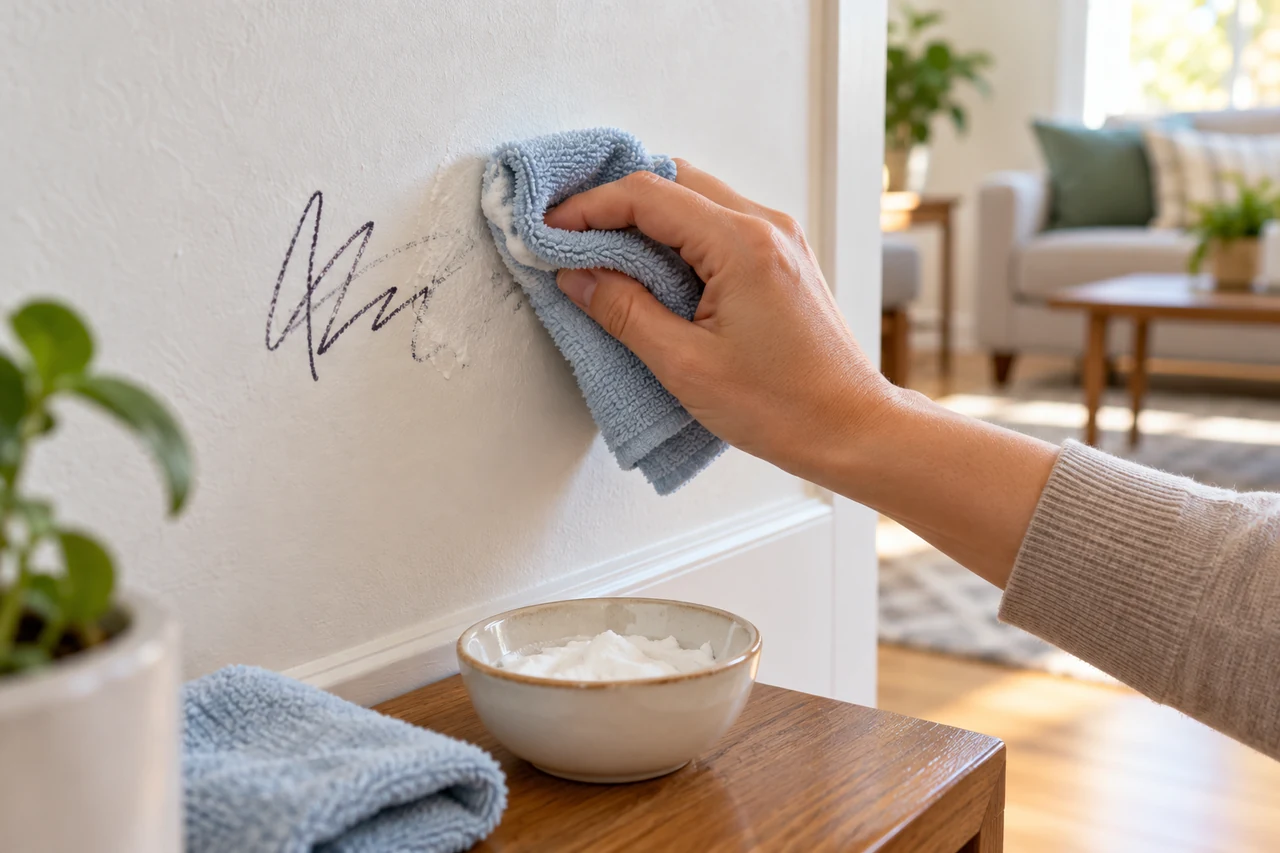
Begin with warm water and a drop of dish soap on a soft cloth. If the mark remains, make a loose paste with baking soda and water, or use a pea-sized amount of plain white non-gel toothpaste. Dab it onto the mark and rub lightly with your fingertip through the cloth for 10 seconds.
Wipe with a clean damp cloth and dry. Flat and matte paint can burnish or fade faster than satin paint, so use very little pressure. A melamine sponge may work, but it acts like a fine abrasive; reserve it for washable paint and test carefully first.
Loosen marker from finished wood without stripping the finish
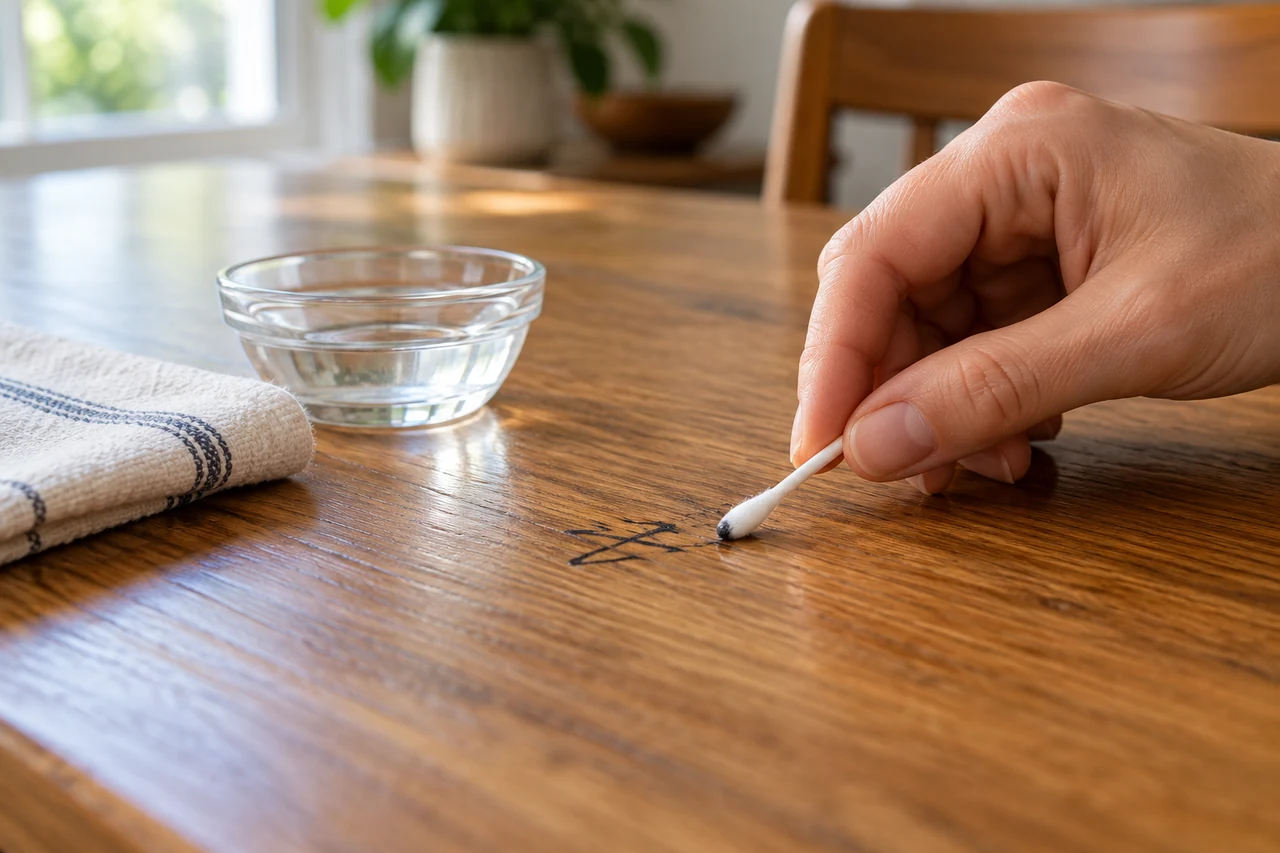
Start with a barely damp cloth and one drop of dish soap. If that is not enough, touch a cotton swab lightly dampened with alcohol to the ink for only a few seconds, then wipe it away immediately. Work on a small section and dry it before moving on.
Stop if the cloth picks up the wood’s finish or the sheen changes. Do not use acetone, abrasive powder, or a saturated cloth on furniture. Waxed, shellacked, antique, or unfinished wood needs a furniture professional because the ink may have entered the finish or grain.
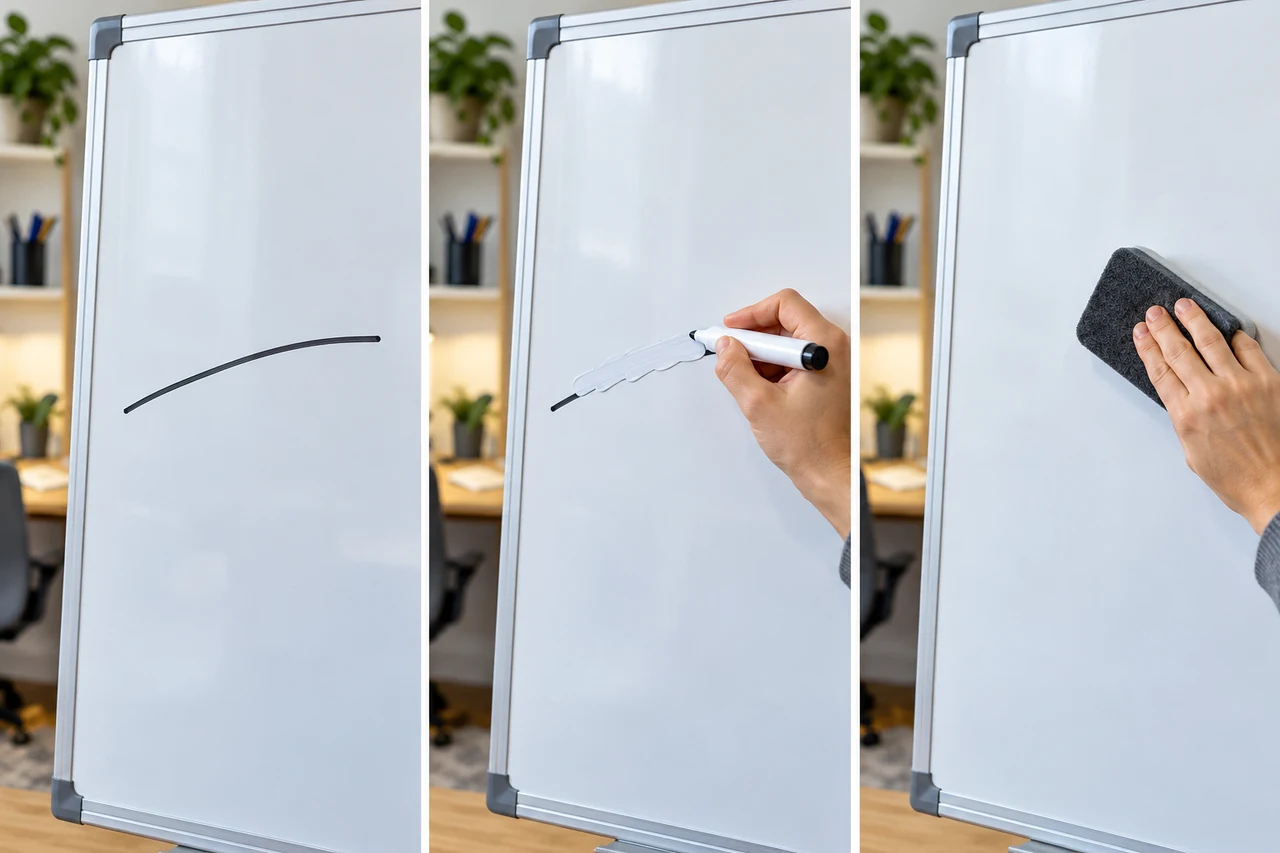
Erase permanent marker from a whiteboard with dry-erase ink
Cover the permanent marker line completely with a fresh dark dry-erase marker. Wipe both inks away at once with a clean whiteboard eraser or soft cloth. The solvent in the dry-erase ink often loosens the permanent ink without harsh scrubbing.
Repeat once if a faint shadow remains, then clean the board with a manufacturer-approved whiteboard cleaner. Do not leave the dry-erase layer sitting for a long time, and avoid abrasive sponges that can scratch the board’s coating.
Clean marker from skin with oil and soap
Massage a small amount of mineral oil, baby oil, or cooking oil over the mark for about 30 seconds. Wipe with a soft cloth, then wash the area with warm water and ordinary hand soap. Repeat gently if needed.
Do not use acetone, bleach, or heavy-duty cleaning solvents on skin. Stop if the skin becomes red or sore. Marker on skin often fades naturally after normal washing, so there is no benefit in aggressive scrubbing.
Rinse, dry, and inspect the treated area
Remove cleaner residue with the least amount of water the surface allows. Blot fabric and carpet, wipe hard surfaces, and dry finished wood immediately. Let the area dry completely before judging the result because a damp patch can look darker than the surrounding material.
If a shadow remains, repeat the same safe method once rather than reaching for a stronger solvent. Several short treatments are safer than one long soak. Stop when ink no longer transfers or when the surface begins to change.
Troubleshooting
| Problem | Likely cause | What to do |
|---|---|---|
| The stain is spreading | Too much liquid or rubbing | Blot with a dry cloth, then resume at the outside edge with less cleaner. |
| Surface color is lifting | Cleaner is too strong | Stop, rinse gently, and let the area dry. Seek professional help for valuable items. |
| A faint shadow remains | Ink remains below the surface | Let it dry, then repeat one short treatment. |
| Carpet has a ring | The area became too wet | Blot outward with a barely damp cloth, then press dry towels over the area. |
| Surface feels sticky | Cleaner residue remains | Wipe with mild soapy water, follow with plain water, and dry. |
Frequently asked questions
Can vinegar remove permanent marker?
Vinegar may soften a light mark on some washable surfaces, but it is not the most reliable first choice. Its acidity can also affect stone, grout sealers, and some finishes. Mild soap or a carefully tested alcohol treatment usually gives more predictable results.
Will acetone remove permanent marker?
Acetone can dissolve marker ink, but it can also melt plastic, remove paint, cloud finishes, and pull color from fabric. Keep it as a last resort for compatible bare glass or uncoated metal, and test first. Do not use it on skin or finished furniture.
Does hairspray still work on permanent marker?
Older hairsprays often worked because they contained a high level of alcohol. Modern formulas may contain conditioners, oils, and fragrances that leave residue. Using plain isopropyl alcohol in a controlled amount is usually easier to rinse and more predictable.
Can permanent marker be removed after it dries?
Yes, many dry marker stains can be reduced or removed. Older stains may need two or three short treatments, with full drying between attempts. The material and its finish matter more than the age of the mark, so keep using the safest surface-specific method.
Quick reference card
- Fabric: Blot from the back with alcohol, rinse, wash, and air-dry.
- Carpet: Put alcohol on the cloth, not on the carpet.
- Glass and metal: Wipe with diluted alcohol, rinse, and dry.
- Painted walls: Try dish soap first, then a mild paste.
- Finished wood: Use minimal moisture and stop if the sheen changes.
- Whiteboard: Cover with dry-erase ink and wipe immediately.
- Skin: Use oil followed by soap and water.
Final takeaway
Learning how to remove permanent marker is mostly about control: identify the material, test first, apply very little cleaner, and blot toward the center. Alcohol works well on many washable or sealed surfaces, but it is not right for every finish. Start mild, let the area dry between attempts, and stop as soon as the surface changes.
With the right method, most marker accidents can be handled without turning a small line into a large stain.