
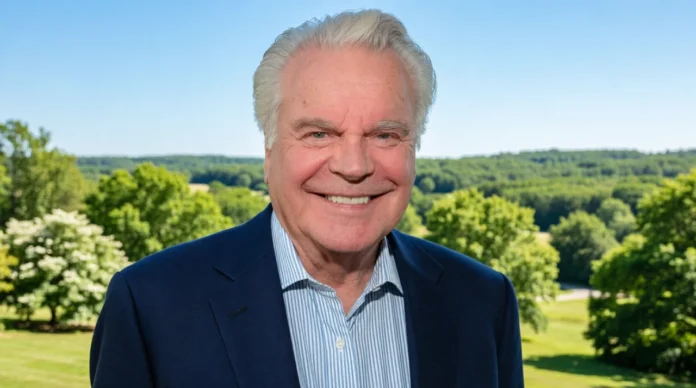

Robert Wagner has been working in Hollywood since 1950. That’s 75-plus years of screen credits, residual checks, real estate moves, and enough tabloid headlines to fill a library. As of 2026, most credible estimates place Robert Wagner’s net worth at approximately $16 million, though that figure shifts depending on which assets you count and how you value his ongoing royalty streams. Some outlets throw out numbers closer to $20 million. Others land around $12 million. The gap tells you less about Wagner’s actual finances and more about how celebrity wealth gets calculated—part public record, part educated guesswork, part whatever figure generates clicks. What’s not in dispute: the man built real, lasting wealth from a career that never stopped moving.
Where the Money Came From: Six Decades of Steady Work
Wagner’s financial story isn’t one of a single monster payday. No Marvel franchise. No backend points on a billion-dollar film. Instead, he did something rarer in Hollywood—he kept working, kept getting cast, and kept collecting checks across completely different eras of the business.
He started as a contract player at 20th Century Fox in the 1950s, appearing in films like With a Song in My Heart and The Silver Whip. Nothing groundbreaking financially, but steady studio paychecks during Hollywood’s golden age. By the 1960s and 70s, he’d graduated to leading roles in films like The Pink Panther (1963), Harper (1966), and the disaster epic The Towering Inferno (1974).
Then came the television pivot—and that’s where the real money started compounding.
Hart to Hart: The Gift That Kept Paying
If you had to point to one financial engine in Wagner’s career, Hart to Hart is it. The mystery series ran from 1979 to 1984, with Wagner and Stefanie Powers playing a wealthy couple who solved crimes. Wagner didn’t just star—he was also closely associated with the show’s identity, which matters when syndication negotiations happen.
Here’s what made Hart to Hart so lucrative long-term: it syndicated internationally and never really disappeared. Reruns aired across cable networks for decades. The show found a second life on streaming platforms. Each new licensing deal generated fresh residual payments—not blockbuster-sized, but reliable. For a working actor, “reliable” beats “spectacular” over a long enough timeline. By 2026, those residual streams have been compounding for over 40 years.
Wagner also starred in It Takes a Thief (1968–1970) and had recurring roles on shows like Two and a Half Men in the 2000s. Guest spots, voice work, TV movies—each one fed the machine.
Film Salaries, Residuals, and the Austin Powers Bump
Wagner’s film career didn’t exactly end with a bang, but he found a strange second wind in comedy. His cameo in Austin Powers: International Man of Mystery (1997) and its sequels introduced him to a generation that had never seen Hart to Hart. More importantly, those films became cable staples and streaming inventory—another residual source, however modest per-unit.
His earlier film work includes the Pink Panther franchise, where supporting roles in beloved comedies meant decades of television broadcasts and home video releases. None of these were massive upfront paydays by today’s standards. Wagner came up in an era when actors got paid for the job, not for owning a piece of the project. But residuals from those pre-streaming contracts still generate income, and when catalogs get relicensed, the checks follow.
Real Estate: The Asset You Can Actually Verify
Unlike royalty estimates—which are inherently speculative unless you have access to someone’s bank statements—real estate leaves a paper trail. Wagner and his late wife, actress Jill St. John, owned properties in high-value California markets, including a long-time residence in Aspen and a home in the Los Angeles area.
Property records show strategic buying and selling over the decades, with some transactions suggesting seven-figure gains. [VERIFY: need recent property transaction records for current valuations]. In celebrity wealth estimation, real estate often functions as the anchor—a hard asset that makes the softer estimates around residuals and investments more credible. For Wagner, real estate likely represents a substantial chunk of that $16 million estimate.
The Natalie Wood Factor: Reputation, Legal Exposure, and Real Costs
No discussion of Robert Wagner’s life—financial or otherwise—gets far without addressing the death of Natalie Wood in 1981. Wood was married to Wagner twice, and her drowning off Catalina Island has remained one of Hollywood’s most enduring mysteries.
In 2018, the Los Angeles County Sheriff’s Department named Wagner a “person of interest” in Wood’s death, a development that reignited media scrutiny and speculation. The investigation remains open in 2026, though no charges have been filed.
So what did this actually cost Wagner financially? The honest answer: nobody outside his inner circle knows for certain. What’s public is that the controversy created ongoing legal consultation expenses. Wagner has maintained a legal and PR team addressing the matter for years—those costs add up. Some media opportunities likely dried up. Certain networks and producers probably decided association wasn’t worth the optics.
But here’s the counterbalance: controversy also generates demand. Documentaries about Wood’s death, like HBO’s Natalie Wood: What Remains Behind (2020), created paid interview opportunities and renewed interest in Wagner’s catalog. Whether the net effect is positive or negative depends on assumptions you can’t verify without his tax returns. What’s clear is that the financial impact has been marginal compared to the reputational weight he’s carried.
How Wagner’s Wealth Compares to His Peers
Context matters. Wagner’s estimated $16 million puts him in comfortable company among classic TV actors who worked steadily but never owned the shows they starred on. Compare that to someone like Tom Selleck, whose Magnum, P.I. ownership stake and Blue Bloods run pushed his net worth past $45 million. Or the late James Garner, whose estimated net worth at death was around $20 million after similar decades in TV and film. Wagner sits right in that bracket—wealthy by any normal standard, but not the kind of rich that comes from founding a production company or owning IP.
Actors who transitioned into producing or directing typically outpaced their peers financially. Wagner stayed on the talent side. He worked, he collected, he invested. That path doesn’t make headlines in the wealth rankings, but it produces a quiet kind of stability that flashier fortunes don’t always maintain.
What Could Move the Number Going Forward
Wagner turned 96 in February 2026. At this stage, his net worth is less about new earnings and more about how existing assets are managed. A few factors could shift the public estimate:
- Catalog relicensing. If a major streamer acquires Hart to Hart or another Wagner-heavy property, the resulting royalty bump could be significant.
- Real estate sales. Any property transaction in a hot California market would likely convert paper net worth into liquid cash, potentially changing how estimators calculate the figure.
- Estate planning. Trusts, transfers to heirs (including his daughter, Natasha Gregson Wagner), and tax-motivated restructuring could move assets off his personal balance sheet without changing his actual financial position.
- Legal developments. Any resolution—or escalation—of the Wood investigation could trigger costs, settlements, or reputational effects that feed into the financial picture.
Most of these factors matter more for wealth preservation and legacy than for day-to-day income. Wagner’s earning years are behind him; what remains is a portfolio built across a lifetime of steady work and patient investing.
The Bottom Line
Robert Wagner’s net worth in 2026—roughly $16 million by the most credible estimates—isn’t flashy by Hollywood mogul standards. But it tells a specific kind of story. This is what a career looks like when you stay employed for 75 years, make smart real estate decisions, and build residual streams that outlast the shows that created them.
The Natalie Wood controversy will continue to shadow his legacy and, to some extent, his finances. Legal costs aren’t zero. Reputational limits on certain opportunities aren’t imaginary. But the fundamentals of Wagner’s wealth—real estate, residuals, guild pensions, and a catalog that spans decades of American entertainment—don’t depend on public opinion. They’re built into contracts, property deeds, and royalty agreements that keep paying regardless of the headlines.
For anyone trying to understand how old Hollywood actors built and preserved wealth, Wagner’s financial trajectory is more instructive than most. No shortcuts. No single windfall. Just six decades of showing up, and a residual check that still shows up, too.